H2: Introduction
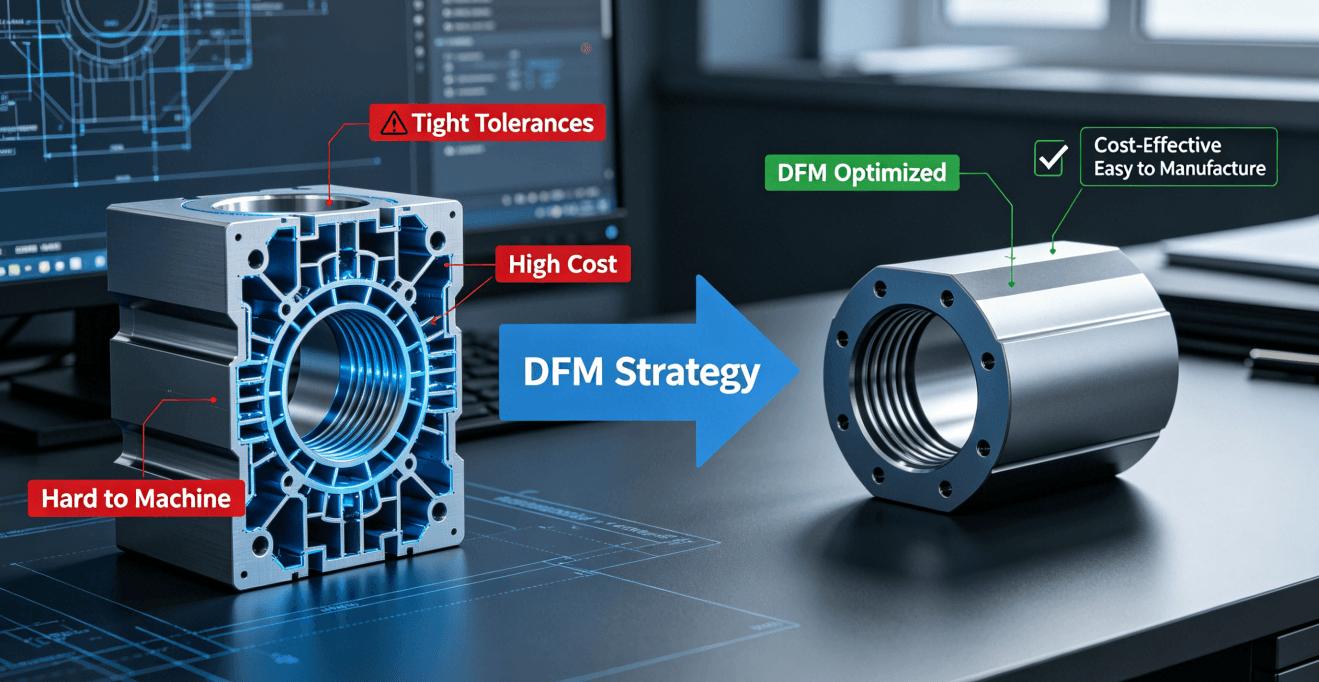
Custom bushings play vital roles in the proper functioning of systems in the tough sectors of machinery, automobiles, and aerospace industries. Nevertheless, going from the stage of designing a product to its actual manufacturing is rarely a hassle-free process. Many engineers struggle due to problems such as non-compliance, exceeding budgetary limits, and delays in lead time, causing repeated prototyping processes.
Such problems often occur due to a mismatch between design and manufacturing. Unawareness of the limitations of CNC machining, material characteristics, and post-manufacturing process in designing products often results in poorly manufactured products.
In this article, three fundamental approaches based on DFM principles will be discussed. Through these principles, engineers can make sure that the design of their custom bushings is optimized from the very beginning, taking into account both functionality and ease of manufacture through CNC machining.By applying the following approaches, success rates for first article prototypes can be greatly enhanced.
H2: Why Do Traditional Custom Bushing Designs Often Lead to Soaring CNC Machining Costs?
Many traditional designs often end up paying more than necessary because of various mistakes that make the design difficult to machine. Excessive internal geometries, such as unconventional deep grooves and sharp internal corners, require specialized tooling, low speeds, and multiple setups to manufacture. Tight tolerances on non-critical areas increase manufacturing times, necessitate the use of specialized tools, and require more frequent inspections to ensure quality control, increasing costs without providing any benefit.
One area where many mistakes are made is the accessibility of tools for machining. Designs that have deep holes with a small diameter and other features requiring a long reach tool create problems with tool deflection and poor surface finish, even causing damage to the tool itself. Other problematic designs involve not considering the stock materials’ sizes and making unnecessary cuts. Proper DFM makes it easier to machine, uses realistic tolerances, and allows every feature to be machined easily by standard tools. The value of early engagement with custom bushing manufacturers for a DFM review is clear.
H2: How to Select the Best Material and Heat Treatment for Custom Steel and Bronze Bushings?
Selection of material is key when it comes to the performance and service life of a bushing. The common materials used in the construction of custom steel bushings include alloy steel such as 4140 due to its strength and toughness properties and different kinds of stainless steel (e.g. 303, 304) when corrosion-resistance capability is needed. Custom bronze bushings that could be made out of phosphorus or aluminum bronze are ideal for high load and low-speed conditions.
The material selection will greatly affect the CNC machining process. When dealing with metals such as steel, one must have tough, durable cutting tools along with precise control over the speeds and feeds of operations due to temperature issues. When using a material such as bronze, there are easier machining capabilities, but bronze tends to gum up; therefore, proper chip breaking techniques are required. Post-processing techniques can improve the performance of the bushings. With steel bushings, post-processing heat treatments such as quenching and tempering can significantly increase surface and interior strength of the material. The use of surface treatments such as nitrocarburizing or case hardening can further increase the wear-resistance of the bushings. Communicating application needs with the machinist is crucial for selecting the optimal material and treatment.
H2: How Does High-Precision CNC Machining Achieve Micron-Level Tolerances for Custom Bushings?
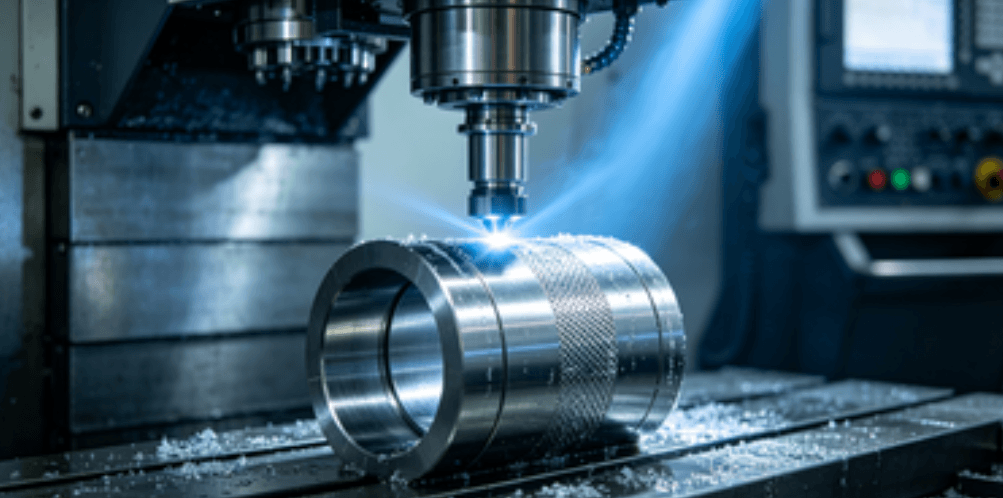
Micron-level tolerance levels for custom CNC machined bushings can be attributed to the integration of high-tech machines, tools, and strategies.
H3: The Pillar of High Precision: Machine, Tools, & Strategy
- Machine Stiffness & Cutting Tool Selection
For starters, high precision begins with using a rigid machine. The other important component is choosing the best cutting tool with suitable geometry and coating that have minimal runout. Moreover, using high pressure coolants is crucial in controlling heat and removing chip buildup.
- Machining Programming & Strategy
Programming is equally important. In the programming stage, employing appropriate cutting strategies and using techniques such as climb milling ensures lower cutting force and vibration that helps maintain accuracy.
H3: The Future of High Precision Engineering: In Process Monitoring & Smart Manufacturing
However, the future is now! Real-time monitoring of processes in closed loop fashion has proven beneficial. Using probing systems on the CNC machine to measure and adapt to the part being manufactured in real time will help maintain tolerances of IT7-IT8 grades. Therefore, when dealing with complex parts, it is best to work with manufacturers such as LS Manufacturing who invest in such high-precision CNC machining technologies and smart factory ecosystems for real-time traceability. Partnering with experienced precision cnc machining manufacturers is paramount for consistency.
H2: What Are the Most Overlooked Fit Considerations in Custom Gear Bushing and Pin & Bushing Assembly Design?
The performance of dynamically paired components depends heavily on accurate fit design.
H3: Key Considerations for Custom Gear Bushings
- Precision of Bore and Interfacing Geometry
Precision of the bore and interfacing geometry features is critical. Any miscalculations result in backlash, uneven load sharing, and much faster than normal wear rates.
- Lubrication Groove Design
It is just as important to have good lubrication groove design that ensures proper oil delivery to the friction surface without compromising the wall strength of the bushing.
H3: Fit Selection for Custom Made Pins and Bushings
The first decision is what kind of fit should be used – clearance, transitional or interference. This decision is based on the application needs – loading conditions and rotational speed among others. Each one has specific CNC machining precision considerations. In case of an interference fit, high accuracy of diameter, roundness and cylindricity measurements is required. The DFM analysis is needed to determine the optimal fit and associated tolerance values for a given combination of materials to prevent excessive clearance-related failures.
H2: From Prototype to Production: How to Ensure Consistency in CNC Machining for Custom Bushings?
Transitioning from a perfect prototype to an efficient manufacturing cycle demands a reliable quality management system. Where volume production is concerned using CNC machining for custom bushings, techniques such as First Article Inspection (FAI), Statistical Process Control (SPC), and full dimensional reports come in handy. First Article Inspection involves checking whether the first manufactured piece conforms to all the requirements detailed on the drawings, while Statistical Process Control employs statistical tools to ensure quality within the machining process.
The operations mentioned above are grounded in a quality-oriented culture and are usually validated by international certificates. ISO 9001, IATF 16949 (Automotive) and AS9100D (Aerospace) are not simply wall plaques; rather, they ensure standard work instructions, proper equipment maintenance, and traceability of all parts produced. It is due to such a process that the 1000th bushing is exactly the same as the first one. In industries where there is an absolute necessity for strict quality standards and safety requirements, such an approach becomes necessary. Hence, working with a CNC Machining Services provider who understands quality standards inside out is essential for ensuring easy scalability. LS Manufacturing, a company that provides digital inspection results as well as works within an IoT-enabled factory, would be a perfect choice for you to ensure consistency in custom bushings CNC machining services.
H2: Conclusion
Designing a customized bushing that works flawlessly is just half the challenge. Making sure that bushing is designed for manufacture is the secret to meeting goals in terms of budget, schedule, and quality. By applying DFM principles and thinking proactively about material choice, tolerance requirements, fit specifications, and quality processes, engineers can significantly increase collaboration effectiveness when working with CNC machine shops. This synergy guarantees efficient implementation of your design.
Have you considered all the manufacturing-related aspects in your future bushing design? If you want your project to get off on an efficient foot, upload your CAD files to an experienced manufacturer for DFM evaluation and pricing.
H2: Author Bio
The article was authored by a veteran manufacturing engineer with more than a decade of experience under his belt. He specializes in translating optimal design into actual products through manufacturing solutions offered by his company, LS Manufacturing.
H2: FAQs
Q1: What is the typical lead time from design to obtaining CNC machined samples of custom bushings?
A: The lead time varies depending on the complexity of the design and the order quantity. Simple designs using common materials can be prototyped quickly within 3-5 days by reliable CNC machining service companies. Complex designs that require special post-processing take around 1-2 weeks. DFM consultation at an early stage is the best method for avoiding delay.
Q2: What are the most frequently used surface treatments of CNC machined custom bronze bushings?
A: Common surface treatments of custom bronze bushings include polishing, which reduces friction, tin/nickel plating, which increases durability, and electroless nickel plating, which produces a homogeneous tough coating. The selection is based on the working environment (seawater, chemicals, etc.) and necessary coefficient of friction.
Q3: When do I know that I need 5 axis machining services for my bushing design?
A: The use of 5-axis machining will be necessary when there are intricate inner contours within the bushing, as well as non-orthogonal angular holes or multiple faces that need to be machined simultaneously to maintain precision. In case of relatively uncomplicated bushing design, 3-axis CNC machining is adequate. The manufacturer can help decide which route to follow.
Q4: Is CNC machining a cost-effective option for producing custom steel bushings in small batches?
A: Definitely. In case of small batch manufacturing of custom steel bushings, CNC machining is very cost-effective since there is no need for expensive hard tooling. It is particularly ideal for prototype testing and making replacement parts or models on demand.
Q5: What should take precedence in designing a gear bushing for its service life?
A: In the case of specialized gear bushings, service life depends on good lubrication as well as wear resistance. It should be ensured that there are channels through which lubrication can flow effectively. Material selection, particularly choosing a wear-resistant combination of materials (such as hardened steel gear with bronze bushing), is very important.