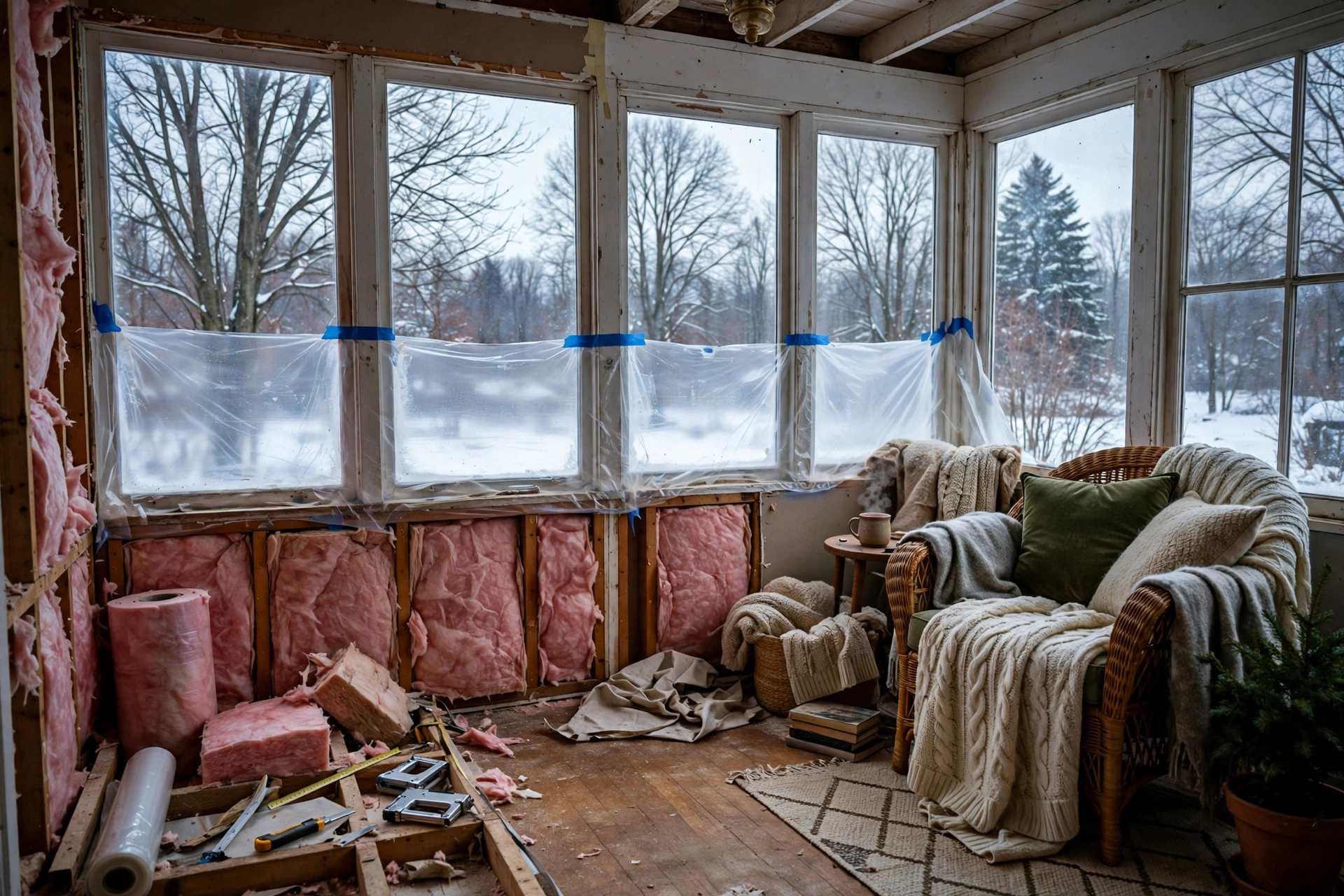
A sunroom should be the brightest room in a small home, but in winter it is often the coldest, and in summer it can overheat by midday. That swing is not a mystery: sunrooms have far more glass, thinner walls, and lighter roofs than the rest of the house, so heat escapes quickly in cold weather and solar gain builds up fast in warm weather. Replacing every window is the most complete fix, but it is also the most expensive and disruptive, and for many small homes it is not necessary to make the room usable again. The short answer is to find and seal the actual air leaks first, add a second insulating layer at the glass with film or interior panels, dress the windows with thermal curtains or cellular shades, and insulate the roof, floor, and wall junctions that are leaking heat around the glass.
This guide focuses on practical, non-replacement methods that a homeowner can tackle in stages, starting with the cheapest and most effective. It explains how to tell whether a draft comes from a failed seal, a gap in the frame, or simply cold glass, because each cause needs a different fix. It also explains the limits honestly: insulation without replacement will improve comfort and reduce drafts, but it will not turn a single-glazed three-season room into a fully insulated four-season room, and it will not fix structural problems, rotten frames, or a leaking roof. Costs are broad estimates only, because room size, window count, and product choice vary widely.
Finding Where a Sunroom Actually Loses Heat
Before buying anything, spend a cold, windy day finding the leaks, because sunrooms leak in several places at once and treating only the windows will disappoint you. Close all windows and doors, turn off fans and the heating for a short while, then move a lit incense stick slowly around each window frame, sash, sill, and wall junction, watching for smoke that wavers or is drawn sideways. Feel for cold air at the base of doors, where the sunroom meets the house wall, around pipe and cable entries, and at the junction between wall and roof. Note which windows feel cold to the touch even when no draft is obvious, because cold glass itself radiates chill and makes a room feel drafty even when the seals are sound. That distinction matters: air leaks need sealing, while cold glass needs an insulating layer.
Sealing Sunroom Frames, Sashes, and Wall Junctions Without New Windows
Sealing is the highest-value first step, because it costs little, needs no structural work, and often removes the worst drafts in a single afternoon. Replace cracked, flattened, or missing weatherstripping on opening sashes with a type suited to the window, such as V-seal for sliding sashes or foam tape for irregular gaps, and make sure the sash still closes and locks fully afterwards. Seal fixed gaps between frame and wall with a flexible exterior-grade caulk, and use removable rope caulk for small seasonal gaps you may want to open again in summer. Check the sunroom door too, because a door that does not latch tightly can leak more air than several windows combined. Work methodically around the room, one window at a time, and retest with the incense method after each fix so you know what actually worked.
- Replace worn weatherstripping; do not layer new strips over old, flattened ones.
- Seal frame-to-wall gaps with flexible caulk, not rigid filler that will crack.
- Check door latches and thresholds; a loose door can out-leak several windows.
- Keep trickle vents and extractor routes clear; sealing a room airtight without ventilation causes condensation.
Window Film, Interior Storm Panels, and Secondary Glazing for Sunrooms
Once air leaks are sealed, the next layer is insulation at the glass itself. Shrink window film, applied with double-sided tape and tightened with a hair dryer, creates a still air gap over the pane and is the cheapest way to cut heat loss through single glazing for a winter season. It is not pretty up close, and it needs replacing each year, but for a small sunroom it can make a noticeable difference for a modest spend. Interior storm panels, made from clear acrylic or polycarbonate cut to fit inside the frame, are a more durable version of the same idea: they add an insulating air gap, can be removed in summer, and look far better than film, though they cost more and need accurate measuring. Magnetic secondary glazing kits sit between the two, offering a removable panel that is easy to take down for cleaning, provided the frame can hold the magnetic strip securely.
Thermal Curtains, Cellular Shades, and Sunroom Light Control
Window treatments do not stop air leaks, but they add a real insulating layer at night, when a sunroom loses most heat, and they control solar gain by day. Thermal curtains work best when they hang close to the window, reach the floor, and cover the full width, so warm room air cannot circulate behind them and cool against the glass. Cellular, or honeycomb, shades trap air in their cells and are a good choice for small sunrooms because they take up little space when raised and do not crowd the room like heavy curtains. The trade-off is light: a sunroom exists for daylight, so choose treatments you will actually open each morning. A room that stays curtained all day to stay warm has lost the reason it was built, so pair treatments with sealing and film rather than relying on them alone.
Insulating a Sunroom Roof, Floor, and Knee Walls Around the Glass
In many sunrooms, the glass gets all the attention while the roof and floor leak just as much heat. A thin sunroom roof, especially a polycarbonate or single-skin roof, loses heat rapidly and can also drip with condensation in cold weather. Insulated roof panels, a lightweight insulated ceiling below the existing roof where headroom allows, or rigid foam boards fitted between rafters can all help, but roof work must respect ventilation and condensation routes, and any change to a glass roof needs care to avoid trapping moisture. Floors are equally important in small homes: a sunroom built on a concrete slab or over an uninsulated void will feel cold underfoot even when the air is warm, so thick rugs, underlay, or, where feasible, insulation beneath a raised floor can improve comfort noticeably. Knee walls, the short walls below windows, often have little or no insulation, and filling them, where access allows, is a small job with a real return.
Heating a Small Sunroom Efficiently After Insulation
Insulation reduces heat loss, but a sunroom still needs a heat source that matches its use. A small, thermostatically controlled electric heater, a ductless mini-split where the budget allows, or an extension of the house heating system each suit different rooms, and the right choice depends on how often the room is used and whether it is intended as a year-round living space. Avoid heating a leaky sunroom to the same temperature as the rest of the house before insulating it, because much of that heat will simply escape through glass and gaps. Heat the room for the hours you use it, close the door to the house when it is unheated, and use a thermometer to check whether insulation changes are actually raising the room temperature, rather than relying on how the room feels on a single mild day.
Sunroom Insulation Mistakes That Cause Condensation and Mould
The most common mistake is sealing a sunroom so tightly that moisture has nowhere to go. Sunrooms generate humidity from plants, breathing, cooking nearby, and drying clothes, and if warm, moist air meets cold glass with no ventilation, condensation forms, runs down panes, and can feed mould on frames and sills. Keep trickle vents open, ventilate briefly each day, and do not block extractor fans or air bricks in the name of draft-proofing. The second mistake is covering a leaking roof or rotten frame with insulation and hoping it will disappear; trapped moisture will worsen the damage out of sight. The third mistake is using interior foam boards directly against glass without an air gap or vapour consideration, which can trap condensation against the frame. Insulate in layers, keep air moving, and fix leaks first.
Final Thoughts: A Warmer Sunroom Without Replacing Its Windows
For a small home, the best sunroom insulation plan is staged and honest: seal air leaks first, add film or interior panels at the glass, dress windows with thermal curtains or cellular shades for the night, and insulate the roof, floor, and knee walls that surround the glass. That combination will not match new double or triple glazing in every respect, but it can turn a drafty, barely used room into a comfortable space for much of the year, at a fraction of the cost and disruption of replacement. Test each stage, watch for condensation, and keep ventilation open, and if frames are rotten, the roof leaks, or the room is intended as a permanent bedroom, get professional advice before investing heavily in insulation alone.
Insulating a Drafty Sunroom FAQs for Small Homes
Can I insulate a sunroom without replacing the windows?
Yes, by sealing air leaks, adding window film or interior storm panels, using thermal curtains or cellular shades, and insulating the roof, floor, and knee walls. These methods reduce drafts and heat loss noticeably, though they will not match the performance of new energy-efficient windows, especially if the existing glass is single-pane and the room is intended for year-round living.
Is window film effective on sunroom glass?
Shrink window film creates a still air gap over the pane and can reduce heat loss through single glazing for a winter season, at very low cost. It needs careful application, looks less polished than a rigid panel, and must be replaced each year, but for a small sunroom with many panes it is often the best first insulating layer after sealing.
Why does my sunroom get condensation after draft-proofing?
Condensation appears when warm, moist air meets cold glass and has nowhere to vent, and sealing drafts without ventilation can make it worse. Keep trickle vents open, ventilate the room briefly each day, avoid drying clothes in the sunroom, and check that roof and wall junctions are not trapping moisture behind new insulation.
Are thermal curtains enough to warm a drafty sunroom?
Thermal curtains help at night by adding an insulating layer and reducing radiant chill, especially when they hang close to the window and reach the floor. They do not stop air leaks, however, so they work best after weatherstripping and caulking, and they should be opened during the day so the room still benefits from sunlight.
Should I insulate a sunroom roof or floor first?
Start with the element that feels coldest or leaks most, but in many sunrooms the roof loses more heat than the floor, especially with a thin polycarbonate roof. A floor that feels cold underfoot deserves rugs and, where feasible, insulation beneath a raised floor, while knee walls below windows are often an easy, overlooked win.
When is window replacement the better choice for a sunroom?
Replacement is usually better when frames are rotten, warped, or no longer close, when glass is broken or misted between panes, when the room is being converted to a permanent living space or bedroom, or when insulation alone leaves the room unusable in winter. In those cases, get quotes for replacement alongside insulation, and compare lifetime comfort and energy use rather than first cost alone.