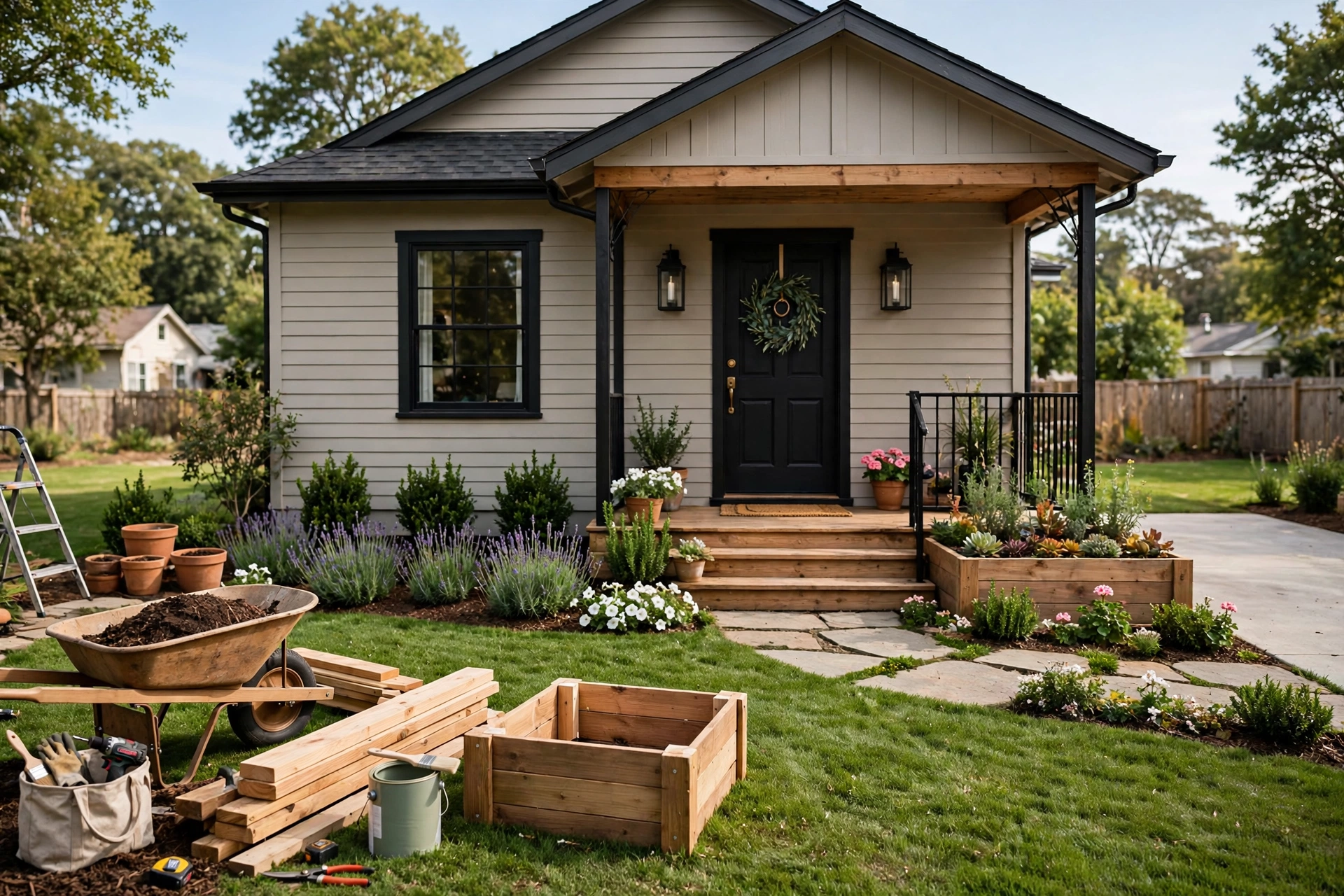
Curb appeal is the first story a home tells, and it is told in seconds from the street. Peeling paint, a cluttered porch, an unedged lawn, and a tired mailbox can make even a well-kept interior feel neglected. The encouraging part is that most of that first impression can be changed in a single weekend, without a contractor, a large budget, or a full exterior renovation.
The direct answer is simple: clean and edge first, refresh the front door and entry details second, and finish with mulch, planting, and lighting that frame the house rather than hiding it. Spend money only where the eye lands first — the door, the walkway, and the front beds — and leave larger work, such as roofing or siding replacement, for a separate project and a professional quote.
Starting With a Street-Level Walkaround for Weekend Curb Appeal
Walk to the street and look back at your home as a visitor would, then walk slowly toward the door and note what distracts you. Photograph the front from several angles, because a photo often reveals sagging gutters, a leaning mailbox, or a patchy lawn that the eye overlooks in person. List every issue in order of visibility, not difficulty, so a small, highly visible fix is not crowded out by a hidden repair that no passer-by will notice.
Check local rules before you paint or plant, especially in a neighbourhood with a homeowners association or a historic district. Some associations restrict door colours, fence styles, and tree planting, and a weekend project that must be undone is neither affordable nor quick. A short check of the rules, plus a note of where utilities run before you dig, keeps a Saturday project from becoming a Monday problem.
Cleaning and Edging That Make a Home Look Cared For
Cleaning is the cheapest curb-appeal project and often the most dramatic. Sweep the walkway and porch, wash windows that face the street, wipe down the mailbox and house numbers, and remove cobwebs from porch lights and corners. If you rent a pressure washer, use a low, even setting on concrete and keep the nozzle moving, since a concentrated jet can etch soft stone, strip paint, and force water behind siding.
Edge the lawn along walks and driveways with a half-moon edger or a flat spade, creating a crisp line between grass and hard surfaces. That single line makes a lawn look intentional even before it is mowed, and it costs nothing but time. Rake leaves out of beds, pull weeds from cracks, and sweep the debris away rather than blowing it into a neighbour’s garden, so the clean look lasts past the weekend.
Painting the Front Door Without Painting the Whole House
A front door is the focal point of most homes, so repainting it gives a disproportionate return for one afternoon of work. Choose a colour that complements the siding and trim rather than competing with them, and test it in daylight before committing, since a colour that looks rich in a shop can look harsh in full sun. Clean and lightly sand the door, protect the hardware or remove it, and use exterior paint suited to the door material.
Paint in thin, even coats and allow proper drying time between them, rather than loading the brush to finish faster. A second thin coat covers better and lasts longer than one thick coat that drips and peels. While the paint dries, clean the hinges and handle, and replace only hardware that is genuinely worn, since a new handle on a freshly painted door completes the refresh without a full hardware set.
Updating House Numbers, Mailbox, and Porch Lighting Together
House numbers, a mailbox, and porch lighting are small, but together they signal whether a home is maintained. Choose numbers that are large enough to read from the street, mount them at a consistent height, and match their finish to the door hardware for a cohesive look. If the mailbox is rusted, dented, or leaning, either repaint it, straighten its post, or replace it with a simple, sturdy model that suits the house style.
For lighting, clean existing fixtures first, because dirt and dead insects dim even a good bulb. Replace a dated or damaged fixture with a simple outdoor sconce, and consider solar path lights along the walkway for evening appeal without wiring work. Keep lighting warm and modest, aimed at the path and entry, rather than bright and scattered, so the house looks welcoming rather than floodlit.
Mulch, Edging, and Simple Planting That Frame the Entry
Fresh mulch instantly darkens beds, suppresses weeds, and makes planting look deliberate, but it should be spread two to three inches deep and kept away from direct contact with siding and tree trunks. Pile mulch against a trunk and you invite moisture damage and pests; leave a small gap and the tree stays healthier while the bed still looks finished. Choose a mulch colour that matches the house, not one that shouts for attention.
Plant for the space you have, not the catalogue photo. Low, hardy plants near the entry, a pair of matching planters by the door, and a small tree set well back from the house will look better in a year than a crowded bed that outgrows its space in a season. Water new plants thoroughly, and choose varieties suited to your sun, soil, and rainfall rather than forcing a plant that will struggle all summer.
Porch Furniture and Planters That Invite People In
A porch does not need a full furniture set to feel inviting. A single sturdy chair, a small table, or a bench that fits the space, plus a clean doormat, tells visitors the entry is used and cared for. Remove broken, faded, or mismatched pieces first, because one tired chair can undo the effect of a freshly painted door. Keep the porch clear of storage, bins, and tools, which belong out of sight.
Use planters to add colour at eye level, grouping them in odd numbers and varying heights rather than lining up a row of identical pots. Seasonal flowers, herbs, or evergreen shrubs all work, provided they are watered and deadheaded regularly. A planter that is allowed to dry out and die sends the opposite message to the one you intended, so choose plants you will realistically maintain.
Garage Door and Driveway Touch-Ups on a Weekend Budget
A garage door often covers more of the front of a house than the front door does, so washing it, touching up paint, and cleaning its hardware can change the whole facade. Wash with mild detergent, rinse thoroughly, and touch up only areas where paint has failed, feathering the edges so the repair does not stand out. If the door is dented or its mechanism is faulty, leave that repair to a specialist, since garage-door springs are dangerous to handle without training.
For the driveway, sweep it, remove weeds from joints, and fill only small, stable cracks with a suitable filler after cleaning them out. A driveway that is clean and even reads as maintained, even if it is not new. Avoid sealing an entire driveway in a rushed weekend unless the product and weather suit it, because a poorly applied seal can peel and look worse than the original surface.
Weekend Curb Appeal Mistakes That Waste Money and Time
The most common waste is buying plants, paint, and decor before cleaning and edging, so new purchases sit on top of dirt and clutter. Another is choosing a bold door colour, a trendy planter, or a large tree without checking scale, sunlight, or association rules, and then having to redo the work. A third is spreading mulch too thickly or against trunks and siding, which looks tidy for a week and damages plants and walls over time.
Finally, avoid starting a project that needs a permit, a structural repair, or electrical work and calling it a weekend job. Those projects deserve proper planning, quotes, and, where needed, a licensed professional. A weekend plan that finishes cleanly beats an ambitious plan that is still half-done when guests arrive on Monday.
Keeping Weekend Curb Appeal Looking Good Through the Seasons
A weekend refresh fades quickly if nothing is maintained, so build a short seasonal routine around the work you just did. In spring, refresh mulch, prune dead growth, and wash the porch and mailbox again after winter grime. In summer, water new plants deeply rather than briefly, deadhead flowers, and keep the lawn edged so beds retain their crisp lines. In autumn, clear leaves from beds and gutters, and in winter, keep the walkway safe and the porch light working, so the entry stays inviting even in poor weather.
Keep a small kit for these touch-ups: a broom, an edger, a spare bulb, touch-up paint for the door, and a bag of mulch for thin spots. Fifteen minutes every few weeks preserves a weekend of work far better than another full weekend every year, and it keeps the home looking maintained rather than periodically rescued. That routine is what turns a one-off project into lasting curb appeal.
Final Thoughts: Weekend Curb Appeal That Lasts Beyond the Weekend
Improve curb appeal by cleaning first, refreshing the door and entry details second, and framing the house with mulch, planting, and light. That sequence keeps costs low, finishes within a weekend, and leaves a home that looks cared for long after the paint dries. Pick one project to start this Saturday, finish it properly, and let the next weekend build on it.
Weekend Curb Appeal FAQs: Costs, Timing, and First Impressions
What is the cheapest curb appeal project with the biggest impact?
Cleaning, edging, and sweeping usually win, because they cost little and reveal the home underneath dirt and clutter. Painting the front door is a close second, since the door is the natural focal point of the facade.
How much should a homeowner budget for a curb appeal weekend?
A cleaning and door-paint weekend can be done with a low budget, while mulch, plants, and new fixtures raise the cost into a moderate range. Set a firm budget before shopping, and spend first on the door, walkway, and front beds, where the eye lands first.
Can curb appeal really affect a home’s value?
Curb appeal alone does not set a price, but it shapes a buyer’s first impression and can affect how many people view a home and how well it is maintained in their eyes. Treat it as presentation that supports value, not as a guaranteed return.
Should I plant a tree for curb appeal?
A tree can add lasting appeal, but only if it is planted well away from the house, driveways, and utilities, and suited to the site. A small, well-placed tree beats a fast-growing tree planted too close, which can damage foundations and paving later.
Is pressure washing safe for every exterior surface?
No. Concrete and sturdy siding tolerate careful pressure washing, but soft wood, old mortar, and painted surfaces can be damaged by a strong jet. Start with a gentle setting, keep the nozzle moving, and test a hidden area first.
When should a curb appeal project involve a professional?
Call a professional for roofing, structural repairs, garage-door springs, electrical work, and large tree work. Those jobs carry safety or structural risks that a weekend DIY approach should not take on, however simple they may look from the street.