Modern residential fireproofing is not one product but a layered system: non-combustible framing and sheathing, fire-rated gypsum assemblies, mineral wool insulation, intumescent coatings, and sealed penetrations, all working to buy time. The goal is not to make a house fireproof in the literal sense, because no ordinary home is, but to slow a fire’s spread long enough for everyone to get out and for the structure to stay standing. The highest-value places to start are the attached garage wall, the kitchen, and the mechanical room, where fires most often begin.
What Fireproofing Really Means Inside a Home
Fire protection in a home is measured by fire-resistance ratings, which describe how long a complete wall, floor, or ceiling assembly can withstand a standard fire test without collapsing, letting flames through, or overheating the far side. Common residential ratings are one hour and two hours. The rating belongs to the whole assembly, not to a single material: a wall’s rating comes from its framing, its gypsum layers, its insulation, and its sealed joints working together, so swapping one component can change the rating of the entire wall.
That distinction matters when you shop. A product labelled fire-resistant or flame-retardant is not automatically part of a rated assembly, and a single fire-rated board does not make a wall fire-rated on its own. Look for assemblies that have been tested to recognised standards, and check your local building code for where rated assemblies are required, since garages, stairwells, and walls between dwellings are common requirements. When in doubt, ask the manufacturer for the tested assembly listing rather than trusting a label.
Which Gypsum Board Works as a Residential Fire Barrier: Type X or Type C?
Fire-rated gypsum board is the most common residential fire barrier, and it works by chemistry as much as by structure. Gypsum contains chemically bound water, and as heat drives that water out, the board absorbs energy and stays relatively cool, delaying the fire’s passage. Type X board adds glass fibres to the gypsum core so the board holds together longer as it dehydrates. A single layer of 5/8-inch Type X on both sides of a framed wall is a typical minimum for a one-hour rating.
Mineral Wool and Fibreglass Insulation as Fire Brakes
Insulation inside a wall cavity does more than save energy; it can slow a fire’s movement through the structure. Mineral wool, made by spinning molten rock into fibres, is non-combustible and withstands very high temperatures without melting, which makes it a strong choice for fire-rated walls and floors. It also limits heat transfer and convection inside the cavity, reducing the chance of fire breaking out on the cool side of the wall.
Fibreglass insulation is also non-combustible and will not burn, though it can melt at high temperatures and lose its structure sooner than mineral wool. Both materials only help when they fill the cavity properly, without gaps or compression that leave channels for hot gases. Foam plastic insulation is the exception to watch: many foam products are combustible and need a thermal barrier, usually gypsum board, over them to meet code. Never leave foam insulation exposed in a living space or garage.
Intumescent Paints and Sprays That Swell Against Heat
Intumescent coatings look like ordinary paint when dry, but they react to heat by swelling into a thick insulating char, sometimes 50 times their original thickness, that shields the material beneath. On steel beams and columns, they delay the loss of strength that leads to structural failure. On wood, intumescent paints and sprays slow ignition and flame spread, buying evacuation time in basements, mechanical rooms, and exposed structural areas.
These coatings only work when applied at the specified thickness, which is measured in wet film thickness during application and verified as dry film thickness afterward. A thin coat applied like ordinary paint will not perform, and most products need a compatible primer and topcoat to survive in a lived-in space. Spray-applied fire-resistive materials, the thicker cement-like coatings used on large steelwork, are a professional application in most homes. If a product claims a fire rating, ask for its test report and the exact assembly it was tested in.
Fireproofing Materials Compared for Home Use
Fire-Rated Doors, Sealants and Penetration Stops
A fire-rated wall fails if its openings are not protected. Fire-rated doors, typically rated for 20 minutes to 90 minutes in residential use, slow fire passing between rooms and are commonly required on the door between an attached garage and the house. They only work with the right frame, self-closing hinges, and intact seals, so a fire door propped open or fitted with a household latch defeats its purpose.
Every pipe, cable, and duct that passes through a rated wall or floor needs a firestop.
- Intumescent caulk, putty pads, or collars that expand when heated and seal the gap.
Ordinary caulk will not do this job, so walk your home’s rated walls, especially around the garage, and look for unsealed holes where a previous owner ran a wire or a pipe.
Sealing those gaps is one of the cheapest and most effective fireproofing jobs in any house.
Non-Combustible Exteriors: Siding, Sheathing and Roofing
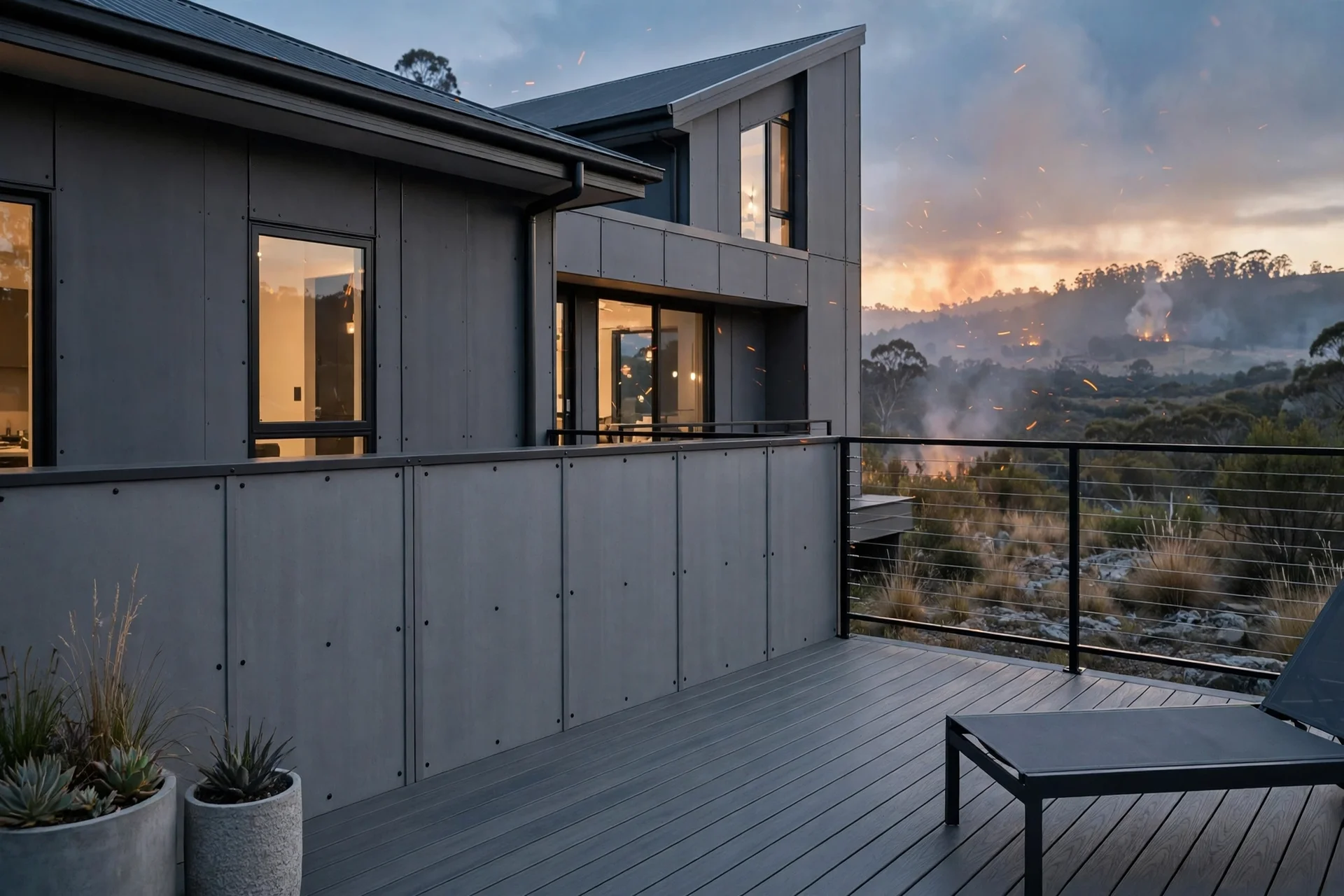
The outside of a house faces a different fire threat, especially in wildfire-prone areas, where wind-blown embers can ignite vulnerable materials from a distance. Fibre cement siding, stucco, metal siding, brick, and stone veneer are non-combustible and resist ember ignition far better than vinyl or untreated wood siding. Magnesium oxide (MgO) sheathing boards add fire resistance behind the cladding, with many boards rated for one to two hours depending on thickness.
Roofing deserves the same attention, because embers landing on a roof are a leading cause of home loss in wildfires. Metal roofing, clay, and concrete tiles are non-combustible and withstand high heat and ember exposure. Asphalt shingles with a Class A fire rating offer the highest fire resistance among shingles and are a practical upgrade where a full roof replacement is already planned. Keep gutters clear of leaves and debris too, since a gutter full of dry litter is an ember trap sitting against the roof edge.
Fireproofing the Garage, Kitchen and Mechanical Room First
If you can only fireproof part of a house, start where fires start. The attached garage is the top priority: it holds fuel, paints, solvents, and often a car, and the wall and ceiling between the garage and the living space must be a rated fire separation, usually with Type X gypsum, sealed penetrations, and a self-closing fire-rated door. Never store fuel or solvents in the living space, and keep the garage door’s self-closer working.
Kitchens need a different approach, since most kitchen fires start on the hob and are fought with detection and suppression rather than materials alone. A working smoke alarm, a small kitchen fire extinguisher, and non-combustible splashbacks and worktops near the hob reduce risk more than any wall treatment. Mechanical rooms, where furnaces, water heaters, and electrical panels live, benefit from rated walls, clear space around equipment, and sealed penetrations for flues and ducts. Keep storage out of mechanical rooms; a pile of boxes next to a furnace is fuel waiting for a spark.
Fireproofing Choices That Waste Money or Create Risk
- The most common waste is buying a fire-rated product and installing it outside its tested assembly, which gives no rating at all.
- Painting over an intumescent coating with an incompatible topcoat, which can stop it swelling properly.
- Treating a single room while leaving the garage separation unsealed, since fire will simply take the unprotected route into the house.
Some choices create risk directly. Storing flammable materials in a newly fireproofed garage undoes the protection, and using ordinary foam insulation without its required thermal barrier is both a code violation and a fire hazard. Be wary of products that claim to make wood fireproof; wood can be made more fire-resistant, but it remains combustible, and any claim otherwise should be checked against a test report. Spend money on tested assemblies and sealed details, not on miracle claims.
What Residential Fireproofing Costs in Broad Terms
Costs vary by region and scope, so use these as broad planning ranges only. Replacing standard drywall with Type X board on a garage wall typically adds a modest premium over standard board, often in the low hundreds of dollars in materials for a single wall, plus labour. Mineral wool insulation costs more than fibreglass per batt but is comparable once fire performance is part of the decision. Intumescent paint for a basement ceiling or exposed steel can run into the high hundreds to low thousands depending on area and required thickness, and professional spray application costs more still.
When Fireproofing Needs a Licensed Specialist
Many fireproofing jobs are straightforward DIY work, but several need a professional. Any change to a rated assembly, such as altering a garage separation or adding a fire-rated ceiling, should be checked against local code and inspected, because an unapproved change can fail an inspection and complicate a future sale. Spray-applied fireproofing, structural steel protection, and sprinkler systems are specialist work, and in some jurisdictions they need licensed installers and certification.
Call a fire protection specialist or your local building department if you are unsure which assemblies your home needs, if you find a rated wall that has been altered, or if you live in a wildfire-prone area and want a proper ember-resistance assessment. Also involve a professional if you discover damaged or missing firestopping in a multi-unit building, since fire protection there affects your neighbours as well as your own household.
Residential Fireproofing Questions Answered
Can a house be made completely fireproof?
No ordinary home is completely fireproof. Fireproofing slows a fire’s spread and buys time for escape and for firefighters to work, but given enough heat and time, any house will burn. The realistic goal is a rated assembly that holds for one or two hours, not permanent immunity.
What is the difference between Type X and Type C drywall?
Both are fire-rated gypsum boards, but Type C contains more glass fibre and additives that help it perform better under heat, so it is often specified for ceilings and more demanding assemblies. Type X is the standard for most residential fire barriers, including garage separations.
Does mineral wool insulation stop fire spreading?
Mineral wool is non-combustible and slows heat transfer and fire spread through a wall cavity, but it does not make a wall fireproof on its own. Its value comes as part of a tested assembly with rated gypsum and sealed penetrations.
Where should I fireproof first in my home?
Start with the wall and ceiling between an attached garage and the living space, then the mechanical room, then the kitchen area. These are where fires most often start and where a rated barrier gives the most protection for the money.
Do I need a permit to add fireproofing?
It depends on the work and your local code. Simple jobs like sealing penetrations or replacing a door usually do not, but altering a rated assembly, adding fire-rated ceilings, or installing sprinklers generally does. Check with your local building department before starting structural changes.
Is intumescent paint enough on its own?
No. Intumescent coatings protect the surface they are applied to, but they are one layer in a system. They work best alongside rated gypsum, proper insulation, and sealed penetrations, not as a substitute for them.
Final Thoughts: Fireproofing Buys the Minutes That Matter
Fireproofing is not about building a fortress; it is about buying minutes. A rated garage wall, sealed penetrations, a self-closing fire door, and non-combustible insulation together can give a family the time it needs to get out safely and give firefighters a structure still worth saving. Start with the cheap work, the caulk, the door closer, the sealed gaps, and build the bigger upgrades into the renovations you were already planning. The minutes those materials buy are the whole point.