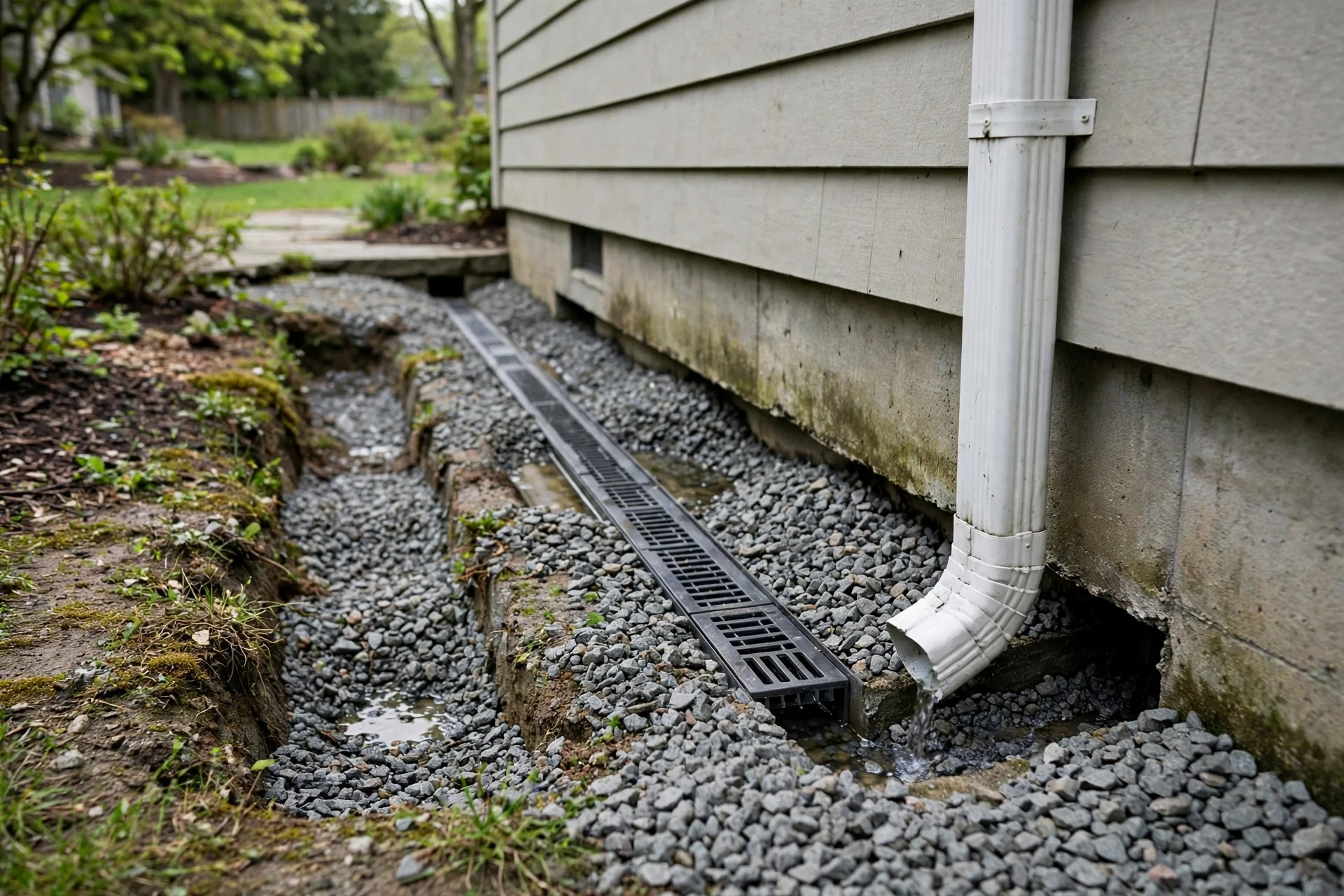
Foundation drainage usually fails quietly. Water collects against a wall a little at a time, soil stays damp for weeks, and the first visible sign is often a crack, a musty basement, or paint peeling near the floor. Exterior foundation inspection channels solve this by giving water a visible, checkable path around the building, so you can see how drainage is performing instead of guessing from inside the house. The short answer is that a channel system combines shallow surface channels, a few subsurface observation points, and a simple record of what you see after rain, and together they show whether water is moving away from the foundation or settling against it.
This guide explains how to read the ground around an existing building, how to set up inspection channels without disturbing the footing, and how to turn occasional observations into a drainage record that actually predicts trouble. It is written for homeowners with an existing house, not a new build, so every method works around finished landscaping, patios, and driveways.
Why Foundation Drainage Fails Silently Around Older Homes
Most foundation water problems start with small changes that nobody notices. Soil settles against the wall over the years and the original slope flattens out. A downspout extension gets removed during a garden project and never goes back. A patio is laid slightly higher than the damp-proof course, or a flower bed is built up against the wall and holds moisture like a sponge. Each change is minor on its own, but together they redirect water toward the foundation instead of away from it.
The damage then happens out of sight. Water sitting against a foundation wall increases hydrostatic pressure, pushes moisture through tiny cracks and porous concrete, and keeps the soil in a swollen, shifting state. In clay soils the cycle of wetting and drying alone can move a foundation enough to crack finishes inside. By the time a homeowner sees the result, the drainage fault has usually been there for seasons, which is exactly why a visible inspection system matters.
What an Inspection Channel Actually Shows You About Water Movement
An inspection channel is a shallow, open or covered channel set into the ground around the foundation that collects surface water and carries it to a visible outlet. Unlike a buried pipe, you can see what is happening inside it: how fast water moves after rain, whether it ponds in one spot, and whether silt or leaves are blocking the flow. That visibility turns drainage from a hidden system into something you can check in five minutes after a storm.
- Flow direction: standing water in a channel shows exactly where the ground falls toward the house instead of away from it.
- Blockage points: silt, leaves, or root growth collect at the same spots repeatedly, marking the places that need regular cleaning.
- Volume clues: a channel that overflows in ordinary rain is undersized or discharging into a blocked outlet.
- Seasonal patterns: comparing wet-season and dry-season behaviour shows whether the problem is storm runoff or a constantly high water table.
- Repair feedback: after a grading fix or a new downspout route, the channel shows within one rainfall whether the fix worked.
Channels work best as part of a small network rather than a single trench. A channel along the worst wall, one at each downspout outlet, and an observation point at the lowest corner of the lot together give a complete picture of how water behaves around the building, and they cost far less than excavating the whole perimeter to inspect a buried drain.
Reading the Ground: Grading, Soil, and Runoff Patterns Around the Foundation
Before digging anything, walk the property during or just after heavy rain and watch where the water goes. Look for soil sloping back toward the wall, low spots where puddles linger, mulch washed against the foundation, and downspout discharge landing within a metre of the wall. Mark these spots with flags or photos, because the pattern after rain is more honest than any plan drawn on a dry day.
| Ground Condition | What It Tells You | First Response |
|---|---|---|
| Soil slopes toward the wall | Runoff is directed at the foundation | Re-grade to fall away from the house |
| Puddles linger for days | Poor infiltration or a high water table | Add a channel or French drain to move water on |
| Mulch piled against the wall | Moisture is held against the masonry | Pull mulch back and leave a clear gap |
| Downspout dumps at the wall | Roof water is the main source | Add an extension or a channel to carry it away |
| Cracks with damp staining | Water is already entering the wall | Get a specialist assessment before covering it |
Soil type changes what the ground can do with water. Sandy soils drain quickly and rarely pond, but they also let water reach the footing fast. Clay soils hold water for days, swell when wet, and shrink when dry, which is why homes on clay need the most careful grading. A simple squeeze test of damp soil tells you a lot: sandy soil falls apart, loam holds a loose ball, and clay forms a smooth, sticky ribbon.
Surface Channels That Reveal Where Water Really Goes
Surface channels are the easiest inspection tool to install around an existing home. A shallow precast or formed concrete channel, a linear drain with a removable grate, or even a gravel-filled swale can be set along the base of a wall or across a path where water crosses. The grate or open top is the point: you lift it and look inside, and what you see tells you whether the channel is doing its job.
Place channels where water actually travels, not where they look tidy. The classic spots are along the wall that faces the slope, across the foot of a driveway that drains toward the house, and at the base of steps or patios where water pools. Connect each channel to a visible outlet, such as a soakaway, a storm drain, or a daylight outfall on a slope, so you can watch water leave the system as well as enter it.
Subsurface Inspection Points: Cleanouts, Observation Wells, and Test Pits
Surface channels only show surface water, so a complete system needs a few subsurface eyes as well. An observation well is a perforated pipe set vertically into the ground near the foundation, capped at the surface, that lets you measure the water level in the soil with a dipstick or a simple water-level tape. Two or three wells around the house, checked monthly, reveal whether groundwater rises against the footing after wet weather.
- Observation wells: vertical perforated pipes that show the groundwater level near the footing.
- Cleanouts: capped access points on buried perimeter drains, letting you flush and camera-check the pipe.
- Test pits: small hand-dug pits beside the wall, opened when damp appears, to inspect the wall face and soil directly.
- Moisture probes: simple probes pushed into the soil at the wall base to compare dampness between walls.
- Outlet checks: the discharge point of any existing drain, watched after rain to confirm water is actually leaving.
Do not dig test pits against a foundation without knowing the footing depth and the location of buried services. A pit should stay shallow, stay clear of the footing itself, and be backfilled the same day. If a pit reveals water sitting against the wall or a damaged damp-proof course, that is a finding to record and to show a specialist, not a problem to hide by backfilling quickly.
Installing a Perimeter Observation Channel Without Disturbing the Footing
The rule for any work near a foundation is to stay clear of the footing. Excavation close to an existing building can affect the soil supporting it, so establish the footing depth and the line of buried services before any digging, and keep channels at least a short distance out from the wall face rather than hard against it. Shallow channels rarely need deep excavation, which is one reason they suit existing homes so well.
Lay the channel on a compacted granular bed with a consistent fall toward its outlet, usually around one percent, and check the fall with a level as you go rather than trusting the eye. Bed precast sections in mortar or compacted sand so they do not rock, and leave removable grates or covers in place so the channel can be cleaned without tools. Where a channel crosses a path, use a load-rated grate and set it flush so it does not become a trip hazard.
Recording Drainage Performance Across Wet and Dry Seasons
A channel system only becomes a monitoring system when someone writes down what it shows. Keep a simple log: date, rainfall, water level in each observation well, whether channels flowed freely or ponded, and any debris found. A phone photo of each channel after heavy rain, taken from the same spot each time, builds a visual record that makes slow changes obvious.
| Season | What to Check | How Often |
|---|---|---|
| Wet season | Channel flow, well levels, outlet discharge | After every heavy rainfall |
| Dry season | Silt build-up, cracks in channel joints | Monthly |
| Autumn | Leaf blockage in grates and gutters | Every two weeks while leaves fall |
| Winter | Frost heave around channels, frozen outlets | Monthly, and after thaws |
The log pays off when a problem appears, because it shows whether the change is sudden or gradual. A well level that creeps up over three wet seasons points to a slowly failing drain or a changing water table, while a sudden jump after a neighbour’s landscaping project points to a new runoff source. Either way, the record gives a drainage contractor something concrete to work from instead of a vague complaint about damp.
Linking Channel Readings to Downspouts, Gutters, and Grading Fixes
Channels rarely fix a drainage problem by themselves; they reveal which fix is needed. If a channel overflows only when a particular downspout discharges, the answer is a downspout extension or a rainwater route that carries roof water further from the wall. If every channel ponds after rain, the ground itself needs re-grading or a new subsurface drain. If one wall is always wet while the others stay dry, look for a leaking pipe, a broken gutter joint, or a patio that slopes the wrong way on that side.
Fix one thing at a time and let the channels judge the result. Re-grade the worst wall first, then watch the next two rainfalls before moving on to the next fix. This patient sequence avoids spending money on a full perimeter drain when a five-metre downspout extension would have solved the problem, and it builds a record of what actually worked for the next owner as well.
Warning Signs That Call for a Drainage Specialist, Not a DIY Patch
Some findings mean it is time to stop digging and call a professional. Water entering a basement through a floor-wall joint, a foundation wall that is bowing or stepping, cracks that widen month by month, and persistent damp that returns within days of any repair all point to structural or groundwater problems beyond a channel’s scope. A specialist can run a camera through buried drains, test soil conditions, and design a system that a homeowner’s channel network can then monitor.
- Structural cracks: horizontal or stepped cracks in a foundation wall need an engineer’s eye, not a sealant.
- Rising water table: observation wells that stay full in dry weather suggest groundwater, not surface runoff.
- Repeated flooding: water entering living space in ordinary rain means the existing drainage has failed, not just clogged.
- Sewage or chemical smells: odours in a channel or well can indicate a broken drain that needs urgent attention.
- Neighbour runoff: water arriving from outside the property may need a legal or shared solution, not just a bigger channel.
Bring the log and the photos to the first visit. A contractor who can see a season of channel readings will diagnose faster and quote more accurately than one who starts from a single damp patch, and the channels will keep working after the repair as the early-warning system they were built to be.
Foundation Drainage Monitoring FAQs: Channels, Readings, and Repairs
How close to the foundation can an inspection channel be installed?
Keep the channel a short distance out from the wall face and never dig below or against the footing itself. Shallow surface channels are designed to sit clear of the foundation, and any deeper work should start with checking the footing depth and the location of buried services.
How often should observation wells be checked?
Check them monthly and after every heavy rainfall. The most useful readings are the ones taken over time, because a rising trend across a wet season tells you far more than a single measurement after one storm.
Can inspection channels replace a French drain?
No, they do different jobs. A French drain moves water away from the foundation, while an inspection channel shows you where water is going and whether the drainage is working. Channels often reveal that a French drain is needed, and then they monitor it afterwards.
What does standing water in a channel after rain mean?
It usually means the channel has too little fall, its outlet is blocked, or it is undersized for the water arriving at it. Clean the grate and outlet first, then check the fall with a level before assuming the channel needs replacing.
Do I need a permit to install drainage channels around my home?
Shallow surface channels usually do not need a permit, but rules vary by location, especially where channels connect to a public storm drain or alter runoff onto a neighbour’s land. Check with the local building department before connecting to any public system.
Final Thoughts: A Foundation That Tells You When Drainage Slips
Foundation drainage is one of those systems that only gets attention when it fails, and by then the repair is expensive. A few inspection channels and observation wells change that by making water visible: you see it arrive, you see it leave, and you see the week it stops behaving. Install the channels clear of the footing, keep the log honest, and fix one thing at a time. The foundation will not thank you, but it will stop surprising you, and that is exactly what a good monitoring system is for.