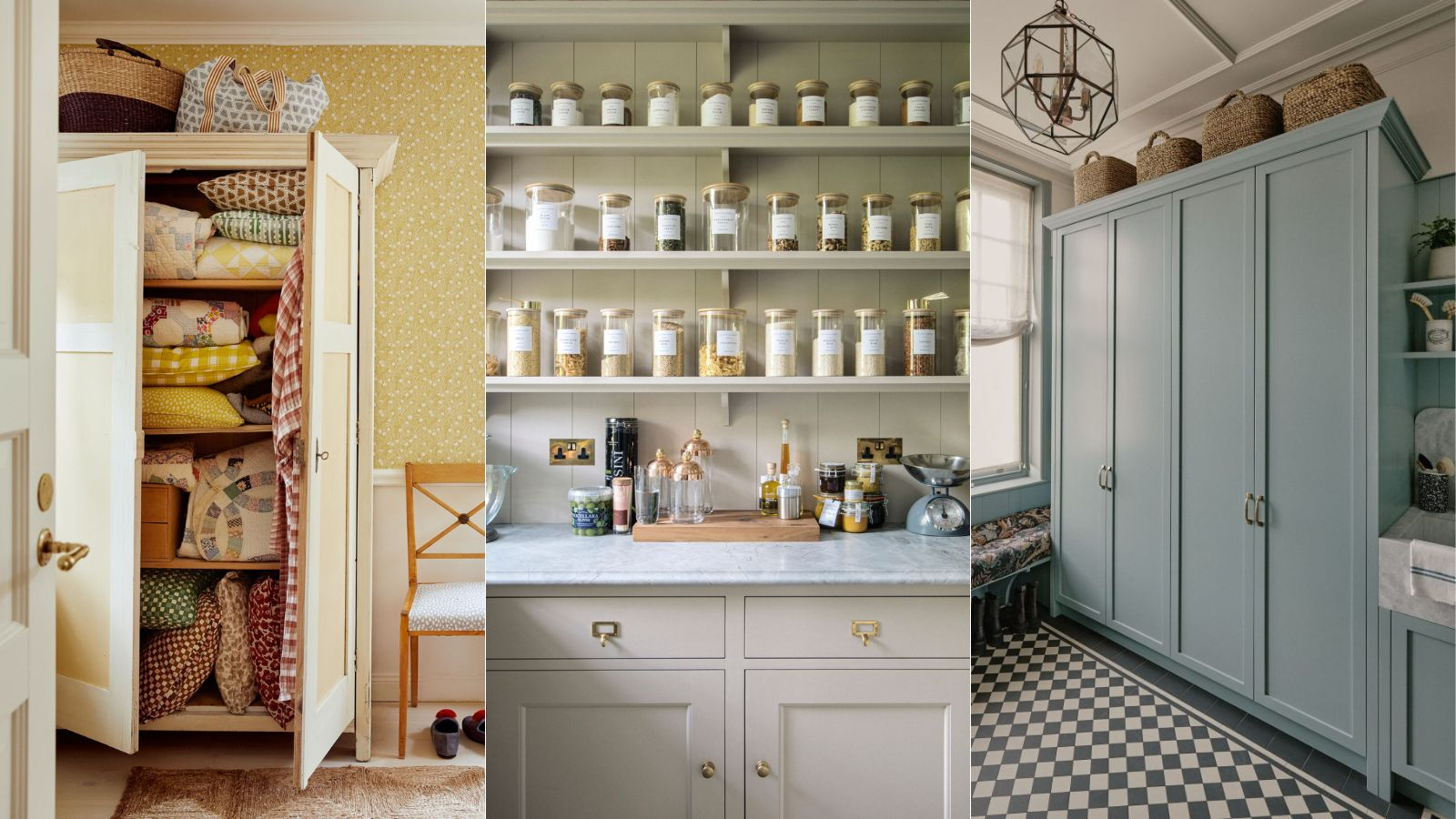
Every home has a spot where clutter collects: mail on the kitchen counter, shoes piled by the door, a closet that will not quite close. In most cases the problem is not that the house is too small. It is that everyday items have no clear, convenient place to go. When storage is awkward, people set things down wherever they land, and piles form within days.
Good storage works the opposite way. It puts the things you use most within easy reach, gives seasonal and rarely used items a home out of the way, and makes putting something back almost as quick as dropping it. The ideas in this article cover the whole house, room by room, with a mix of low-cost fixes you can do this weekend and larger upgrades worth planning for. None of them require a bigger house. They require a better plan for the space you already have.
Declutter Before You Add Storage
Buying bins and building shelves before you declutter is the most common storage mistake. It simply gives clutter a neater container, and it often leads to buying the wrong size or quantity of organizers. Start instead by removing what you no longer need, use, or love. Work one room, or even one drawer or shelf, at a time so the job stays manageable.
Sort items into four groups: keep here, move to another room, donate or sell, and discard. Be honest about duplicates and hopeful items. Most kitchens hold three spatulas where one good one would do, and most closets hold clothes that have not been worn in two years. A useful test is whether you would buy the item again today at full price. If not, it is probably taking up space another item needs.
Only after this pass should you measure what remains. Note how many linear feet of hanging clothes, how many pairs of shoes, and how many bulky items actually need a home. Those numbers tell you whether a $30 set of shelf dividers will solve the problem or whether a $300 closet kit is justified. Decluttering first routinely cuts the storage you need to buy by a third or more, and it makes every later decision in this article cheaper and simpler.
Built-In Storage for Living Areas
Living rooms carry a heavy load: books, games, blankets, remotes, toys, and media equipment, yet many have almost no storage beyond a sofa and a TV stand. Built-in units solve this by using wall space that furniture cannot. A pair of bookcases flanking a fireplace, a window seat with a hinged lid, or a low cabinet run beneath a window adds generous storage without shrinking the floor area.
Custom built-ins typically cost $1,500 to $5,000 or more depending on size and materials, but flat-pack bookcases with trim added to look built in can achieve a similar result for $300 to $800. Whichever route you choose, mix open shelves for display with closed cabinets below. Closed storage hides the visual noise of games, cables, and paperwork, while open shelves keep the room feeling light. Add baskets on open shelves for small items so they read as decor rather than clutter.
Furniture can work harder, too. A storage ottoman holds blankets and doubles as seating. A console table with drawers catches keys and chargers near the door. A lift-top coffee table hides remotes and laptops. When choosing pieces, measure the interior, not just the outside; thick walls and shallow drawers can halve the usable space. Give closed storage first to the wall where clutter naturally gathers.
Bedroom Closet Systems That Work Harder
The standard closet, one long rail with a shelf above it, wastes most of its volume. Shirts and pants hang in the lower half while the space below them and the corners go unused. A zoned closet system fixes this by dividing the closet into sections matched to what you own: double hanging for shirts and folded trousers, a tall section for dresses and coats, a bank of shelves for folded knits, and drawers or baskets for underwear, belts, and accessories.
Adjustable closet kits from home centers cost roughly $150 to $600 per closet and can be installed in an afternoon with a drill and a level. Custom systems run $1,000 to $3,000 or more but add drawers, better finishes, and exact fits. Either way, a few details matter. Keep everyday clothes between waist and eye level. Put a shelf or cubbies for shoes at the bottom rather than a floor pile. Use slim, matching hangers, which can free up to 20 percent more rail space compared with mixed bulky hangers. Add a small pull-out valet rod if you lay out outfits the night before.
Do not forget the closet door and the wall just outside it. Over-door hooks or a slim shoe organizer handle overflow, and a dresser drawer divider set, usually under $25, stops small items from tangling. If two people share the closet, assign each person a clear zone and a shared zone for seasonal items stored up high. Clear boundaries are what keep a shared closet organized after the first month.
Kitchen Storage Upgrades That Save Steps
Kitchens store more small items than any other room, and deep base cabinets swallow much of it. The single most effective upgrade is converting fixed shelves into full-extension pull-out drawers or trays. Items at the back become visible and reachable, so you stop buying duplicates of spices and cans you already own. Retrofit pull-outs cost about $50 to $150 per cabinet, while new drawer cabinets cost more but are worth including in any remodel.
Inside drawers, use dividers sized to the contents. A wide utensil tray, a knife insert, and a diagonal divider for long tools turn a jumbled drawer into one where everything has a slot. In cabinets, risers and turntables help with spices and oils, and a simple file-style rack keeps baking sheets, cutting boards, and lids upright instead of stacked in a sliding pile. A wall rail or magnetic strip keeps everyday cooking tools within reach of the stove and off the counters.
Treat the pantry, whether a closet, a cabinet, or a few shelves, as zones: breakfast items together, baking together, snacks together, and back-stock on the highest shelf. Clear labeled containers work well for flour, rice, and pasta because you can see quantities at a glance. Finally, claim the overlooked spots: the inside of cabinet doors for measuring cups and wrap, the narrow gap beside the refrigerator for a slim rolling cart, and the toe-kick space below cabinets, where shallow drawers can hold step stools and trays.
Bathroom Storage for Small Spaces
Bathrooms are usually the smallest rooms in the house and among the busiest. Start with the medicine cabinet. A recessed cabinet with adjustable shelves holds daily essentials behind the mirror at almost no cost in space, and replacing a flat mirror with one typically costs $100 to $400 installed. Choose models with mirrored interiors and, if the budget allows, an electrical outlet inside for charging a toothbrush or razor out of sight.
Under the sink, work around the plumbing with U-shaped drawers, stackable bins, or a two-tier sliding organizer, usually $20 to $60. Keep daily items in the top tier and cleaning supplies below, ideally in a caddy you can lift out. Vanity drawers benefit from shallow dividers for makeup and hair tools, and a heat-safe insert lets a hot styling tool be put away immediately instead of left on the counter.
Walls offer the rest. A cabinet or shelves above the toilet hold towels and spare toilet paper, a shower niche built during a remodel keeps bottles off the edges, and hooks on the back of the door hold robes well. In a very small bathroom, a slim rolling cart tucked beside the vanity can hold more than a cabinet and moves aside for cleaning. The rule is to give daily items the space at hand height and push refills and spares up high or down low.
Garage and Entryway Storage
Give the entryway a simple drop zone: a bench with cubbies for shoes, hooks at adult and child height, a tray for wet footwear, and a small drawer or basket for keys, mail, and sunglasses. Keep only the current season there and rotate the rest to a closet. In the garage, store by zone on wall shelves and pegboard: tools together, sports gear together, seasonal items in labeled bins overhead. Heavy items go low, chemicals up high or locked. Shelving units cost $60 to $150 each and free enough floor space to park the car.
Vertical and Hidden Storage Ideas
Look up before you look for more floor space. Tall, narrow bookcases, shelves above doors and windows, and hooks high on closet walls hold items you use occasionally. Then look inside and underneath: under-bed boxes for off-season clothing, storage ottomans and benches, drawers fitted under stairs, and organizers hung behind doors. Reserve hard-to-reach hidden spots for rarely used items, and label them clearly so nothing disappears into them.
Keeping Your Systems Maintained
- Label every bin, shelf, and drawer so everyone knows where things belong.
- Follow one in, one out: a new item means an old one leaves.
- Do a ten-minute weekly reset of counters, entryway, and living room.
- Review one zone each season and donate whatever went unused.
- Keep a donation box in a closet so clearing out never needs a special trip.
Final Thoughts
You do not need to organize the whole house in one weekend. Pick the room that frustrates you most, declutter it honestly, and add only the storage that fits what remains. Simple systems that everyone understands will always beat elaborate ones nobody maintains.
Frequently Asked Questions
Where should I start if every room feels cluttered?
Start with the entryway or the smallest room. Declutter it fully, add basic storage, and finish it before moving on. One completed space builds momentum.
How much should I budget for home storage?
Begin with $50 to $200 per room for bins, dividers, and hooks. Spend more only on closets, pull-outs, or built-ins you will use daily.
Are matching containers worth buying?
Only after decluttering and measuring. Function comes first: containers should fit the shelf, stack well, and be easy to open. Matching looks come second.
Where should seasonal items go?
Store them clean, in labeled bins, in high or remote spots: top closet shelves, under beds, or garage ceiling racks. Keep an inventory note on each bin.
How can families keep storage systems working?
Give everything a labeled home, keep hooks and bins at child height, and do a short weekly reset together so clutter never builds up again.