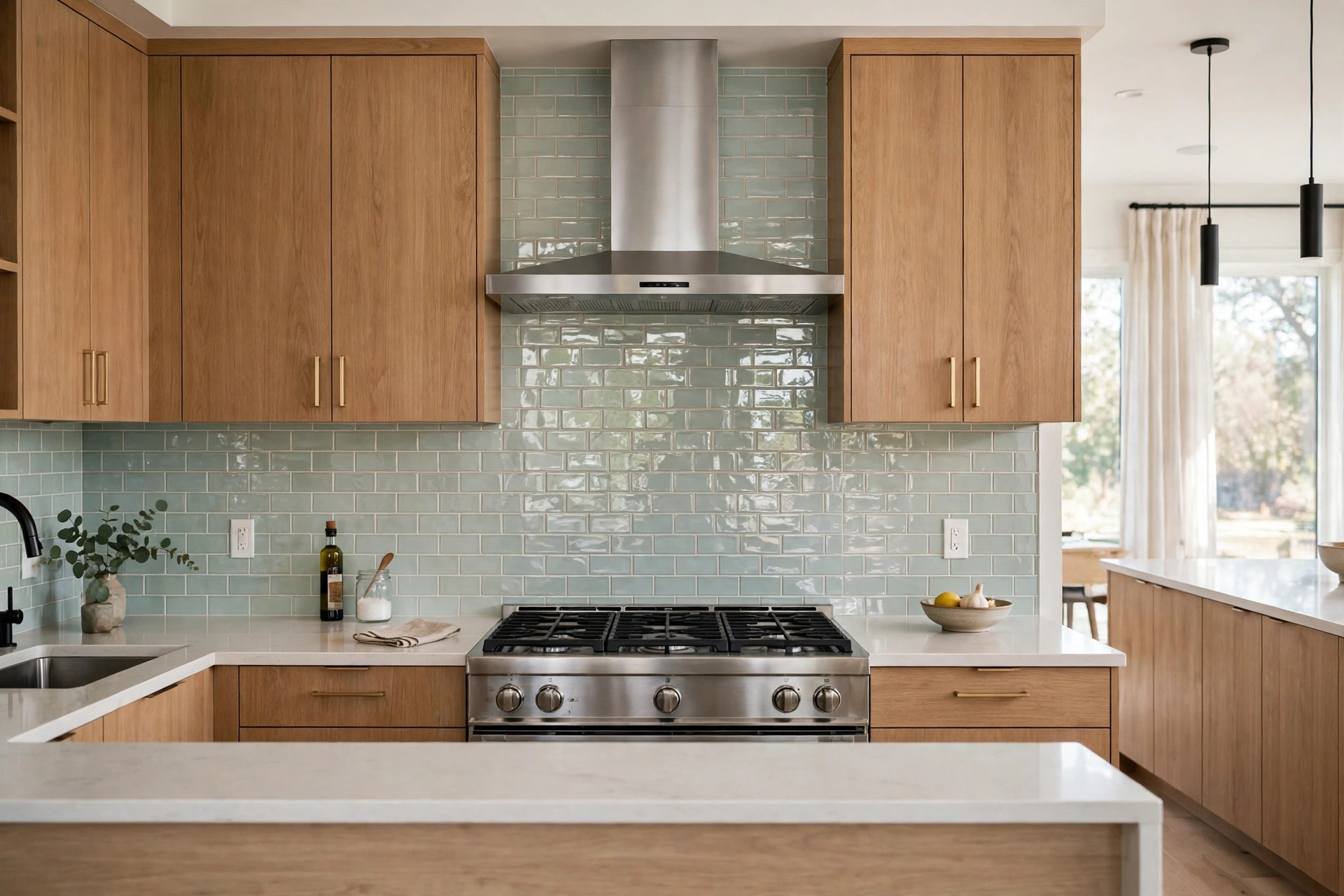
Every home cook knows the moment: oil pops out of the pan, tomato sauce spatters the wall, and steam leaves a sticky film behind the stove. A kitchen backsplash should take that punishment so your wall does not have to, but not every material handles it equally well. Some wipe clean in seconds, while others soak up grease, stain around the grout, and look tired within a year of regular cooking.
The short answer: glazed porcelain, glass, and stainless steel are the most grease-resistant backsplash materials for a hardworking kitchen, especially as large panels or large-format tiles with as few grout joints as possible. Glazed ceramic is a close, budget-friendly second. What matters most is how little the surface absorbs: smooth, non-porous materials keep splatter on top, where it wipes away, while porous or heavily textured materials let oil sink in, and once grease is inside a surface, no scrubbing fully removes it.
Why Cooking Grease Clings to Some Backsplash Walls and Slides Off Others
Grease is not like dust. Hot oil cools into a thin, sticky film that bonds to rough or absorbent surfaces, and steam from boiling pots carries tiny fat droplets across the whole cooking zone, not just behind the burner. Over weeks that film traps dust and food particles, which is why a backsplash can look yellowed even in a kitchen that gets wiped down often.
Two features decide how a material behaves. The first is porosity: a non-porous surface, like a factory glaze or a sheet of glass, gives oil nowhere to go, while a porous surface, like unsealed marble or cement grout, drinks it in. The second is texture: a glossy, flat surface gives grease nothing to grip, while matte and rough finishes give it tiny pockets to settle into. Heat matters too, since the wall behind a range sees repeated bursts of high heat, and materials that warp or crack under that stress create new places for grease to hide. Vinyl peel-and-stick panels, for example, can soften near a high-output gas burner, making them a poor choice for the direct splash zone.
Glazed Porcelain and Large-Format Tile: The Lowest-Upkeep Wall for Daily Cooks
If you cook most nights, glazed porcelain is the safest starting point. Fired hotter and pressed from more refined clay than standard ceramic, porcelain absorbs half a percent of water or less under industry standards, making it effectively non-porous. Oil, sauce, and steam have nothing to soak into, so warm soapy water is usually all it needs. It handles heat well, resists staining from acidic foods like tomato and lemon, and the tile face needs no sealing.
Format matters almost as much as the material. Large-format porcelain tiles and panels cover a wall with far fewer joints than small tiles, and every joint eliminated is one less groove for grease to collect in. A full-height porcelain slab behind a range is about as close to a wipe-and-forget backsplash as tile gets. The trade-off is installation: porcelain is hard and dense, so it needs a wet saw with a diamond blade and a polymer-modified mortar, and labour runs a little higher than for softer ceramic. Choose a smooth gloss or low-gloss finish rather than a heavily textured one if easy cleaning is your priority.
Glass Panels and Stainless Steel Behind a Hardworking Range
Glass is the other top-tier grease fighter. A sheet of back-painted or tempered glass has no pores, no texture, and no grout lines, so splatter sits on a perfectly smooth surface and wipes off with glass cleaner or a damp microfibre cloth. It also bounces under-cabinet light around the kitchen, which can brighten a small or dark cooking area. Glass tiles offer the same non-porous surface, though with grout joints to maintain, so a single panel is the lower-maintenance choice where the budget allows.
How Glazed Ceramic Subway Tile Stands Up to Frying, Steaming, and Sauce
Glazed ceramic subway tile became a kitchen classic for a practical reason: the glaze fused to the clay in the kiln forms a hard, smooth skin that resists grease and stains and wipes clean easily. It is also the most forgiving material to install, since ceramic is softer than porcelain and cuts with a basic tile cutter, keeping labour costs down and making it a realistic DIY project for a confident homeowner.
Quartz and Solid-Surface Slabs: A Seamless Wall With Nowhere for Grease to Hide
Running your countertop material up the wall as a full-height slab is one of the most effective ways to beat kitchen mess. Quartz is an engineered stone that is highly non-porous and stain-resistant by nature, so a quartz slab backsplash gives you a vast, seamless surface with no grout lines at all. Solid-surface materials behave similarly, and both wipe down in seconds while matching the counter below for a deliberately designed look.
Natural stone slabs can deliver the same seamless appearance, but with a catch: stone is naturally porous, so it must be sealed to resist grease and acidic splashes, and that sealer needs reapplying over time. Even well-sealed stone stains more readily than glazed tile or glass, and acidic foods can etch marble. If your heart is set on stone, treat sealing as part of the purchase and use pH-neutral cleaners rather than vinegar or abrasives. Slabs cost more than tile and need professional templating around outlets and corners. As a rough estimate only, installed costs for a quartz slab backsplash commonly run higher per square foot than standard tile work, so get local quotes before deciding.
The Grout Problem: Why Backsplash Joints Stain Long Before the Tiles Do
Ask homeowners what they regret about a backsplash and the answer is rarely the tile. It is the grout. Standard cement grout is porous, so it absorbs cooking oil and coloured liquids, yellows over time, and turns dark around the stove. Small mosaic tiles multiply the problem by creating a huge total area of grout, so if you love mosaics, use them as an accent away from the range rather than as the main cooking-zone wall.
Three choices keep grout from becoming the weak link. First, reduce joints with larger tiles or slabs. Second, choose a stain-resistant grout: epoxy grout needs no sealing, resists staining far better than cement grout, and is the standard choice for high-end kitchen work, though it is harder to install, so many DIYers hire it out. High-performance polymer-modified cement grout is a middle option. Third, pick a forgiving colour: white grout behind a stove shows every splash, while mid-grey or warm taupe hides discolouration. Sealer helps cement grout, but it is not magic: it wears away in a busy kitchen and typically needs reapplying every one to three years, and never seal over dirty grout, or you trap stains underneath.
Backsplash Surfaces That Trap Cooking Mess Instead of Shedding It
Some beautiful materials are a poor match for a hardworking cooking wall. Unsealed natural stone, including marble and travertine, is extremely porous: oil splatter soaks in almost immediately, acidic foods etch the surface, and permanent dark spots can appear within months of regular cooking. Sealed stone is better, but it still stains more readily than glazed tile or glass and demands ongoing sealing and gentle cleaners.
Matte and heavily textured finishes are the next trap. A matte tile looks soft and modern, but its rougher surface gives grease and food particles more to grip than a glossy finish does. The same applies to handmade-look tiles with uneven glazes and deep relief patterns, which catch splatter in their low spots. If you love the look, reserve textured tile for areas away from the stove, such as the sink wall, and put a smooth, glossy surface where the frying happens. Ordinary paint and wallpaper are worse still: even washable types stain from grease and cannot be scrubbed hard without damage.
Grease Resistance, Upkeep, and Installed Cost Compared at a Glance
Wiping, Degreasing, and Resealing: A Routine That Keeps a Cooking Wall Looking New
Even the best backsplash benefits from a simple routine, and most of the work is timing. Fresh grease wipes off easily; grease reheated by the next night’s cooking hardens and bonds. A quick wipe while the stove is still warm, not hot, after cooking prevents most buildup.
- Wipe after cooking: once the wall is warm rather than hot, wipe the cooking zone top to bottom with a microfibre cloth dampened with hot water and a few drops of dish soap.
- Let the cleaner dwell: leave the soapy solution on for a few minutes before wiping, so the soap breaks the grease down instead of you scrubbing it off.
- Degrease grout first: clean greasy grout lines before the tiles, with a soft brush and baking soda paste or a kitchen degreaser, so loosened grime does not streak clean tile.
- Rinse and dry: wipe with a clean damp cloth to remove soap residue, which attracts new dirt, then dry to prevent water spots, especially on glass and steel.
- Match the cleaner to the material: mild dish soap suits glazed tile, glass, and steel; use pH-neutral cleaners on stone, and never use vinegar or abrasive pads on stone or steel.
- Reseal on schedule: reapply penetrating sealer to cement grout and stone when water stops beading, typically every one to three years, and only after the surface is fully clean and dry.
When a Grease-Proof Backsplash Job Belongs With a Tile Setter or Fabricator
A confident DIYer can lay glazed ceramic subway tile well, but some grease-resistant options are genuinely better left to a professional. Full slabs of quartz, porcelain, or glass need precise templating, heavy handling, and cutting around outlets that leaves no room for error. Glass tile demands a flat substrate and specific mortars and grouts, and epoxy grout sets fast and leaves a haze if cleanup is slow, which is why many homeowners wisely let an installer handle it.
Grease-Proof Backsplash Questions Cooks Ask Before They Buy
Which backsplash material is truly the easiest to wipe clean after frying?
A seamless panel wins: back-painted glass, a quartz slab, or a large-format porcelain panel, because there are no grout lines and the surface is non-porous. If you prefer tile, large-format glazed porcelain with epoxy grout is the closest tiled equivalent.
Does sealing a tile backsplash stop grease stains for good?
No. Sealer on cement grout or natural stone reduces absorption and makes wiping easier, but it wears away in a busy kitchen and needs reapplying, typically every one to three years. Glazed porcelain, glass, and epoxy grout need no sealing at all.
Can I put a new grease-resistant backsplash over my existing tile?
Sometimes. Thin peel-and-stick panels can go over clean, flat existing tile, but for a proper tile or slab installation it is almost always better to remove the old backsplash first, so the new surface bonds well and sits flat.
Is matte tile really harder to keep clean than glossy tile behind a stove?
Yes, in practice. Matte finishes have a rougher micro-texture that gives grease more to grip, so they need more scrubbing than a smooth gloss finish. If you love matte, use it away from the range and put a glossy surface where the splatter lands.
What grout colour hides cooking stains best behind a range?
A mid-grey, warm taupe, or a tone that matches the tile hides discolouration far better than white, which yellows fastest where heat and grease combine. Pair the colour with epoxy or high-performance grout for the best stain resistance.
Will a glass backsplash crack from the heat of my gas stove?
Properly specified tempered or heat-rated glass handles normal cooking heat well, but glass can be sensitive to sudden temperature change, so confirm with the supplier that the product is rated for use directly behind your range, and have it installed by someone experienced with glass.
Picking the Backsplash Your Cooking Habits Can Actually Live With
The right grease-resistant backsplash is the one that matches how you actually cook. If you fry, sear, and simmer most nights, choose a non-porous surface with as few joints as possible: a porcelain panel, a glass sheet, a quartz slab, or large-format glazed tile with epoxy grout. If you cook lightly and love classic looks, glazed ceramic subway tile with a forgiving grout colour will serve you well. And if your heart is set on natural stone or mosaic, go in with eyes open: budget for sealing, accept the extra scrubbing, and keep the most demanding material away from the direct splash zone behind the range.