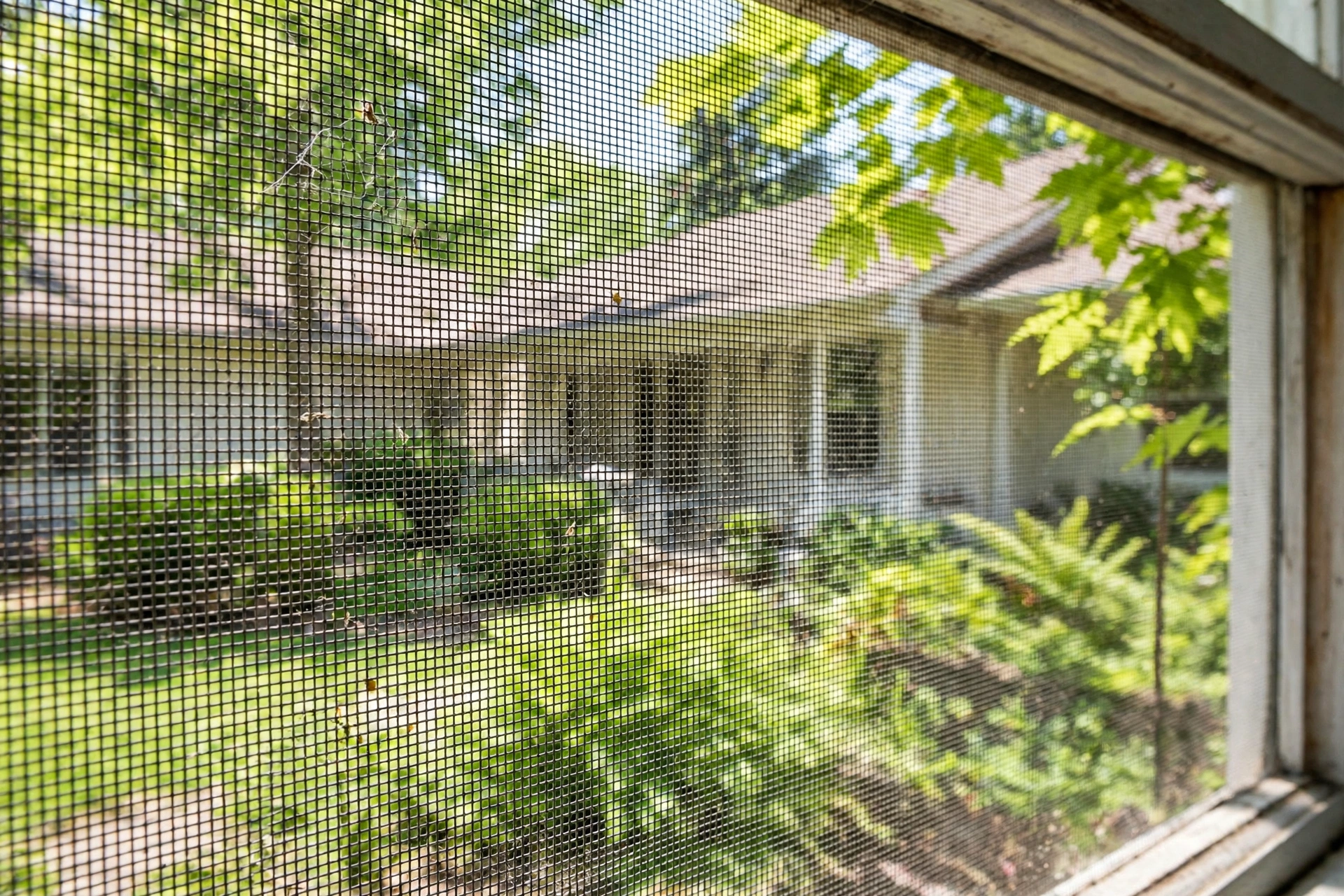
Opening the windows on a warm evening should cool the house, not invite mosquitoes, flies, and gnats indoors. The screen is the only thing standing between a fresh breeze and a room full of biting insects, yet most homeowners choose replacement mesh on price alone. The material and the weave matter as much as the frame they sit in.
Durable window screen materials that improve ventilation while keeping insects outside your home balance three things at once: openings small enough to stop the insects in your area, enough open space in the weave to let air pass, and a material tough enough to survive sun, pets, and years of use. For most homes, that balance is charcoal fiberglass in a standard 18 by 14 mesh. Where tiny biting midges are a problem, a tighter 20 by 20 weave is the better trade, and where durability matters most, aluminum or stainless steel earns its higher price.
The Breezy Answer: Charcoal Fiberglass in 18 by 14 Mesh for Most Windows
If you want one straightforward recommendation, here it is: for a typical home dealing with mosquitoes, flies, and moths, choose charcoal-colored fiberglass mesh in an 18 by 14 weave. It blocks the insects most households actually face, keeps roughly two-thirds of the screen area open to airflow, resists corrosion in damp weather, and costs less than metal mesh. It is also the easiest mesh to fit yourself, because it flexes into the frame channel without creasing.
That recommendation changes in three situations: no-see-ums or sand flies call for a 20 by 20 weave; dogs or children pushing against screens call for heavy vinyl-coated polyester pet mesh; and a coastal home or a wish for screens that last decades calls for aluminum or stainless steel.
How Mesh Count Decides Which Insects Stay Outside and How Much Air Gets In
Mesh count is the number of strands per inch in each direction. An 18 by 14 screen has 18 strands one way and 14 the other, leaving openings of roughly 1.2 millimeters, while a 20 by 20 screen has 20 strands both ways and openings closer to 0.9 millimeters. Smaller openings stop smaller insects but leave less open area for air, so standard mesh keeps out mosquitoes, houseflies, bees, and wasps while preserving a strong breeze, and finer mesh stops the tiny biters that slip through standard weave but trims airflow noticeably.
Moving from 18 by 14 to 20 by 20 can cut airflow by roughly a fifth to a third, depending on wire thickness. In a hot climate where open windows are your main cooling, that difference is felt on still evenings. A practical compromise is to mix weaves: fit the tighter mesh only on the windward or waterside windows where tiny insects arrive, and keep standard mesh everywhere else.
Fiberglass, Aluminum, and Stainless Steel Side by Side
Fiberglass is the workhorse of residential screens: woven glass fiber coated in vinyl, flexible, resistant to corrosion and denting, and easy to see through, especially in charcoal. Its weaknesses are tearing under sharp claws or heavy impact and a shorter life in harsh sun, typically around five to ten years. For most windows, though, it is the best value available.
Aluminum mesh is woven wire: it holds its shape, resists sagging, and suits high-traffic openings such as patio doors, lasting roughly ten to fifteen years. It can dent permanently if struck, and uncoated aluminum can oxidize in salty coastal air. Stainless steel is the premium metal option: corrosion-proof even in salt air, hard to cut, and good for twenty years or more, which also makes it useful as a security screen, though it costs more and dims the view slightly. Bronze, roughly 90 percent copper and 10 percent zinc, resists salt air beautifully and weathers to a dark patina that suits heritage properties, but it is among the most expensive options.
When a Tighter 20 by 20 Weave Is Worth the Breeze You Give Up
No-see-ums are the reason finer mesh exists. These biting midges are small enough to walk straight through standard 18 by 14 openings, and if you live near marshes, mangroves, rivers, or the coast, you may be bitten by insects you can barely see. A 20 by 20 weave closes those gaps, at a modest price premium of roughly ten to fifteen percent over standard mesh. The cost is real, though: airflow drops, the view softens, and the tighter weave traps more pollen and dust, so the screens need cleaning more often. Upgrade only where the tiny insects actually reach you.
Solar mesh blocks much of the sun’s heat and glare but dims the room and trims airflow further, while pollen mesh catches airborne particles at the same cost. Both are specialty tools for a specific room, not general-purpose insect screens.
Pet Claws, Sun, and Salt Air: Specialty Meshes for Hard-Working Windows
Some windows take more punishment than others. Pet-resistant mesh, made from heavy vinyl-coated polyester, is roughly seven times stronger than standard fiberglass against tears and punctures, making it the right call for screen doors and low windows where dogs lean and cats climb. Sun is the other quiet destroyer: south- and west-facing windows bake their mesh, and ultraviolet light gradually weakens vinyl-coated fiberglass, while polyester-based meshes resist it better. If only a few windows face the harshest sun, upgrading just those extends the life of the whole set without paying premium prices everywhere.
Charcoal Versus Bright Mesh: The Visibility Trick Most Shoppers Miss
Color affects how much you notice the screen. Dark mesh, especially charcoal or black, reduces glare and makes the weave fade from your vision when you look outward, so the outdoors looks clearer. Bright or silver mesh reflects light back at your eyes and can look hazy from inside on a sunny day. One exception: on a dark interior or at night, a bright screen is easier to see, which helps prevent people walking into a screened door. For most windows, charcoal is the better everyday choice.
Fitting a New Screen Without Gaps Insects Can Walk Through
Even the finest mesh fails if insects can walk around it. Gaps at the frame edges, a loose spline, or a screen that does not seat fully in its track are the usual entry points, and they are more common than mesh that is too coarse. Rescreening a standard window is a manageable weekend job, and a careful fit matters as much as the material you choose.
Take the frame out. Remove the frame, pry out the old spline, the rubber cord holding the mesh in the channel, and discard the old mesh.
Inspect the frame. Check the frame for bends, cracks, and corrosion. A bent frame will not seal, so straighten or replace it first.
Roll in the new mesh. Lay the new mesh over the frame with spare material on every side, then press new spline into the channel with a spline roller, keeping the mesh taut but not drum-tight.
Trim carefully. Trim the excess with a sharp utility knife, angled slightly into the channel so the cut edge sits below the frame surface.
Test the seal. Refit the frame and check the seal all the way around: no daylight gaps, no bowing, and latches holding the frame firmly in place.
On tension, aim for flat and firm: mesh pulled too tight bows the frame inward and opens corner gaps, while loose mesh sags and wears the spline out. If a frame is badly bent or corroded, a screen shop can build a replacement to measure.
What Rescreening a Window Costs, and Where the Estimate Creeps Up
Rescreening is one of the cheaper home improvements, but prices vary with size, material, and whether you do it yourself. The figures below are estimates based on commonly quoted ranges, and local labor rates will move them up or down.
- Do-it-yourself. DIY mesh and spline for one standard window: roughly $10 to $25 in materials, as an estimate.
- Standard window, professionally rescreened. Professional rescreening of a standard window: roughly $20 to $50 with the frame supplied, or roughly $40 to $100 per window including service, as estimates.
- Screen doors. Sliding screen doors: roughly $50 to $150 per door, as an estimate, because of the larger area and heavier frame.
- Specialty and large jobs. Specialty mesh adds a premium over standard fiberglass, and full patio or pool enclosures are priced by area, often roughly $0.75 to $1.50 per square foot for materials and labor, as an estimate.
Screen Slip-Ups That Let Bugs In Even With the Right Mesh
Most screen failures are not material failures. They are small oversights that undo an otherwise good choice.
- A frame left ajar. Leaving the frame slightly out of its track after cleaning. A screen that is not fully seated leaves a gap at one corner, and mosquitoes find it within minutes.
- Patching past the point of sense. Patching a torn screen repeatedly instead of replacing it. A mesh with several patches is usually near the end of its life and tears again beside the patch.
- Neglecting the doors. Forgetting the door screens. Windows get new mesh while the back door screen hangs torn all summer, and insects simply use the easier entrance.
Keeping Screen Mesh Breathing Freely Through the Seasons
Screens do their best work when they are clean and taut. Dust, pollen, and salt build up in the weave and gradually choke airflow, which is especially noticeable on finer meshes.
- Brush or vacuum screens gently in spring and autumn, and wash them with mild soapy water and a soft brush when grime is visible.
- Rinse coastal screens with fresh water several times a year to remove salt deposits.
- Check for tears after storms and after pets have leaned on low screens, and patch small holes promptly with a repair kit.
Window Screen Material Questions Homeowners Ask Before Replacing Mesh
Does a finer screen mesh always keep more insects out?
Almost always, but only up to a point. Finer mesh stops smaller insects, yet it also reduces airflow and visibility and traps more dust. The best mesh is the coarsest one that still stops the insects in your area.
Will a 20 by 20 screen make my rooms noticeably stuffier?
Somewhat, yes. Expect roughly a fifth to a third less airflow than standard mesh on still days, though on breezy days the difference is less obvious. If only some windows face tiny insects, fit the tighter weave there and keep standard mesh elsewhere.
How long should a fiberglass window screen last?
Typically five to ten years, depending on sun exposure, weather, and handling. Shaded, sheltered windows last longer; sun-baked and coastal screens wear faster. Aluminum generally lasts ten to fifteen years, and stainless steel twenty years or more.
Can I fit pet-resistant mesh on a normal window frame?
Yes, in most cases. Pet-resistant polyester mesh is thicker and heavier than standard fiberglass, so it needs a slightly larger spline size and a frame in good condition, but it fits standard channels.
Is stainless steel screening worth the extra cost?
It is worth it where durability or security matters: coastal homes, ground-floor windows, and high-traffic doors. For an ordinary upstairs window in a mild climate, fiberglass gives the same insect protection for much less money.
Do screens need professional fitting, or is rescreening a DIY job?
Rescreening a standard window is a realistic DIY job with a spline roller and a little patience, and it saves the labor cost. Call a screen shop when frames are bent or corroded, windows are oversized, or you want security mesh fitted gap-free.
Picking the Mesh Your Home Will Live With for Years
The durable window screen material that improves ventilation while keeping insects outside your home is not a single product. It is the combination that fits your insects, your climate, and your windows: charcoal fiberglass in 18 by 14 mesh for most homes, a 20 by 20 weave where tiny biters rule, pet-resistant polyester where claws test the mesh, and stainless steel or bronze where salt air and decades of service matter. Fit it carefully, keep it clean, and replace it when it goes brittle.