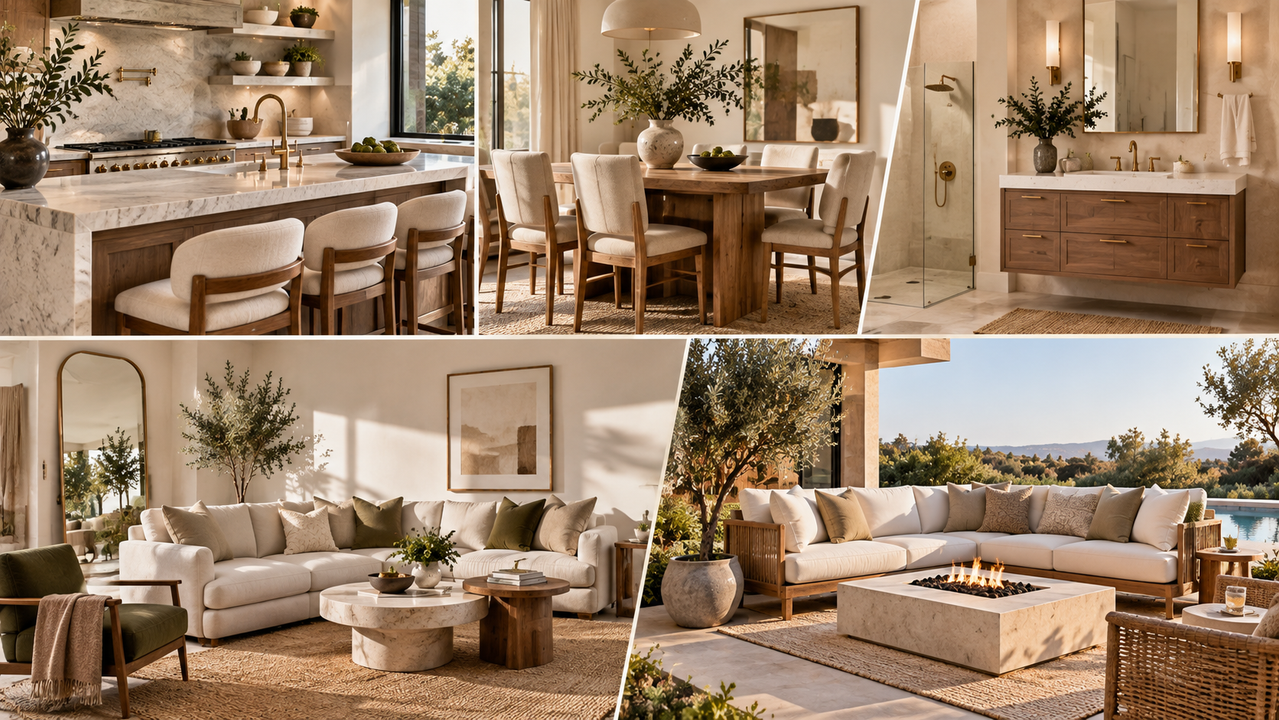
An elegant home is rarely the result of a large budget. It comes from a series of thoughtful choices: a coherent palette, layered light, honest materials, and the discipline to remove what does not belong. The upgrades in this guide work in every room, from the living room to the smallest bedroom, and most of them cost far less than a full renovation. The goal is not a showroom, but a home that feels calm, beautiful, and unmistakably yours, where every room looks finished without feeling fussy.
Elegance Is Editing: The Mindset Behind Beautiful Rooms
Elegance starts with subtraction, not addition. Before buying anything new, edit the room: remove the extra cushions, the duplicate frames, the ornaments that arrived as gifts and never earned their place. A room with breathing space around its objects looks expensive, while a room crowded with decoration looks busy no matter how much it cost. Keep only what is beautiful, useful, or genuinely loved, and give each remaining piece room to be seen.
The second part of the mindset is restraint in number. Choose one focal point per room, whether it is a piece of art, a fireplace, or a statement light, and let everything else support it quietly. Two focal points compete; three create noise. The same restraint applies to colour and pattern: a room with two or three colours and one pattern feels composed, while a room with five colours and three patterns feels restless. Elegance is the confidence to stop before the room is full.
Architectural Details That Make Plain Walls Look Custom
Plain drywall can feel flat and uninspired, but a few architectural details change that completely. Picture-frame wall moulding, made from primed pine or polyurethane strips, adds depth and shadow lines to a dining room, hallway, or living room for a modest cost, and it can be fitted with a mitre saw and a finishing nailer over a weekend. Taller skirting boards, five to seven inches instead of the standard three, make a room feel grounded and custom-built the moment you walk in.
Crown moulding softens the line where wall meets ceiling and draws the eye upward, which makes a room feel taller and more finished. In rooms with a central light, a ceiling medallion above a chandelier adds a classical touch that instantly elevates the whole ceiling. Wainscoting or beadboard in a hallway or bathroom adds texture and protects the lower wall from scuffs at the same time. These details work because they add shadow, line, and craftsmanship, the qualities that separate a builder-grade room from a considered one.
A Cohesive Colour Palette That Ties Every Room Together
Colour sets the emotional tone of a home, and the most elegant homes use a restrained palette carried from room to room. Start with warm off-whites for the main walls, such as shades with a hint of cream or greige rather than stark hospital white, then add one deeper accent colour that repeats in small doses: a forest green, a deep navy, or a warm terracotta. When the same accent appears in a cushion, a piece of art, and a painted door, the house feels connected.
The palette should change gently from room to room, not restart in every doorway. Bedrooms can go slightly deeper and warmer for calm, bathrooms can go cooler and cleaner, but the underlying neutrals should stay the same family so the transitions feel natural. Test paint on a large board and look at it in morning and evening light before committing.
Lighting, Mirrors, and the Illusion of Space and Light
Lighting is the fastest upgrade from ordinary to elegant. A three-layer scheme, ambient, task, and accent light, gives a room depth that a single ceiling fitting never can. Replace basic flush mounts with a statement pendant or chandelier, add table lamps and wall sconces at eye level, and fit dimmers so the same room can shift from bright daytime to soft evening. Warm-white bulbs between 2700K and 3000K flatter skin, wood, and fabric, while cool daylight bulbs make even a beautiful room feel clinical.
Mirrors are the other tool for light and space. A large mirror placed opposite or near a window reflects daylight back into the room, making it feel brighter and more open. Tall mirrors draw the eye upward and create an instant bigger-room effect, which is especially useful in small living rooms and narrow hallways. Choose a mirror with a frame that matches the room’s metal finishes and hang it at eye level.
Textiles and Texture: The Soft Layer of Elegance
Texture is what makes a room feel luxurious to the touch as well as to the eye. Mix materials deliberately: velvet cushions against linen, a wool throw over a leather chair, a silk curtain beside a matte plaster wall. Each material catches the light differently, which adds depth without adding colour or clutter. Layering fabrics through cushions, throws, and curtains is one of the easiest ways to make a room feel more expensive, because the eye reads the variety as richness.
Rugs anchor a room and should be large enough that the front legs of all seating sit on them; a too-small rug shrinks the space visually. Curtains deserve the same attention: floor-length, made-to-measure curtains hung from a rod close to the ceiling draw the eye upward and make windows feel grand, while short, ill-fitting curtains cheapen even a well-furnished room.
Hardware, Fixtures, and the Small Details Guests Notice
Small details carry surprising weight in an elegant home, because they are the things hands touch every day. Replacing generic chrome cabinet knobs with solid brass, matte black, or brushed nickel hardware changes how a kitchen or bathroom feels for a modest cost. The same applies to door handles, light switches, and tapware: when the finishes match across a room, the space reads as considered and complete, while mixed finishes read as unfinished.
Choose one metal finish per room and repeat it consistently, from the cabinet pulls to the mirror frame to the light fittings. Brass brings warmth, matte black brings definition, and polished nickel brings a cool, classic shine; all three can look elegant, but mixing them carelessly rarely does. Spend on the pieces you touch most, such as taps and handles, because their weight and smooth action are noticeable every day.
Art, Shelves, and One Confident Statement Piece Per Room
Art is the fastest way to give a room personality, and scale matters more than price. One large piece of art makes a stronger, more sophisticated statement than several small ones scattered across a wall, because it creates a single focal point and avoids visual clutter. Hang art at eye level, roughly 145 to 155 centimetres to the centre, and keep frames consistent within a room, all black, all oak, or all brass, so a collection reads as intentional.
Shelves should be curated, not filled. Group objects in odd numbers, vary their heights and shapes, and leave breathing space between groups so each piece can be seen. A shelf with three beautiful objects and empty space looks elegant; a shelf crammed edge to edge looks like a shop. Choose one confident statement piece per room and let it anchor the space while everything else stays quiet.
Bringing Nature In: Plants and Natural Materials
Plants and natural materials soften a room in a way no manufactured object can. A large plant in a corner adds height, colour, and life, while smaller plants on shelves and windowsills bring a room to life at eye level. Choose plants that suit the light in each room, and use simple pots in ceramic, terracotta, or woven baskets that match the room’s palette, because a beautiful plant in a plastic pot loses half its effect.
Natural materials work the same way throughout the house: timber, stone, linen, wool, and rattan add warmth and texture that synthetic surfaces cannot match. A timber side table, a stone tray, or a linen cushion each adds a small note of nature, and together they keep a room from feeling cold or artificial. Keep the materials honest and the palette restrained, and the room will feel calm and grounded.
| Upgrade | Best rooms | Elegance it adds | Rough cost |
| Warm bulbs + dimmers | Every room | Soft, flattering glow | Low |
| Floor-length curtains | Living, bedroom | Taller windows, grand feel | Moderate |
| Picture-frame moulding | Dining, hallway, living | Custom, tailored walls | Low to moderate |
| Brass or matte black hardware | Kitchen, bathroom | Jewellery for the room | Low |
| Large mirror | Hallway, living room | Light and spaciousness | Moderate |
| One statement piece | Any room | A focal point with confidence | Moderate to high |
| Large rug, right size | Living, bedroom | Anchored, complete seating | Moderate |
Elegant Interior Mistakes That Make Rooms Look Busy, Not Beautiful
The most common elegance mistake is buying too much. A room that is filled to the edges with furniture, cushions, and decoration has no breathing space, and the eye has nowhere to rest. Edit ruthlessly, leave empty surfaces, and let the room’s best pieces be seen. A second mistake is following every trend at once: a room with a trendy colour, a trendy pattern, and trendy furniture all together will date quickly.
Other mistakes are small but visible. Hanging art too high, choosing a rug that is too small, mixing three metal finishes in one room, or using cool daylight bulbs in a living area all quietly undermine elegance. The elegant home is not the one with the most beautiful objects; it is the one where the beautiful objects can actually be seen.
When Elegant Upgrades Need a Professional Finish
Many elegant upgrades are safe do-it-yourself work: painting, hanging art, fitting shelves, swapping hardware, and changing light bulbs. The line is crossed when the work involves electrics, structural changes, or heavy fittings. Installing a chandelier, fitting a dimmer switch, or adding new circuits needs a licensed electrician, and hanging a very heavy mirror or art piece needs fixings rated for the weight and the wall type, which a professional can confirm.
For moulding, wainscoting, and made-to-measure curtains, a professional finish is often worth the cost, because the difference between a good and a great result is in the mitred corners, the level lines, and the clean joins. Get a written quote, check recent work, and confirm the scope before anyone starts. A professional’s tidy mitre joint or perfectly hung curtain is the kind of detail that makes a room look expensive, and it is very hard to achieve on a first attempt.
Final Thoughts: Beautiful, Elegant Rooms Built One Thoughtful Choice at a Time
Beautiful, elegant rooms are not bought in one shopping trip. They are built one thoughtful choice at a time: editing what does not belong, choosing a palette that flows through the house, layering warm light, adding texture, and spending on the details hands touch every day. Start with the room you spend your evenings in, remove what crowds it, add one good light and one statement piece, and let the rest follow.
Stylish Interior Upgrade FAQs
How can I make my home look elegant on a small budget?
Start with editing and lighting, which cost almost nothing: remove clutter, swap bulbs to warm white, and add a dimmer. Then add one large mirror, floor-length curtains, and new cabinet hardware. These small changes make a room feel elegant for a fraction of a renovation budget.
What colours make a home look elegant?
Warm off-whites, soft greys, and muted neutrals create a calm, timeless backdrop, with one deeper accent colour repeated in small doses. Avoid stark white, which can feel cold, and avoid using five competing colours in one room. Test paint in morning and evening light before committing.
Should every room have the same style?
The rooms should share a palette and a metal finish so the house feels connected, but each room can have its own character. A bedroom can be deeper and softer, a bathroom cooler and cleaner, while the underlying neutrals stay the same family. Consistency in the bones and variety in the details is the balance to aim for.
How big should a rug be in a living room?
Large enough that the front legs of all seating sit on it, which usually means a rug that extends at least 15 to 20 centimetres beyond the sofa on each side. A too-small rug makes the room look smaller and the furniture look disconnected, while a properly sized rug anchors the whole seating area.
What is the best first upgrade for a plain room?
Lighting, because it changes how everything else in the room looks. Swap to warm-white bulbs, add a lamp at eye level, and fit a dimmer. After lighting, a large mirror and floor-length curtains give the biggest visual improvement for the money.
Do I need a professional for elegant interior upgrades?
Most styling upgrades, such as painting, hanging art, and swapping hardware, are easy DIY jobs. Hire a licensed electrician for new light fittings and dimmers, and consider a professional for moulding, made-to-measure curtains, and heavy mirrors, where a precise finish makes the difference between good and elegant.