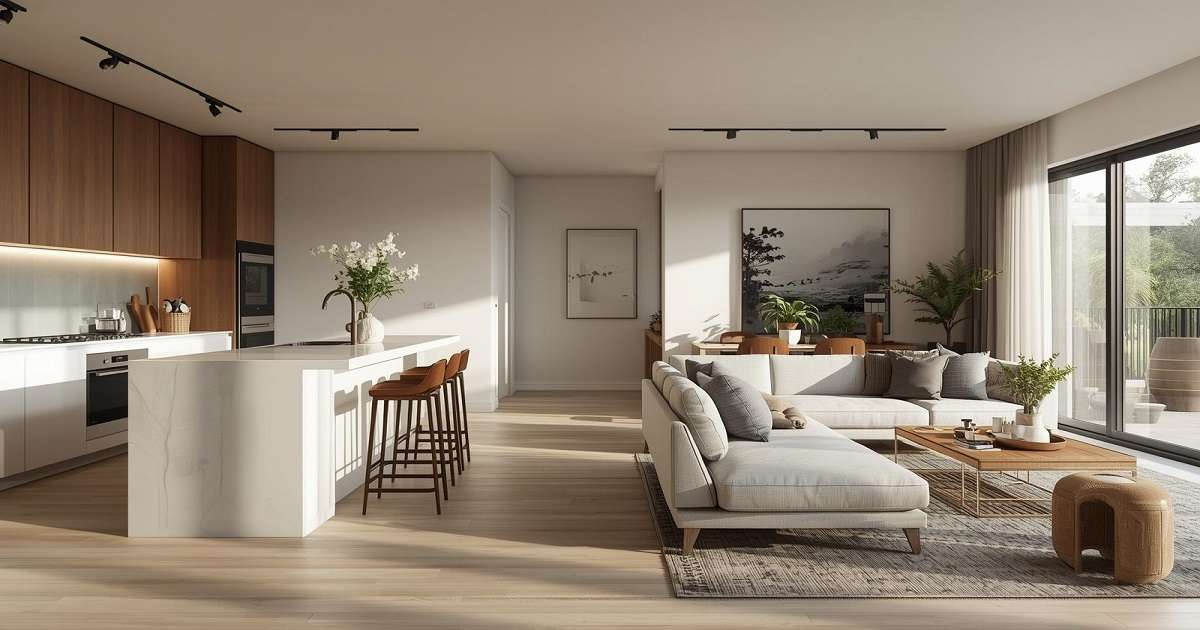
A beautiful modern interior is not about following one strict style. It is about clean lines, honest materials, comfortable furniture, and a calm palette that lets the rooms breathe. The most successful renovations balance style with comfort, so a home looks polished in photographs and still feels welcoming when you walk in with muddy shoes and a bag of groceries.
The short answer is to renovate room by room with one shared design language: a consistent colour palette, matching flooring, and lighting in three layers throughout the home. Start with the rooms you use most — the living room and kitchen — then carry the same palette and materials into bedrooms and bathrooms. The solutions below show how to do that without losing warmth or spending more than you need to.
Defining Modern Style for Your Own Home Before You Renovate
Modern style means different things to different people, so define it for your own home before you spend anything. Collect images of rooms you love and look for the pattern: are they mostly white and minimal, or warm and layered? Do they use natural wood, matte black metal, or soft textiles? That pattern is your style, and writing it down in two or three sentences gives every later decision a test — if a choice does not fit the sentence, it does not belong in the renovation.
A practical way to lock in your direction is a simple mood board: one paint colour, one flooring sample, one fabric, and one metal finish. If those four pieces look good together, your whole home will. Keep the board visible during the renovation and check every purchase against it. This small habit prevents the most common renovation problem — a home full of individually lovely things that do not belong together.
Modern Colour Palettes That Make Interiors Feel Calm and Stylish
Modern interiors usually start with warm neutrals rather than stark white. Shades with subtle undertones — warm off-whites, soft greys, greige, and gentle earth tones — reflect light softly and make rooms feel calm. Add depth with one darker accent colour in a dining room, bedroom, or study, such as a deep green, navy, or charcoal, and repeat it in cushions, art, or a rug so it feels deliberate.
Colour drenching — painting walls, trim, and doors in the same shade — can make a small room feel larger and more cohesive, especially in a study or powder room. In larger rooms, keep ceilings and trim a shade lighter than the walls to preserve a sense of height. Always test paint on a large swatch in the actual room, because a colour that looks perfect in a shop can look completely different under your own lighting.
- Choose a palette of three colours: a main neutral, a secondary tone, and one accent.
- Test paint samples on the wall for at least two days before committing.
- Repeat the accent colour in at least two places per room so it feels intentional.
Flooring Solutions That Anchor a Modern, Comfortable Interior
Flooring is the largest single surface in a home, so it sets the tone for every room. Running the same flooring through living areas creates flow and makes a home feel larger, while bedrooms can take a softer option such as carpet or a warm wood. Engineered wood offers the look of solid timber with better stability, and luxury vinyl plank gives a convincing wood or stone look with excellent resistance to water and wear in busy family homes.
In kitchens and bathrooms, durability matters more than anything. Large-format porcelain tiles reduce grout lines and are easy to clean, while waterproof laminate and vinyl are practical choices for homes with children or pets. Underfloor heating under tile or stone transforms a bathroom or kitchen in winter and is far easier to install during a renovation than afterwards, so plan for it early if you are already lifting floors.
Modern Kitchen Renovation Solutions With Style and Storage
A modern kitchen should look calm and work hard. Handleless cabinets in a matte finish, a large island with seating, and a backsplash that runs to the ceiling create a clean, contemporary look. Inside, the real renovation value is storage: deep drawers for pots, pull-out larders, vertical dividers for trays, and a dedicated drawer for cutlery and utensils keep the worktops clear and cooking efficient.
Appliances should be chosen for how they fit the design, not just for features. Integrated or panel-ready appliances disappear into the cabinetry and keep the kitchen looking seamless, while a statement range or a beautiful tap can be the room’s jewellery. Quartz worktops are a popular choice because they are durable, non-porous, and available in a wide range of colours that suit modern interiors.
Bathroom Renovation Solutions for a Modern, Spa-Like Interior
Modern bathrooms feel like a spa when they are calm, well-lit, and easy to clean. A walk-in shower with a frameless glass panel, a floating vanity with drawers, and a large mirror with integrated lighting are the three changes that transform most bathrooms. Large-format tiles on the walls reduce grout and make the room feel bigger, while a single feature tile or a textured wall adds personality without clutter.
Storage is what keeps a bathroom looking like a spa rather than a cupboard. Recessed niches in the shower wall, a mirrored cabinet, and a vanity with proper drawers hide the everyday bottles and brushes that otherwise crowd the counter. Choose fittings in one finish — brushed brass, matte black, or polished chrome — and repeat it across taps, shower, and hardware so the room feels designed rather than assembled.
Living Room and Bedroom Renovation Solutions for Modern Comfort
In the living room, a modern renovation usually means a better layout, better lighting, and furniture that invites people to stay. A comfortable sofa with clean lines, a rug large enough for the front legs of all seating, and a media wall or low console that hides cables will change the room more than any single decoration. Add a reading chair near a window and a floor lamp, and the room gains a quiet corner for evenings.
Bedrooms should be the calmest rooms in the house. A modern renovation here means a comfortable bed with a simple upholstered headboard, blackout lining for sleep, layered lighting with dimmers, and wardrobes with proper internal storage. Keep the palette soft and the surfaces clear — a bedside table with one lamp, one book, and one glass of water is the goal. Clutter in a bedroom affects sleep more than most people realise.
Lighting Layers That Give Modern Interiors Their Warmth
Modern interiors can feel cold when they rely on a single overhead light, so lighting should be layered in every room. Ambient light from ceiling fixtures or recessed lights provides general brightness, task lighting from pendants, reading lamps, and under-cabinet strips serves specific activities, and accent lighting from picture lights, sconces, or LED strips adds depth and warmth. Dimmers on the main circuits let one room shift from bright to intimate in seconds.
Warm white bulbs, around 2700K to 3000K, suit living rooms and bedrooms, while slightly cooler light works in kitchens and bathrooms where you need to see clearly. Statement fixtures — a sculptural pendant over a dining table or a pair of sconces beside a bed — act as jewellery for the room, so choose them carefully and keep the rest of the lighting simple and consistent.
Modern Renovation Pitfalls That Make Stylish Interiors Feel Cold
The most common pitfall in a modern renovation is removing all texture and warmth in pursuit of a clean look. A room with only smooth white surfaces, chrome, and glass will feel like a showroom, not a home. The fix is to layer natural materials — wood, wool, linen, stone, and leather — so the eye and the hand have something warm to rest on. A single wooden side table or a wool throw can change the whole feeling of a room.
Other pitfalls include choosing a palette that is too grey, buying furniture that is too small for the room, and filling the home with matching sets. Grey-on-grey interiors can feel flat without a warm accent, undersized sofas and rugs make a room look unfinished, and matching furniture sets remove the personality that makes a home feel lived in. Mix one or two different pieces, add a personal object or two, and the room will feel modern and human at the same time.
When Modern Interior Renovation Work Needs a Licensed Professional
Painting, styling, and simple furniture assembly are safe DIY projects, but much of a modern renovation is not. Moving walls, rewiring, relocating plumbing, installing a new bathroom, or fitting underfloor heating all require licensed professionals, and most regions require permits and inspections for structural, electrical, and plumbing work. A mistake in any of these areas can be dangerous and expensive to fix.
Hire a professional whenever the work affects safety, structure, water, gas, or electricity, and whenever the finish must be flawless — such as a perfectly levelled floor, a seamless plaster finish, or a fitted wardrobe. Get at least three written quotes, check references and insurance, and agree the full scope, materials, and payment schedule in writing before work begins.
Beautiful Modern Interior Renovation FAQs
What makes an interior look modern rather than just new?
Modern interiors share clean lines, a calm palette, uncluttered surfaces, and natural materials used honestly. The difference is coherence — one palette, one flooring direction, and consistent lighting throughout the home, rather than a collection of unrelated new things.
How can I make a modern interior feel warm and comfortable?
Layer natural textures such as wood, wool, linen, and leather, use warm white lighting, and add soft furnishings in a consistent accent colour. A rug, a throw, and a wooden piece of furniture in each room will warm up even the most minimal interior.
Should I renovate the whole house at once or room by room?
Room by room is usually kinder to your budget and your daily life, as long as you keep one shared design language across rooms. Renovating the whole house at once can be faster and cheaper per room, but it usually means moving out or living through significant disruption.
What flooring is best for a modern interior?
Engineered wood and luxury vinyl plank are the most versatile choices for living areas, while large-format porcelain tile suits kitchens and bathrooms. Running one flooring through the main living areas creates flow and makes the home feel larger.
How do I choose a modern colour palette?
Start with a warm neutral you can live with for years, add one secondary tone, and one accent colour that you genuinely like. Test large swatches in the actual room for two days, and check the palette against your flooring and furniture before buying paint.
Is it worth hiring an interior designer for a modern renovation?
For a single room, careful planning is usually enough. For a whole-home renovation, a designer can save money by preventing mismatched purchases, coordinating trades, and producing a coherent plan that a contractor can follow. Ask for a clear fee structure before committing.
Final Thoughts: Stylish, Comfortable, Modern Interiors That Feel Like Home
A beautiful modern interior is not a magazine page. It is a home where the palette calms you, the light flatters the rooms, the furniture invites you to sit down, and the storage keeps life tidy without effort. Renovate with one shared design language, invest in light and flooring, layer in natural warmth, and let the rooms grow with your family. That is how a modern interior stays stylish and comfortable for years, not just for a season.
| Renovation solution | Style impact | Typical cost range | Best for |
| Consistent flooring throughout | High — creates flow | Moderate to high | Open-plan and family homes |
| Layered lighting with dimmers | High — warmth and flexibility | Low to moderate | Every room |
| Modern kitchen with island | High — the heart of the home | High | Homes needing a kitchen refresh |
| Spa-like bathroom refresh | High — daily luxury | Moderate | Tired bathrooms |
| Warm neutral palette | Medium — calm, cohesive feel | Low | Any home, quick change |