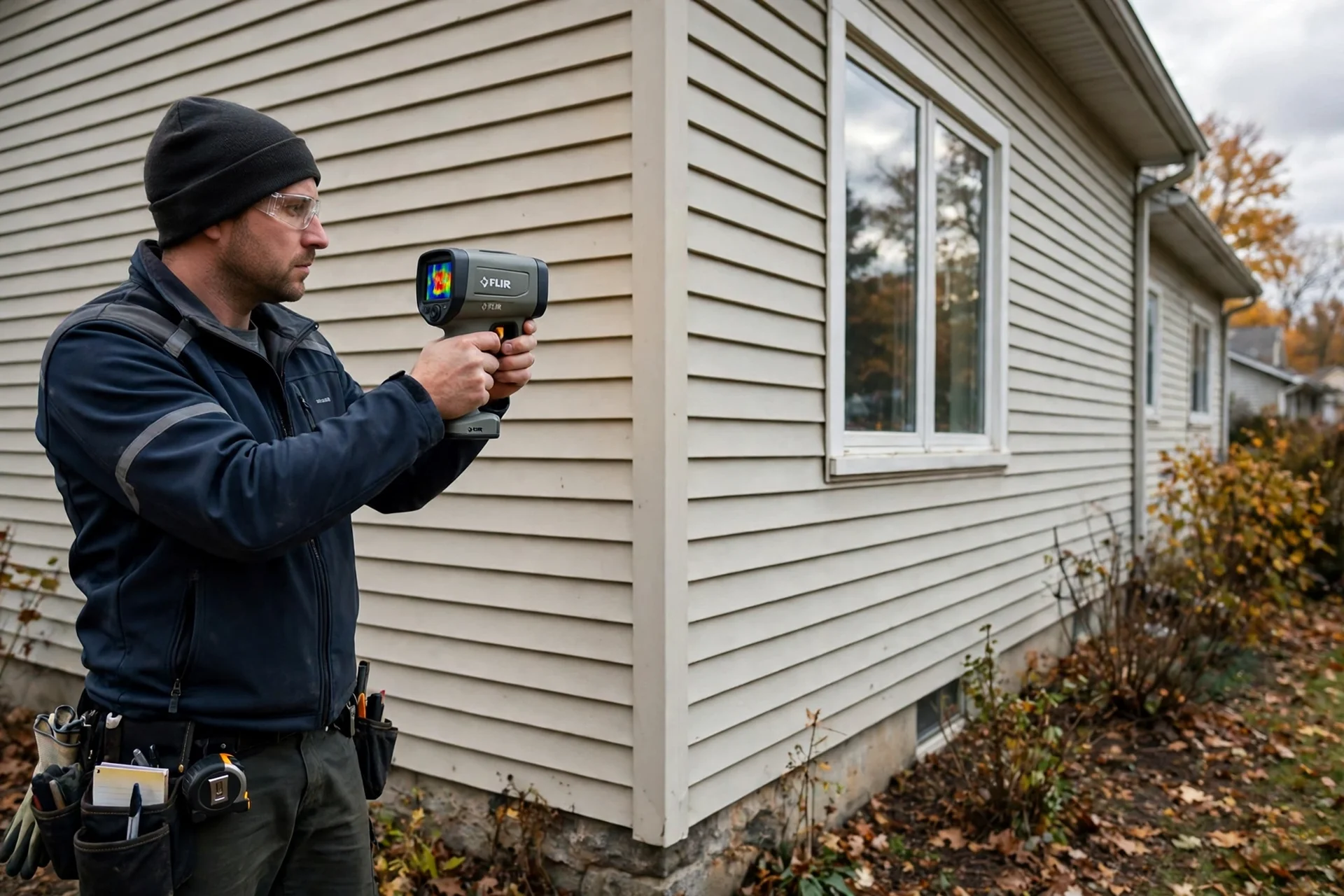
A residential home energy audit is a whole-home diagnostic that finds exactly where your house wastes energy, instead of leaving you to guess. An auditor reviews a year of utility bills, walks the house room by room, runs a blower door test to measure air leakage, scans walls with an infrared camera, and checks gas appliances for safe venting. The visit ends in a written report that ranks improvements by cost and expected savings, so the first dollar you spend goes to the fix that pays back fastest.
The stakes are larger than most homeowners expect. The U.S. Department of Energy links the simple fixes an audit turns up to roughly 5 percent energy savings, rising toward 30 percent or more when the full package of recommended improvements is completed. This guide explains what happens during each stage of the audit, what the numbers mean, how to choose a qualified auditor, and how to turn the report into a sensible order of work.
Why Guessing at Energy Waste Costs More Than Measuring It
Most homeowners attack energy bills by replacing the most visible thing: new windows, a new furnace, a thicker layer of attic insulation. Sometimes that helps, but often the real problem is invisible, a hundred small gaps adding up to a hole the size of a window left open all winter. Air leaks around attic hatches, plumbing penetrations, and rim joists can waste more heat than a whole wall of old windows, and no amount of new equipment fixes a shell that leaks.
An audit replaces that guesswork with measurement. The blower door test produces a single leakage number for the house, the infrared scan shows precisely where insulation is missing, and the report translates both into a ranked list. Homeowners who audit first routinely find that air sealing and attic insulation, two of the cheapest improvements, deliver more savings than the expensive equipment they were about to buy.
What a Residential Home Energy Audit Actually Measures
An audit measures the house as a system, not as a collection of separate parts. The building envelope, the heating and cooling equipment, the ductwork, the ventilation, and the health and safety of the combustion appliances are all checked together, because they interact: tightening a leaky house without checking ventilation can trap moisture and combustion gases indoors, and a new furnace cannot save energy if the ducts leak into the attic.
- Air leakage through the envelope, measured as a number rather than estimated by eye.
- Insulation depth and coverage in the attic, walls, floors, and rim joists.
- Heating and cooling equipment efficiency, distribution losses, and thermostat behavior.
- Combustion safety: whether gas appliances vent properly or spill exhaust indoors.
- Ventilation adequacy, moisture patterns, and the comfort complaints behind the visit.
The Blower Door Test: How Auditors Turn Air Leaks Into a Number
The blower door test is the technical core of a professional audit. The auditor mounts a calibrated fan into an exterior doorway and uses it to depressurize the house, pulling air out until a standard pressure difference of 50 pascals exists between inside and outside. Every crack, gap, and poorly sealed penetration becomes an entry point for outside air, and the fan measures the total airflow needed to hold that pressure, a figure called CFM50.
Close all exterior doors and windows, open interior doors, and turn off combustion appliances as the auditor directs.
Mount the fan frame and fabric panel in an exterior doorway and seal it airtight.
Run the fan until the house holds a 50-pascal pressure difference from outside.
Record the airflow in cubic feet per minute (CFM50) and convert it to air changes per hour (ACH50) for the size of the house.
Walk the house with a smoke pencil or infrared camera while the fan runs, so each leak shows itself as moving air or a cold streak.
A high CFM50 number means the house leaks badly; a low number means the envelope is relatively tight. The number also creates a baseline: after air sealing work, a second test shows exactly how much improvement was achieved, and many rebate programs require a before-and-after test to qualify. The test itself is safe and brief, the fan runs only during testing, and doors and windows return to normal immediately afterward.
Infrared Scans and the Hidden Gaps They Expose
An infrared camera reads surface temperature rather than visible light, and during an audit it is usually used with the blower door running, which exaggerates every leak. Cold spots glow blue or purple on the screen, revealing missing or settled insulation, gaps where framing conducts heat straight through the wall, and the exact pathways where air streams in. The combination of the two tools is what separates a professional audit from someone simply eyeballing the insulation.
| What the Camera Shows | What It Usually Means | Typical Fix |
|---|---|---|
| Cold stripes along ceiling edges | Attic bypasses at top plates and penetrations | Air sealing, then insulation |
| Cold band at the floor framing | Uninsulated rim joist at the foundation | Rigid foam and caulk at the rim |
| Patchy cold areas in walls | Missing, settled, or compressed batts | Dense-pack or blown-in insulation |
| Warm spots around outlets and pipes | Air leaking through penetrations | Foam and caulk sealing |
The scan also distinguishes an insulation gap from an air leak, which matters because the fixes differ. A cold patch with no air movement is missing insulation; a cold streak that appears only while the blower door runs is air in motion. Getting that distinction right keeps homeowners from paying to insulate a problem that actually needed sealing.
Combustion Safety, Ventilation, and the Checks That Protect Your Household
The most important part of an audit is the one homeowners never ask about: combustion safety. Using specialized meters, the auditor checks whether the furnace, boiler, or water heater flue is spilling carbon monoxide and exhaust gases back into the house instead of venting them outside. A full combustion appliance zone test checks backdrafting under the worst conditions, with exhaust fans running and interior doors closed, because that is when a marginal flue fails.
Ventilation gets checked alongside it. A house that is tightened up without enough fresh air can trap moisture, cooking fumes, and combustion byproducts indoors, so the auditor confirms the home still gets adequate fresh air after sealing. This is also why an audit should come before major air sealing work: the report can flag a venting problem that must be fixed first, rather than discovering it after the house has been sealed tight around a spilling appliance.
Reading Your Audit Report: Which Recommendations Pay Back First
A good report is not a pile of numbers; it is a ranked plan, usually with photos, thermal images, and an estimated payback period on each line item. The ranking matters because the cheapest fixes often sit at the top. Attic air sealing and insulation, rim joist sealing, and duct sealing routinely pay back in a few heating seasons, while new windows and new equipment sit further down the list despite their higher price tags.
- Start with air sealing: it is cheap, it makes every other improvement work better, and the blower door retest proves the result.
- Add insulation only after sealing, since insulation cannot stop air moving through gaps.
- Fix duct leaks in unconditioned attics and crawl spaces before sizing new equipment.
- Treat comfort complaints as data: a cold room usually points at a duct or envelope problem the report has already located.
How to Choose a Qualified Auditor and What the Visit Costs
Look for certification and independence. Auditors are typically certified through the Building Performance Institute (BPI) or the Residential Energy Services Network (RESNET), and the best auditors do not sell the upgrades they recommend, so the report is a diagnosis rather than a sales pitch. Ask in advance what the visit includes, because scope varies: a basic assessment may be only a visual walkthrough, while a comprehensive audit adds blower door testing, infrared imaging, and a detailed modeled report.
Cost varies by region and scope, but a comprehensive professional audit commonly falls in the low hundreds of dollars, and many utility programs offer assessments free or at a steep discount. Utility-sponsored programs in several states send an auditor at no cost to the homeowner, install basic energy-saving products on the spot, and connect the household to rebates that can cover most of the cost of bigger upgrades. Check with the local gas or electric utility before booking a private audit.
Do-It-Yourself Checks Worth Doing Before the Auditor Arrives
A homeowner can learn a surprising amount before the auditor arrives, and the findings make the professional visit more useful. A do-it-yourself check does not replace the blower door test or the infrared scan, but it helps the homeowner describe the symptoms accurately and understand the report when it arrives. Gather a year of utility bills first, since the auditor will want them, and note which rooms are cold, drafty, or hard to heat.
- Hold a lit incense stick near windows, outlets, and attic hatches on a windy day and watch for smoke movement.
- Check attic insulation depth with a ruler and look for dirty patches that mark air leaking through.
- Feel for drafts at the rim joist in the basement and at recessed lights in the top floor.
- Note ice dams, condensation on windows, and musty corners, since each points at a specific failure.
After the Audit: Sequencing Air Sealing, Insulation, and Equipment Upgrades
The order of work matters as much as the work itself. Seal first, then insulate, then consider equipment, because each step changes what the next one needs. Air sealing reduces the load on the heating system, insulation holds the heat that remains, and only then does it make sense to size new equipment to the smaller load. Replacing a furnace before sealing and insulating usually means buying a larger unit than the improved house will ever need.
Keep the blower door retest in the plan. A second test after the air sealing work shows the improvement as a number, confirms the crew actually sealed what the report listed, and satisfies the documentation many rebate programs require. Homes more than twenty years old usually gain the most from this sequence, since their envelopes were built before airtightness was a design goal.
Final Thoughts: An Audit Turns a Drafty House Into a Ranked To-Do List
An energy audit is the cheapest way to spend money on a house wisely, because it replaces a guess with a measurement and a shopping list with a ranked plan. Book a comprehensive audit with blower door testing, choose a certified auditor who does not sell the upgrades, and treat the report as the order of work. The fixes at the top of the list are usually the least expensive, and they are the ones that make the house quieter, more comfortable, and cheaper to run.
Home Energy Audit Questions Homeowners Ask Before Booking
How long does a home energy audit take?
A comprehensive audit usually takes two to three hours. The auditor reviews utility bills, walks the home room by room, sets up and runs the blower door test, scans with an infrared camera, and checks combustion appliances. A basic visual assessment is faster, but it cannot produce the leakage number or the thermal images that make the report useful.
How much does a home energy audit cost?
A comprehensive professional audit commonly costs in the low hundreds of dollars, depending on region and scope. Many utility programs offer the same assessment free or heavily discounted, and some install basic energy-saving products during the visit. Always check the local utility program before paying for a private audit.
What is a blower door test, in simple terms?
A calibrated fan is sealed into an exterior doorway and depressurizes the house to a standard 50 pascals. The airflow needed to hold that pressure, measured as CFM50, tells the auditor how leaky the house is overall, and walking the rooms while the fan runs reveals each individual leak.
Will the audit tell me which upgrade to do first?
Yes, that is the point of the report. A good report ranks recommendations by cost and expected savings, with photos and thermal images for each finding. Air sealing and attic insulation usually rank first, because they are inexpensive and make every later improvement perform better.
Can I do an energy audit myself?
A homeowner can do useful preliminary checks, such as the incense test for drafts and an insulation depth check in the attic. But the diagnostic core, the blower door test, the infrared scan, and the combustion safety test, requires calibrated equipment and training, and rebate programs generally require a certified auditor’s report.
Do I need an audit if my house is new?
Even newer homes benefit, because construction quality varies and air leakage hides behind finished surfaces. In climates with large day-night temperature swings, air leaks and thin insulation show up quickly, and an audit can catch a builder’s missed sealing before the warranty period ends.