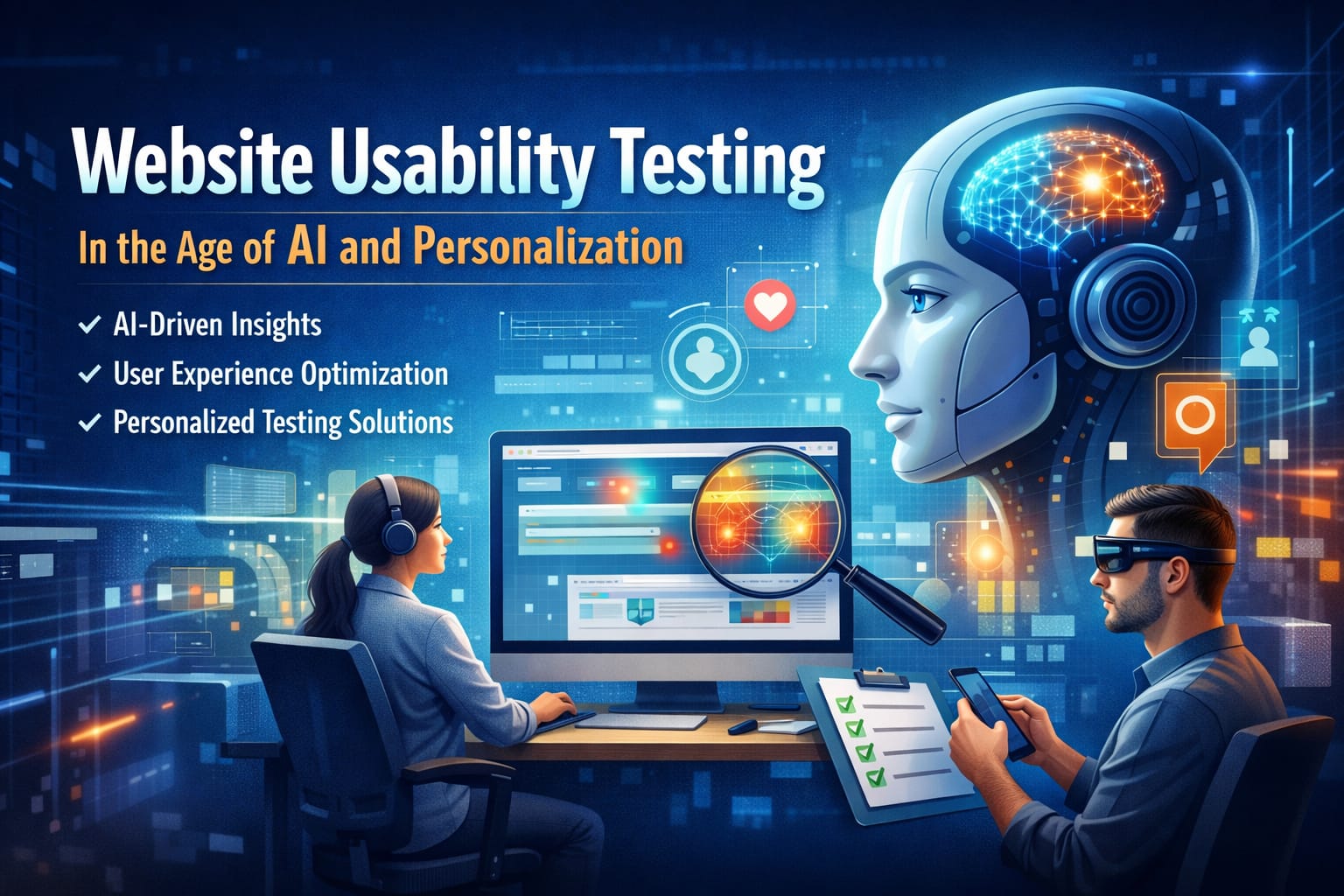
The Growing Importance of Website Usability Testing
Digital products continue to advance, and users expect easy, intuitive experiences when interacting with websites. Today, people look for sites that are fast, easy to navigate, and tailored to their needs. Website usability testing helps teams see how real users engage with a site, making it easier to identify friction points and areas that need improvement.
In today’s digital landscape, websites frequently adjust content, recommendations, and experiences based on user behavior. While this provides valuable opportunities, it can also make navigation and interaction more complex. Website usability testing helps businesses to observe how users engage with these features and give details on the areas that need improvement.
How AI and Personalization Affect User Experience
Artificial intelligence service is now part of how many websites guide users, from suggested products to changing page layouts. These features can be useful, but they do not always improve usability. When the interface keeps changing or navigation feels less direct, users can easily become confused. Website usability testing gives businesses a clearer picture of how people interact with these personalized elements. It helps teams identify whether the experience feels helpful, distracting, or unnecessarily difficult.
Why Businesses Rely on Usability Testing
Companies invest many resources in building digital platforms, and ensuring that users can easily interact with them is essential. Website usability testing allows businesses to identify design problems before they impact large numbers of users.
When teams run structured website usability testing, they can observe how users navigate pages, carry out tasks, and respond to different parts of the interface. This helps organizations improve design decisions, make user journeys simpler, and strengthen the overall digital experience. As AI and personalization become more common across digital ecosystems, website usability testing remains a reliable way to ensure technology serves users in a meaningful way.
Key Elements of Effective Website Usability Testing
Planning and Preparing Usability Tests
Successful website usability testing begins with careful planning. Teams need to clearly define what they want to learn from the testing process and which parts of the website should be evaluated.
Important preparation steps include:
- Identifying the tasks participants will perform during testing.
- Selecting users who represent the target audience.
- Preparing realistic scenarios for participants to complete.
- Choosing the right testing method such as moderated or remote testing.
Planning ensures that website usability testing produces meaningful results rather than general feedback. When the testing environment reflects real user situations, insights become more accurate and valuable.
Observing Behavior and Interpreting Insights
When testing begins, researchers look carefully at how participants interact with the website. Instead of relying only on questions, they observe what users actually do. Website usability testing is meant to show where users hesitate, make errors, or struggle to complete important tasks.
Key areas typically evaluated include:
- Navigation clarity and menu structure
- Task completion speed and success rate
- User understanding of page content
- Interaction with forms or interactive elements
- Overall ease of use
Website usability testing gives design teams useful insights for improving layouts, simplifying workflows, and removing steps that create friction. Many organizations also work with a usability testing service provider to run structured sessions and review findings in greater detail. This helps keep the process organized and makes it easier to turn findings into practical changes teams can move forward with.
The Future of Website Usability Testing in Modern Digital Products
Continuous Testing in Digital Product Development
Modern websites evolve constantly, and usability evaluation should evolve with them. Instead of conducting usability tests only once during development, many organizations now perform website usability testing throughout the product lifecycle.
Continuous website usability testing helps teams track how product updates affect the user experience. When a new feature or design change is released, it can reveal whether users understand the revised interface. This allows teams to spot issues early and avoid larger redesign efforts later.
Combining Technology and Human Insight
AI is helpful for spotting patterns in user data, but human observation remains important. Real user interactions can reveal confusion, emotions, and behavior that automated systems often miss. When analytics tools are used together with website usability testing, organizations gain a clearer and more complete view of digital platform performance.
Going forward, usability testing will continue to support AI-driven personalization in building smarter digital experiences. Businesses that regularly use website usability testing can refine their products based on what users actually experience rather than what teams assume.
Organizations that want to strengthen their digital platforms often benefit from bringing usability insights together with strong development support. Pattem Digital, a leading software product development company, helps businesses improve digital experiences by aligning usability findings with product strategy and development expertise.