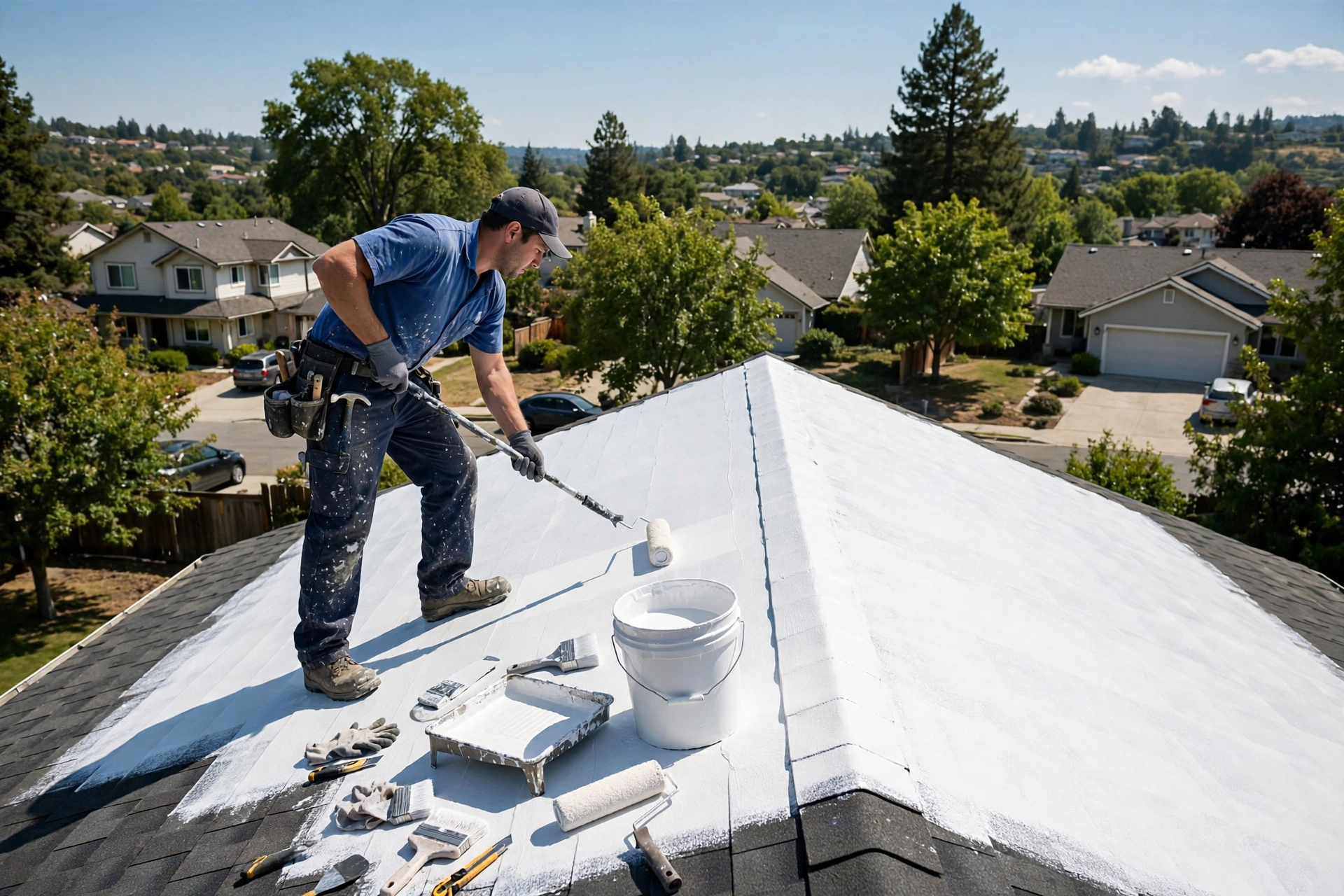
A modern residential roof coating can add roughly 10 to 20 years of service life to an existing low-slope roof, but only when the roof underneath is dry, structurally sound, and properly prepared first. A coating is a liquid-applied membrane that cures into a seamless protective layer over the old surface, shielding it from ultraviolet radiation, standing water, and daily thermal movement. It is a restoration, not a replacement, and its success depends far more on the condition of the roof beneath it than on the brand printed on the bucket.
Homeowners usually consider a coating when the roof is aging but not yet failing: granules washing off, minor cracks appearing, or seams beginning to lift. In that window, a coating typically costs a fraction of a full tear-off and avoids the disruption of removing the old roof. The decision should start with an honest inspection, because no coating can rescue wet insulation, rotted decking, or a roof that has already lost its structural integrity.
Roof Coatings Explained: A Restoration Layer, Not a New Roof
A roof coating is a fluid-applied system, usually applied by roller, brush, or spray in one or two coats over a primed surface, sometimes reinforced with a polyester fabric at seams and penetrations. Once cured, it forms a continuous, flexible membrane with no joints for water to exploit. Most residential systems fall into three families: acrylic elastomeric, silicone, and polyurethane, each with different strengths, and the right choice depends on drainage, climate, and the existing roof material.
Coatings work best on low-slope residential roofs, including built-up roofs, modified bitumen, single-ply membranes such as TPO and EPDM, metal roofing, and spray polyurethane foam. Steep-slope asphalt shingle roofs are generally poor candidates, because shingles shed water by overlapping and a coating can trap moisture beneath them. Before committing, confirm that the coating chemistry is compatible with the existing membrane, since some products will not bond to others, and incompatible layers are one of the most common reasons a coating peels within a year.
- Seamless protection: a cured coating has no laps or joints, removing the most common leak paths on an aging roof.
- Ultraviolet defense: reflective white coatings shield asphalt and rubber membranes from the sun damage that makes them brittle.
How Do Silicone, Acrylic, and Polyurethane Roof Coatings Compare?
Silicone, acrylic, and polyurethane coatings all extend roof life, but they behave very differently once water, sun, and foot traffic enter the picture. Silicone resists ponding water and ultraviolet degradation better than any other common coating, which is why it is the default choice for flat roofs where water stands after rain. Acrylic elastomeric coatings are water-based, reflective, and cheaper, but they soften in standing water and need good drainage. Polyurethane coatings are the toughest under foot traffic and resist abrasion, though they usually need a protective topcoat because sunlight breaks down the base layer.
The practical rule is simple: if water ponds on the roof for more than 48 hours after rain, silicone is the safer choice despite its higher price, because acrylic will eventually re-emulsify and wash away in the ponded areas. If drainage is good and the budget is tight, acrylic delivers strong value and can be recoated easily later. Polyurethane earns its place on roofs that people walk on, such as rooftop decks or roofs with frequent service access, where a softer coating would scuff and wear through. Always check the manufacturer’s data sheet for the minimum dry film thickness, since a coating applied too thin will not reach its stated lifespan.
Reading Your Existing Roof: The Coating Candidacy Check
A coating decision should never be made from the ground. Walk the roof, or hire a roofer to do it, and look for the four conditions that disqualify a roof from coating: more than about a quarter of the insulation is wet, the decking is soft or rotted, seams are open across large areas, or the roof has already been coated with an incompatible product that is peeling. A moisture survey with an infrared camera or a core sample is the reliable way to check for trapped water, because a roof can look sound while the insulation beneath is saturated.
Also check the roof’s age against its expected life. A coating applied when a roof has roughly a quarter of its life left makes sense; applied to a roof that is already past its design life, it is usually money spent on borrowed time. Note the drainage pattern after a rainstorm, the condition of flashings at walls and penetrations, and whether the roof has blisters or ridges that indicate trapped moisture. Any of these findings should be repaired first, because a coating seals in whatever condition it covers, including the problems.
- Wet insulation: soft spots underfoot or infrared readings showing trapped moisture mean repair or replacement, not coating.
- Rotted decking: a spongy feel when walking the roof signals deck failure that a coating cannot fix.
- Widespread seam failure: isolated open seams can be repaired, but seams lifting across the whole roof point to replacement.
Roof Coating Preparation Steps That Decide Whether the System Lasts
Preparation is where most coating projects succeed or fail. Manufacturers are blunt about this: a coating applied to a dirty, damp, or poorly repaired roof will peel, blister, or fail years early, and warranty claims are routinely denied for inadequate preparation. Budget as much time for preparation as for the coating itself, and treat every step as part of the system rather than an optional extra.
Inspect and test. Inspect and test the roof, including a moisture survey, and mark every wet or soft area for repair or replacement.
Clean thoroughly. Pressure wash the entire surface to remove dirt, chalking, algae, and loose material, then let the roof dry completely.
Repair first. Repair open seams, cracks, blisters, and damaged flashings, and replace any wet insulation or rotted decking found.
Prime as specified. Apply the specified primer where the manufacturer requires it, especially over metal, single-ply membranes, or chalky surfaces.
Reinforce details. Reinforce seams, penetrations, and transitions with polyester fabric embedded in the coating, the weakest points of any roof.
Apply at thickness. Apply the coating at the specified thickness in the right weather, avoiding rain, high humidity, and temperatures outside the product range.
Weather matters more than most homeowners expect. Acrylic coatings need warm, dry conditions to cure, and a surprise shower on fresh acrylic can wash it off the roof. Silicone tolerates damp conditions better but still needs the surface free of standing water. Check the forecast for at least 48 hours after application, and confirm the applicator is measuring wet film thickness as they work, since the only way to know the coating will last is to know it went on thick enough.
Roof Coating Costs, Lifespan, and the Replacement Comparison
Professional coating work on a typical residential roof generally falls in a broad range of a few thousand dollars, with the final figure driven by roof size, coating type, and how much repair the preparation uncovers. Installed prices commonly run around $1.50 to $3.00 per square foot for acrylic, $2.50 to $4.50 for silicone, and $4.00 to $6.50 for polyurethane systems, though local labor rates move these figures considerably. A full roof replacement on the same home usually costs several times more, which is why coating is attractive when the roof is still a good candidate.
The honest comparison is cost per year of service. A cheaper acrylic coating that lasts seven years can cost more per year than a silicone system that lasts fifteen, especially once the expense of a second application is counted. Also weigh the energy effect: a white reflective coating can lower roof surface temperatures substantially on a sunny day, which may trim summer cooling demand, though the savings vary with climate, insulation, and roof color. Treat energy savings as a bonus, not the reason to coat, and get the decision in writing with the product, thickness, and warranty terms specified before work begins.
Roof Coating Upkeep After Application: Keeping the Extra Years
A coated roof is lower maintenance than an uncoated one, but it is not maintenance-free. Plan an inspection every year, ideally in spring, and after any major storm. Look for punctures from fallen branches, worn spots where foot traffic crosses the roof, ponding that has developed as the building settles, and any edge lifting at flashings or penetrations. Small problems caught early are usually fixed with a compatible patch material in minutes; left alone, they become the leak that the coating was supposed to prevent.
Keep the roof clean, since dirt and debris reduce reflectivity and hold moisture against the coating. Clear leaves and branches from drains and scuppers, because blocked drainage is what turns a small pond into a permanent one. Recoat on schedule rather than waiting for visible failure: an acrylic system typically needs a maintenance coat after seven to ten years, while silicone can go longer. Recoating a sound coating is quick and inexpensive compared with starting over, and it is how a roof reaches the upper end of its extended life.
- Annual inspection: walk the roof each spring and after storms, checking seams, flashings, and drains.
- Prompt patching: repair punctures and worn spots with the same coating chemistry, not a random sealant.
Roof Coating Questions Homeowners Ask Before Committing
How long will a roof coating actually last on my roof?
A silicone coating typically lasts 10 to 20 years and an acrylic coating 5 to 10 years, assuming the roof was a good candidate, the coating was applied at the specified thickness, and it is maintained. Roofs with ponding water, heavy foot traffic, or poor preparation sit at the short end of those ranges.
Can a roof coating fix a roof that already leaks?
A coating can seal minor leaks caused by small cracks or failing seams, but it cannot fix leaks from rotted decking, saturated insulation, or failed flashings. Those underlying problems must be repaired first, because a coating applied over them traps the moisture inside and the leak returns.
Will a roof coating work over my existing roofing material?
Most coatings bond well to built-up roofs, modified bitumen, TPO, EPDM, metal, and spray foam, provided the surface is cleaned and primed as the manufacturer directs. Compatibility must be confirmed for the specific combination, since some coatings will not adhere to certain membranes or to old silicone layers.
Is a white reflective roof coating worth it for energy savings?
A white coating reflects a large share of sunlight and can lower roof surface temperatures significantly, which may reduce summer cooling demand. The actual savings depend on climate, insulation levels, and how much of the home’s heat gain comes through the roof, so treat it as a useful benefit rather than a guaranteed payback.
How often does a coated roof need to be recoated?
Acrylic systems usually need a maintenance coat after 7 to 10 years, silicone after 10 to 20 years, and polyurethane after about 10 to 15 years. Recoating while the existing coating is still sound is faster and cheaper than waiting until it has worn through.
Does a roof coating come with a warranty?
Many manufacturers offer material warranties of 5, 10, 15, or 20 years, often tied to the dry film thickness applied and to using an approved applicator. Read the terms carefully, since warranties usually exclude damage from ponding water, poor preparation, or foot traffic, and they rarely cover labor.
Final Thoughts: Is a Roof Coating the Right Move for Your Roof?
A roof coating is one of the best value decisions in home maintenance when the roof is the right candidate: dry, sound, and aging gracefully rather than failing. It buys a decade or more of service for a fraction of replacement cost and avoids the mess of a tear-off. Base the decision on a real inspection, honest math about cost per year of service, and an applicator who treats preparation as seriously as the coating itself.