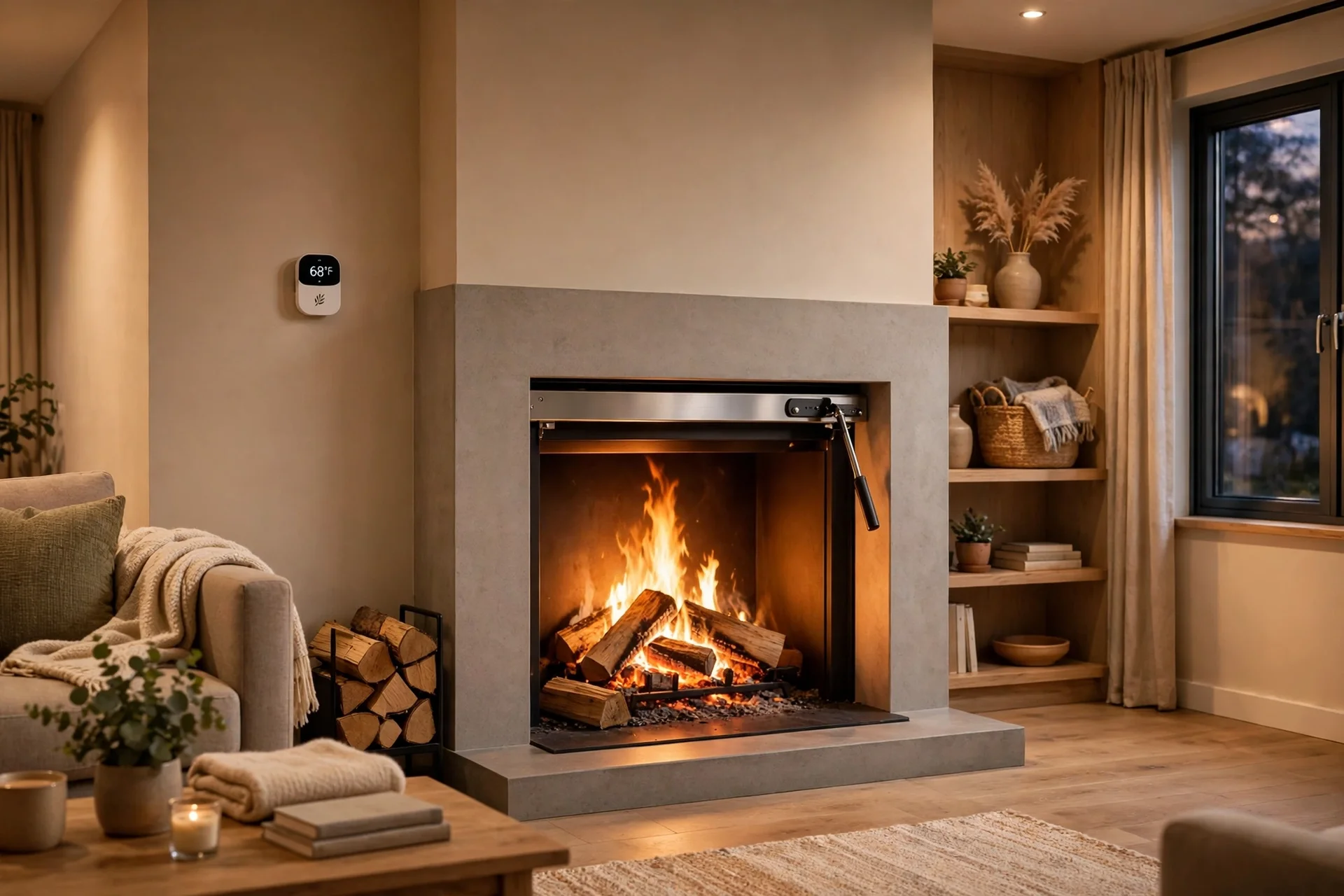
A fireplace that is not in use should be a closed system, not an open chimney. When a damper is missing, warped, or simply does not seal, warm air from your home rises up the flue in winter, cold air drops down it on windy days, and in summer, hot, humid air can flow the other way. The result is a draught you can feel near the hearth, rooms that are harder to keep warm, and a heating system that works harder for no benefit.
Replacing a fireplace damper is one of the most direct ways to close that leak, but it is not a one-size-fits-all job. Dampers sit in different places, seal in different ways, and suit different chimneys, fireplaces, and fuels. This article explains the main replacement options, how to tell which type your fireplace needs, what a good installation involves, and how to use and maintain a new damper safely, so you get the draught reduction and efficiency improvement you are paying for without creating a new hazard.
The Short Answer: Which Fireplace Damper Replacement Cuts Drafts Most Effectively?
For many masonry chimneys, a top-sealing damper, which closes at the very top of the chimney, usually gives the tightest seal and the greatest draught reduction. It closes against a gasket at the flue opening, so it blocks air at the point where it enters the chimney, and it also acts as a rain cap when closed, keeping rain, debris, and animals out of the flue. It is operated by a cable that runs down inside the flue to a handle in the firebox.
How a Fireplace Damper Works, and Why Old Ones Stop Sealing
A damper is a movable plate or lid that opens to let smoke and combustion gases escape while a fire is burning, and closes when the fireplace is not in use to block airflow through the chimney. When it is open, it must open fully, so smoke does not spill into the room; when it is closed, it should sit firmly against its frame or gasket, so air cannot pass around its edges.
Fireplace Damper Replacement Options Compared
Top-sealing dampers are usually made from stainless steel, with a spring-loaded lid and a silicone gasket, and they are sized to the outside of the flue tile or liner. They are particularly useful when the old throat damper is damaged beyond repair, because the old throat damper can often be left in the open position and the new top unit takes over sealing. That avoids a difficult throat replacement, although the old damper should be secured open so it cannot fall closed and block the flue.
Diagnosing a Failing Fireplace Damper Before You Replace It
Before spending money on a replacement, confirm that the damper is actually the problem, and that it is the only problem. A draught near a fireplace can also come from a missing chimney cap, a cracked flue liner, a poorly sealed fireplace door, or negative pressure in the house caused by exhaust fans, but a damper check is a good place to start, because it is visible and testable.
With the fireplace cold and no fire lit, open and close the damper fully and listen and feel for a firm seating when it closes.
Look up into the firebox with a torch for light around the damper plate, rust, warping, soot build-up, or a hinge that does not move freely.
Check for a cold draught on a windy day when the fireplace is not in use, and note whether it changes when you move the damper handle.
Look for signs of water entry, staining, or animal debris in the firebox, which can suggest a missing cap or a damper that does not close.
If you are unsure, or if you see creosote, cracked masonry, or a damaged liner, ask a qualified chimney professional to inspect before use.
Never light a fire to test a damper you suspect is stuck closed. A closed or partially closed damper can cause smoke and carbon monoxide to spill into the room, which is dangerous. If the damper will not open fully, do not use the fireplace until it has been inspected and repaired, and make sure working smoke and carbon monoxide alarms are fitted in the home, as they should be in any home with a fireplace.
Sizing a Replacement Fireplace Damper for Your Flue and Fireplace
A damper that is the wrong size will not seal, however good its design. For a top-sealing damper, the critical measurement is the outside dimension of the flue tile or liner at the chimney top, plus the condition of the chimney crown it will sit on. For a throat damper, the critical measurements are the width and depth of the throat opening and the frame it will fit into, and whether the firebox can accommodate the new plate without interfering with the grate or fireback.
What a Sound Fireplace Damper Replacement Installation Involves
A top-sealing damper installation usually involves working on the roof, so it is not a job to attempt without proper roof safety equipment and experience. The installer will clean the flue top area, fit the damper base to the flue tile, run the operating cable down the flue, and fit a handle and bracket inside the firebox. The old throat damper, if present, is secured in the open position, and the new damper is tested from the firebox to confirm it opens fully and closes tightly against its gasket.
Fireplace Damper Replacement Costs, Broad Estimates, and What Changes Them
Costs for damper replacement vary widely by region, chimney height and access, flue size, damper type, and whether other chimney work is needed, so any single figure should be treated as a broad estimate only, not a quote for your home. As a general guide, a straightforward throat damper replacement in an accessible firebox will usually cost less than a top-sealing damper installation that requires roof work, and both will cost more if the chimney crown, liner, or firebox also needs repair.
Using a New Fireplace Damper Safely, and Avoiding a Closed-Damper Fire
The most important safety habit with any damper is simple: open it fully before lighting a fire, and do not close it until the fire is completely out and the ashes are cold. Closing a damper too early can trap smoke and carbon monoxide in the room, and it can also trap heat in a way the fireplace was not designed for. Many top-sealing dampers have a handle position or a marker that shows whether the damper is open or closed, and it is worth learning that position before the first fire of the season.
In homes with gas fireplaces, follow the appliance instructions exactly, because some gas systems are designed with a damper clamp or a partially open damper for safety. Do not override a safety clamp or fit a different damper without professional advice. For all fireplaces, keep the area around the hearth clear, do not store combustible materials in the firebox, and have the chimney inspected and cleaned on the schedule recommended by a qualified chimney professional, especially if you burn wood regularly.
Fireplace Damper Mistakes That Waste Heat and Create Safety Risks
The most wasteful mistake is leaving a fireplace damper open all year, or forgetting that it exists. An open damper in a home that is heated in winter and cooled in summer is a continuous leak, and it is easy to overlook because the fireplace itself is not being used. A related mistake is fitting a new damper but never testing it, so a cable that is too tight, a plate that does not seat, or a handle that is hard to reach goes unnoticed until the next heating season.
Final Thoughts: Choosing a Fireplace Damper Replacement That Actually Stops the Draft
For most masonry chimneys, a top-sealing damper is the strongest replacement choice, because it seals at the chimney top, where air enters, and it also protects the flue from rain and debris. A throat damper remains a sensible choice where roof access is difficult, the flue does not suit a top unit, or a like-for-like replacement is the right fit for the fireplace. Whichever you choose, size it correctly, test it thoroughly, learn its open and closed positions, and never use the fireplace until you are sure it opens fully. That combination, rather than the damper alone, is what turns a draughty fireplace into a closed, efficient one.
Residential Fireplace Damper FAQs for Draft Reduction and Heating Efficiency
How do I know if my fireplace damper needs replacing?
Signs include a cold draught near the fireplace when it is not in use, a damper handle that does not move smoothly, a plate that looks warped, rusted, or coated with soot, light visible around the closed plate, or a damper that will not open or close fully. If the damper will not open fully, do not use the fireplace until it has been inspected.
Is a top-sealing damper better than a throat damper?
For draught reduction, a top-sealing damper usually seals more tightly, because it closes against a gasket at the chimney top, rather than relying on a metal plate in the throat. A throat damper can still be the right choice if roof access is difficult, the flue shape does not suit a top unit, or the fireplace design requires it, so the best choice depends on your chimney, not just the damper type.
Can I replace a fireplace damper myself?
A throat damper in an accessible firebox may be within the ability of a competent DIYer, but a top-sealing damper involves roof work and should only be attempted with proper safety equipment and experience. If you are unsure about sizing, fuel type, liner condition, or safety, a qualified chimney professional is the safer choice, and gas fireplaces should always be checked by a qualified gas professional.
Should the damper be open or closed when the fireplace is not in use?
Closed, provided the fire is completely out and the ashes are cold. A closed damper blocks draughts, rain, and animals, and prevents conditioned air from escaping up the chimney. Open the damper fully before lighting any fire, and do not close it until the fire and ashes are cold.
Will a new damper really improve heating efficiency?
It can make a noticeable difference, because a leaking or open damper is a continuous opening in the home’s thermal envelope, open day and night. The size of the saving depends on your climate, your heating system, how leaky the old damper was, and how the rest of the home is insulated and sealed, so it should be seen as one part of a wider draught-proofing effort, not a guaranteed saving.
Can a top-sealing damper be fitted if I already have a throat damper?
Often, yes. The old throat damper is usually secured in the open position, and the new top-sealing damper takes over sealing from the chimney top. The old damper must be secured so it cannot fall closed and block the flue, and the installation should be checked to confirm the new damper opens fully and closes tightly.
Does a fireplace damper need maintenance?
Yes, but it is usually simple. Check that it opens and closes smoothly before the heating season, clear debris from the firebox and, for a top unit, from the chimney top area if you can do so safely, and have the chimney inspected and cleaned on a professional schedule. If the damper starts to stick, rust, or not seat properly, have it checked before relying on it for another season.