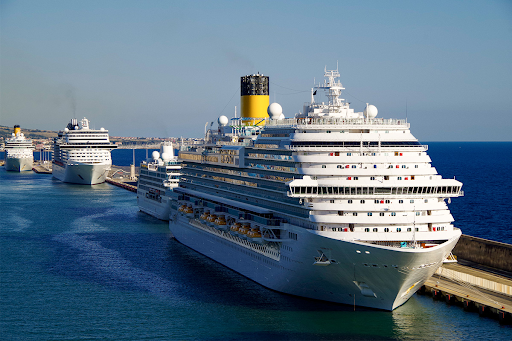
Most cruise stress doesn’t happen on the ship. It happens in the weeks before: a passport that expires too soon, a flight that lands three hours before boarding closes, a suitcase with your medicines in it that you hand over at the terminal and won’t see again until evening.
The good news is that almost all of it can be avoided with a bit of timing. If your Mediterranean cruise starts from Rome’s port, Civitavecchia, or from any other big European port, this checklist breaks the preparation into three moments: three months before, one week before and the day before you board.
3 months before: documents, flights and the big bookings
Check your passport, and your visa
For the Schengen area, which includes Italy, Greece, Spain, France and Croatia, your passport generally needs to be valid for at least three months after the date you leave the area, and it must have been issued within the last ten years. If yours is close to either limit, renew it now: passport offices get busy before the summer season.
Travellers from many countries, including India, also need a Schengen visa, and appointments can book up weeks in advance in spring and summer. If your itinerary includes ports outside the Schengen area, such as Turkey or Montenegro, ask your cruise line or the consulate whether you need a multiple-entry visa.
Know the new EU border rules
Since April 2026 the EU’s Entry/Exit System (EES) is fully operational. Non-EU travellers have their fingerprints and photo registered at their first entry, so passport control can take longer than you remember, especially at busy airports in the morning.
ETIAS, the separate online travel authorisation for visa-exempt travellers, is not in operation yet and has no confirmed start date. When it opens, the only official place to apply will be the EU’s own website. Ignore lookalike sites that offer to “pre-register” you for a fee.
Book flights that land at least a day early
Cruise ships don’t wait for late passengers, and one delayed connection is all it takes. Plan to land the day before embarkation. It also gives you a night to recover from jet lag before a week of early starts and port days.
Book your pre-cruise night
Once the flights are set, decide where you’ll sleep. From Rome, the choice is usually between staying in the city for one last evening or moving to the port town and waking up a few minutes from your ship. Each option suits a different boarding time and type of traveller; this comparison of whether to sleep in Rome or Civitavecchia the night before your cruise sets out the pros and cons of both. Whatever you choose, book early if you sail between April and October, when several ships can be in port on the same day.
Buy travel insurance that covers cruising
Not every policy does. Look for medical cover that includes evacuation from a ship and “missed departure” cover, which pays to get you to the next port if a delay makes you miss embarkation.
1 week before: confirm, pack and check the news
Confirm your boarding time and terminal
Most cruise lines assign a boarding window during online check-in. Check it again, and note which terminal or pier your ship uses: large ports often have several, spread far apart. Print your luggage tags now, so you aren’t looking for a printer in a hotel lobby.
Check for transport strikes
In Italy, transport strikes are announced in advance and published on the Ministry of Transport’s official strike calendar. A rail strike can cancel the regional trains between Rome and Civitavecchia. If one falls on your travel day, book road transport instead of hoping your train is one of the guaranteed services.
Pack an embarkation-day bag
On boarding day you hand your suitcases over at the terminal, and they usually reach your cabin only in the afternoon or early evening. Pack a small bag that stays with you, containing:
- passports, visas and cruise documents
- medicines for at least two days
- phone, charger and power bank
- a change of clothes and swimwear, if you want to use the pool before your luggage arrives
Plan for churches and weather
Many Mediterranean churches, including St Peter’s in Rome, require covered shoulders and knees. A light scarf or shawl solves this in seconds. In spring and autumn, evenings at sea are cooler than the days ashore, so pack one warm layer.
Sort out money and data
Tell your bank you’re travelling and carry some euros in cash for small purchases. Check your phone plan or buy an eSIM for Europe, and remember that connecting to the ship’s mobile network at sea can be very expensive: turn off mobile data once you leave port.
1 day before: slow down
Reconfirm your transfer to the port
If you’re travelling to the port by car, confirm the pickup time with your driver or hotel. Ask how long the drive takes at that hour: morning traffic leaving a big city can add a lot of time.
Repack with boarding day in mind
Move documents and medicines into your day bag. Attach the luggage tags to your suitcases. Take a screenshot of your boarding pass and booking details, because mobile signal in a crowded terminal can be patchy.
Keep the evening easy
After a long-haul flight, a light dinner and an early night will do more for your first sea day than one more late outing. Set two alarms.
The morning of embarkation
Have breakfast, check out with time to spare and aim to arrive early in your boarding window rather than at the end of it. Hand over your suitcases, keep your day bag with you and walk on board knowing the hard part is already done.
A Mediterranean cruise is one of the easiest ways to see several countries in one trip. Spread the preparation over three months, one week and one day, and the only thing left to think about on boarding day is which deck to explore first.