A composite deck is sold as low maintenance, and compared with wood it is. It will not rot, splinter, or need yearly staining. What it will do is get dirty. The polymer cap that makes capped boards so durable has a fine textured grain that traps pollen, dust, and moisture, especially in shade. Within one damp season a clean deck can look dull, spotted, and slippery with algae.
The good news is that almost all of that grime sits on the surface, not in the board. You do not need harsh chemicals or high pressure to remove it — just the right cleaner, warm water, a soft brush, and patience. Cleaned gently twice a year, a quality deck should look close to new for 25 years, protecting the finish and usually the warranty.
How Composite Decks Get Dirty
Understanding what you are washing off helps you choose the right method. Most dirt falls into a few predictable groups, each behaving differently when wet.
- Pollen and airborne dust: In spring, yellow-green pollen settles into the embossed grain and mixes with rain into a paste. Left alone, it bakes on in summer sun and greys the surface.
- Leaf tannins and organic debris: Wet leaves, acorns, and berries left over winter leach brown tannin stains. Decks under trees are hit hardest, particularly in the gaps between boards.
- Food and grease: Grill drips, cooking oil, and sunscreen leave dark, shiny spots near doors and outdoor kitchens. Grease does not rinse off with water alone.
- Algae, mold, and mildew: North-facing and shaded areas that stay damp grow green algae on the surface and black mold spots in the grain. Algae makes boards dangerously slippery when wet.
- Everyday traffic: Muddy shoes, pet paws, and furniture dragged across boards grind fine grit into the cap, dulling high-traffic paths from the door to the steps.
Older uncapped boards absorb more moisture and stain more deeply. Capped boards, sold since about 2010 by brands such as Trex, TimberTech, and Fiberon, resist staining far better — but only if the cap stays intact. Method matters as much as product.
Choosing Safe Cleaning Solutions
For routine dirt, warm water and washing-up liquid or car wash soap is enough, at almost no cost. Mix about a tablespoon of soap in a 10-litre bucket of warm water. It lifts pollen and dust without a film if you rinse well.
For a twice-yearly deep clean, use a dedicated composite cleaner. Products such as Corte Clean or OxiClean typically cost $15 to $25 for a container covering 250 to 300 square feet. Oxygen-based cleaners, using sodium percarbonate, are safest for capped boards. They brighten the surface, kill algae spores, and rinse away without bleaching colour.
What to Look For on the Label
- Safe for capped composite or polymer-capped boards, stated clearly
- Oxygen-based or biodegradable formula, not chlorine-based
- No solvents, acetone, or strong acids
- Clear dilution instructions — more concentrated is not better
Always test a new cleaner on an offcut or hidden board first. Wait 10 minutes, rinse, and let it dry. If the colour looks even, proceed. Never mix cleaners, and never assume a wood brightener is safe on composite — many are made for timber, not a polymer cap.
Soft Washing Technique
Soft washing means letting the cleaner do the work and using water only to rinse. It is slower than blasting, but manufacturers recommend it, and it keeps the cap glossy instead of etched.
Step-by-Step Soft Wash
- Clear and sweep: Move furniture and planters, then sweep or blow off leaves and grit so you are not scrubbing mud around.
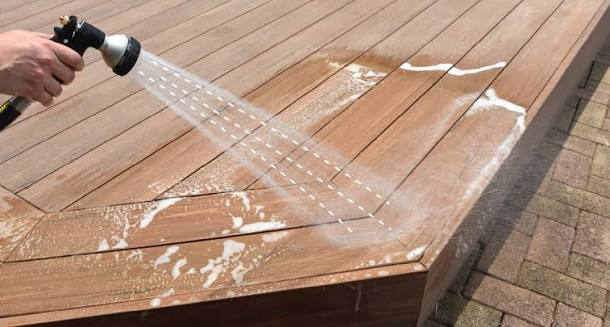
- Pre-wet the deck: Hose the whole surface so boards are evenly damp. This stops cleaner soaking in unevenly on a hot day.
- Apply cleaner in sections: Work on 4 to 5 boards at a time, about 100 square feet. Spread the solution with a pump sprayer or mop and let it dwell for 10 to 15 minutes without drying out.
- Scrub with the grain: Use a soft- to medium-bristle deck brush on a pole ($12 to $20). Scrub lengthwise, following the board, so dirt lifts out of the grain instead of being pushed across it.
- Rinse thoroughly: Hose from the house outward, pushing dirty water off the deck edge. Leftover soap attracts dirt, so rinse until the water runs clear.
- Let it dry and inspect: Once dry, remaining spots are true stains, not general dirt, and can be spot-treated.
If you prefer a pressure washer, treat it only as a rinsing tool. Use a 40-degree or wider fan tip, keep pressure at or below 1,500 PSI, hold the lance at least 12 inches away, and keep it moving. A standard electric washer ($120 to $180) is ideal. Anything stronger can score the cap permanently.
Treating Algae and Mold
Green algae and black mold are the most common complaint on shaded decks. The growth sits in surface moisture and organic film, so you need to kill it, not just wash the colour away, or it returns within weeks.
Start with an oxygen-based cleaner mixed at the stronger end of its label range. Apply it on a cool, overcast morning so it stays wet for the full 15 to 20 minute dwell time, scrub with the grain, and rinse. For widespread growth, a specialist remover such as Wet & Forget, at $20 to $30 a gallon, helps. Spray it on a dry deck and let rain rinse it over following weeks. It works slowly but reaches under railings and into gaps a brush cannot.
To slow regrowth, improve drying. Trim shrubs touching the deck, clear leaves from gaps weekly in autumn, and keep downspouts from discharging onto the boards. In damp climates, spring and late-summer treatments beat one aggressive midsummer scrub.
Handling Stubborn Stains
Deal with stains promptly. On capped boards most spills wipe up within days, but heat and sun set them. Work from the mildest method upward.
Grease, Oil, and Sunscreen
Blot, do not wipe, fresh grease. Then wash with hot water and a degreasing washing-up liquid, scrubbing in small circles before returning to strokes along the grain. Rinse and repeat once. Most cooking oil marks fade completely with this treatment if caught the same weekend.
Rust and Metal Marks
Rust rings from planters and furniture feet respond to a composite-safe cleaner containing a small amount of oxalic acid. Apply only to the spot, wait 10 minutes, scrub lightly, and rinse generously. Put planters on rubber feet afterwards to stop the mark returning.
Tannin, Wine, and Berry Stains
An oxygen cleaner paste — powder mixed with a little water — left on the stain for 20 to 30 minutes will usually draw out tannin and food colouring. Keep it damp with a light mist. Very old shadows may lighten rather than vanish, which is normal.
Avoid scouring powders and melamine sponges. They work by abrasion, and on composite that means removing the finish you are trying to protect.
Seasonal Cleaning Schedule
A light, regular routine prevents heavy scrubbing. For most homes, this rhythm is enough:
- Weekly in season: Sweep leaves and debris, especially from board gaps and corners where moisture collects.
- Spring: Full soft wash with composite cleaner, algae treatment in shaded areas, and a check of gaps, railings, and furniture feet.
- Summer: Hose down monthly, clean grill-area grease promptly, and spot-treat sunscreen or food spills the same week.
- Autumn: Clear fallen leaves weekly so tannins do not set over winter, then do a second full wash before temperatures drop.
- Winter: Sweep snow with a plastic shovel or stiff broom, board by board along the grain. Use calcium chloride ice melt if needed, then rinse it off in spring.
Keep a note of what cleaner you used and where stains appeared. Patterns — a planter that always rusts, a corner that always greens — are easier to fix once than to clean forever.
What to Avoid on Composite Surfaces
- High-pressure washing above 1,500 PSI, turbo or pencil-jet nozzles, and holding any nozzle close to the board
- Chlorine bleach, which can lighten colour, damage the cap, kill nearby plants, and void some warranties
- Wire brushes, steel wool, scouring pads, and stiff pressure-washer brushes that scratch the protective finish
- Solvents, paint thinner, acetone, and undiluted vinegar left to soak, all of which can soften or discolour the cap
- Metal snow shovels and sharp tools dragged across boards
- Sealers, paints, and stains made for wood — capped composite does not absorb them, so they peel and look worse
Check your manufacturer’s guide before using any new product. Trex, TimberTech, Deckorators, and Fiberon all publish approved cleaner lists, and a prohibited chemical is one of the few ways cleaning can affect a 25- to 50-year warranty.
Final Thoughts
A composite deck asks for little: a sweep, a gentle wash twice a year, and quick attention to grease and leaves. In return it stays even in colour, safe underfoot, and free from sanding and staining. The secret is restraint. Mild cleaners, soft brushes, and low pressure work because the grime never bonded to the board. Protect the cap, and the deck will take care of itself for decades.
Frequently Asked Questions
How often should I clean a composite deck?
Do a full soft wash twice a year, in spring and autumn, and sweep weekly during leaf fall. Hose high-traffic areas monthly in summer. This prevents algae and tannin from setting, so each deep clean takes an hour or two.
Can I pressure wash composite decking?
Yes, with limits. Use 1,500 PSI or less, a wide 40-degree fan tip, and keep the nozzle at least 12 inches away, moving along the grain. Never use a turbo nozzle. If unsure of the output, a hose and brush is safer and just as effective.
Is bleach safe on composite decks?
Avoid chlorine bleach. It can fade colour, break down the protective cap over time, and harm planting. Use an oxygen-based cleaner instead. It kills algae and mold, brightens the surface, and rinses away without the bleaching risk. Always follow your board manufacturer’s approved list.
Will vinegar remove algae from composite decking?
White vinegar can lighten light algae on a small patch, but it is a weak and short-lived treatment, and leaving it to soak can dull the finish. An oxygen-based composite cleaner or a dedicated algae remover works better, lasts longer, and is made for the surface.
Do composite decks need sealing after cleaning?
No. Capped composite boards are sealed by their polymer shell during manufacture, so they do not absorb wood sealers. Applied coatings sit on top, peel, and can void the warranty. Cleaning, rinsing well, and letting the deck dry fully is all the protection it needs.