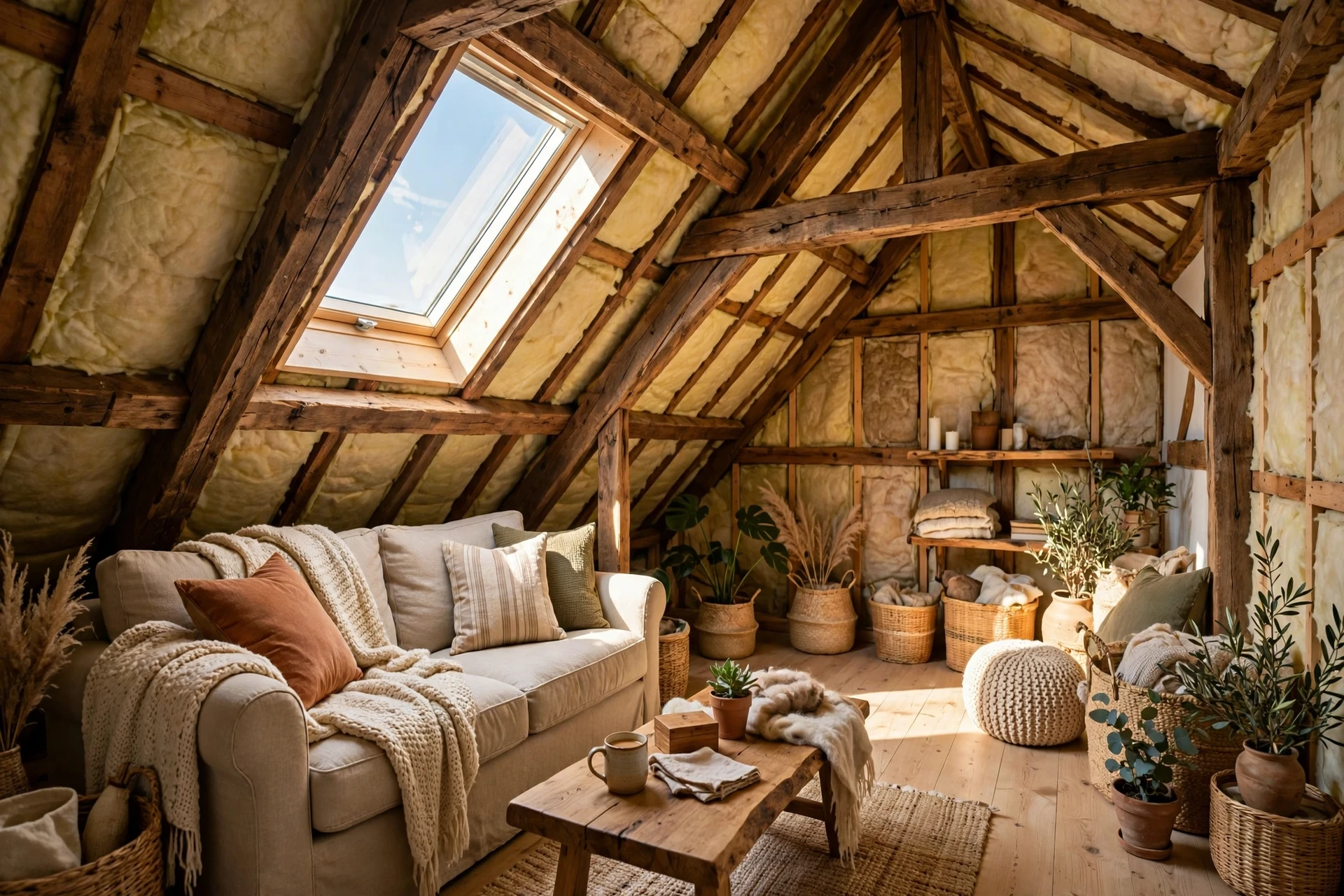
Turning an attic into a bedroom, office, or playroom is one of the most appealing ways to gain living space without extending the house, but comfort in that new room depends almost entirely on insulation. An attic sits directly under the roof, so it feels summer heat and winter cold more sharply than any other room. Without the right insulation, air sealing, and ventilation strategy, the finished space can be stuffy in July, chilly in January, and prone to damp problems that are expensive to fix once walls are closed.
The short answer is that there is no single best material for every attic conversion. Closed-cell spray foam suits shallow rafters and unvented roofs, fibreglass and mineral wool batts suit vented roofs with room to spare, rigid foam boards suit situations where every inch of headroom counts, and cellulose suits irregular cavities that need dense packing. The right choice depends on roof type, ventilation, headroom, budget, and local building requirements, so start with those constraints and choose the material that fits them, rather than choosing a product first and hoping it fits.
Attic Conversion Insulation Starts With Headroom, Structure, and Local Rules
Before comparing materials, check whether the attic can legally and practically become living space. Ceiling height, stair access, escape routes, floor strength, and fire safety all matter, and requirements vary by location. A common rule of thumb is that a good proportion of the floor needs usable headroom, often around seven feet or more over at least half the area, but you should confirm the exact rules that apply to your home before spending on insulation. An attic that is too low, or whose floor cannot safely carry living loads, may need structural work first.
Insulation thickness also eats into headroom. A material with a high thermal resistance per inch leaves more usable height, which is why spray foam and rigid boards are popular in shallow rafters, while thicker batts may need deeper rafters or furring to reach the same performance. Measure rafter depth, note where roof slopes, purlins, and chimneys reduce usable space, and plan insulation around those realities. A conversion that looks generous on paper but loses inches to thick insulation in exactly the places you stand can feel cramped for years.
Spray Foam Attic Insulation: Air Sealing and High Performance in Tight Rafters
Spray foam is applied as a liquid that expands and hardens, filling gaps and sealing air leaks in one step. Closed-cell foam offers high thermal resistance per inch and acts as both insulation and an air barrier, which makes it attractive where rafter depth is limited or where the roof will be unvented. Open-cell foam is lighter, less expensive, and still seals well, but it provides lower resistance per inch and needs more depth to reach the same performance, so it suits deeper rafters and milder demands.
The trade-offs are cost, installation, and moisture strategy. Spray foam usually costs more than batts, generally needs professional installation with proper ventilation and protective equipment, and changes how the roof assembly handles moisture. In an unvented assembly the foam itself becomes part of the moisture control strategy, while in a vented assembly it must not block required airflow paths. Discuss the vented versus unvented approach with a qualified installer or building professional before work starts, because reversing that decision after foam is in place is difficult and costly.
Fibreglass and Mineral Wool Batts for Vented Attic Conversions
Fibreglass and mineral wool batts remain popular for good reasons: they are widely available, relatively affordable, and familiar to most builders. Batts fit between rafters and studs, and mineral wool in particular offers good fire resistance and sound absorption, which helps when the new room sits above bedrooms or living areas. For a vented roof, batts work well when paired with careful air sealing and ventilation baffles that keep an air channel between insulation and roof sheathing.
The weakness of batts is not the material itself but poor installation. Gaps, compression, and missing pieces around wires, pipes, and awkward junctions can sharply reduce performance, because heat and air find the easy path through. Batts also do not air-seal on their own, so cracks, penetrations, and junctions must be sealed separately with caulk, foam, or tape. If you choose batts, insist on a neat, full-depth fit, continuous coverage, and a separate air-sealing pass. Done well, they deliver comfortable, predictable performance at a sensible cost.
Rigid Foam Boards Where Every Inch of Attic Headroom Matters
Rigid foam boards, including polyisocyanurate, extruded polystyrene, and expanded polystyrene types, provide good thermal resistance in a thin layer and can be cut to fit between rafters or layered continuously over them. Continuous external or internal layers are especially valuable because they reduce thermal bridging through timber rafters, which otherwise act as heat highways through the insulation. For a low attic where headroom is precious, a thinner, higher-performing board can be the difference between a usable room and a cramped one.
Boards demand careful joint work. Every seam, edge, and penetration needs sealing or taping, otherwise air leaks around the boards and undermines their performance. Some boards also need a fire-protective covering when used inside a living space, and product choice must suit the roof assembly and local rules. Boards are often combined with batts, with batts filling rafter bays and a board layer adding continuous coverage, a hybrid approach that balances cost, thickness, and performance in many conversions.
Cellulose and Blown Insulation for Irregular Attic Cavities
Cellulose, made largely from recycled paper treated for fire resistance, is blown or dense-packed into cavities, where it flows around obstacles and fills irregular shapes that batts struggle with. That makes it useful for older attics with uneven framing, for knee walls, and for topping up existing insulation. It also offers reasonable sound absorption, which helps in a room used for sleeping or working. Dense packing reduces settling compared with loose fill, provided it is installed to the correct density by an experienced installer.
Cellulose is not a do-it-yourself material for most conversions, because it needs blowing equipment and an understanding of density, moisture, and ventilation. It must be kept dry, must not block soffit vents in a vented roof, and must be paired with air sealing, since it does not seal air leaks on its own. In very damp conditions or where roof leaks are possible, the moisture behaviour of any insulation deserves careful discussion, because wet insulation loses performance and can contribute to mould and timber damage if it stays wet.
Ventilation, Vapour, and Moisture: The Attic Details That Protect Insulation
Insulation and ventilation must be planned together, not as separate jobs. In a vented roof, air should flow from soffit vents up to ridge vents, carrying moisture away from the roof structure. Insulation baffles keep that channel open and prevent insulation from blocking airflow, especially at the eaves where batts are often pushed too far. In an unvented roof, ventilation is replaced by a carefully designed air and vapour control strategy, usually centred on spray foam or rigid boards, and the details matter even more.
Vapour control is about letting the assembly dry in the right direction and avoiding trapped moisture. The correct vapour retarder, its position, and whether one is needed at all depend on climate, roof type, and insulation choice, so generic advice can mislead. A simple rule is to never seal both sides of an assembly in a way that traps moisture, and to fix roof leaks before insulating. If you see stained sheathing, mould, or damp insulation during the conversion, pause and address the source. Insulating over a wet or leaking roof only hides the problem until it becomes structural.
Sound, Fire, and Everyday Comfort in a Finished Attic Room
A converted attic should feel like a normal room, not a tent under the roof. Sound matters more than many homeowners expect, because rain on the roof, footsteps, and plumbing noise travel easily through light attic structures. Mineral wool, cellulose, and resilient details such as staggered studs or resilient channels can reduce noise transfer, while a well-sealed ceiling and wall assembly helps both thermal and acoustic comfort. Consider sound early, because adding it after finishes are complete is disruptive and expensive.
Fire safety and services also shape insulation choices. Recessed lights, wiring, and heating or cooling equipment must not be buried in insulation in ways that create overheating risks, and some insulation types need protective coverings. Plan where heating and cooling will come from, because an attic room often needs its own zone or ductwork, and undersized heating will make even good insulation feel inadequate. A room that is well insulated but poorly heated or ventilated will still disappoint, so treat insulation as one part of a whole-room design.
Attic Insulation Costs, Sequencing, and When to Bring in a Professional
Costs vary widely with material, attic size, access, and local labour, so treat any single figure as a broad estimate rather than a quote. In general, batts are the most affordable, cellulose sits in the middle, and spray foam and rigid board systems cost more, especially when professional installation and air sealing are included. The cheapest material is not the cheapest conversion if it needs deeper framing, loses headroom, or underperforms because of gaps, so compare total project cost and long-term comfort, not material price alone.
Sequence matters too. Complete structural work, roof repairs, wiring, plumbing, and air sealing before insulation goes in, and photograph the insulation before walls are closed, so you have a record of coverage and depth. Bring in a professional when the roof is unvented, when structural changes are needed, when moisture or mould is present, or when local rules require permits and inspections. A professional assessment at the planning stage is often the best money spent on an attic conversion, because it prevents the most expensive mistake: finishing a room around the wrong insulation strategy.
Final Thoughts: Choose Attic Insulation by Roof, Headroom, and Moisture Strategy
The best insulation for converting an attic into living space is the one that fits your roof, preserves your headroom, controls moisture, and is installed without gaps. For many homeowners that means spray foam in shallow or unvented roofs, batts in vented roofs with room to spare, rigid boards where headroom is tight, and cellulose where cavities are irregular. Get the ventilation and vapour strategy right first, seal air leaks carefully, and choose a material you can install well, because a well-installed mid-priced system will outperform a premium product fitted badly, every time.
Attic Conversion Insulation FAQs for Homeowners
What insulation is best for a converted attic?
It depends on roof type and headroom. Closed-cell spray foam suits shallow, unvented roofs, batts suit vented roofs with depth to spare, rigid boards suit low headroom, and cellulose suits irregular cavities. Match the material to ventilation and space constraints first.
Do I need ventilation if I use spray foam in my attic?
It depends on whether the roof is designed as vented or unvented. Spray foam in an unvented assembly replaces the ventilation channel, while in a vented assembly airflow must be maintained. Confirm the approach with a qualified professional before installation.
Can I insulate an attic conversion myself with batts?
Yes, in a straightforward vented attic, provided you air-seal first, fit batts fully without compression or gaps, and keep ventilation baffles clear. Structural work, unvented roofs, and moisture problems are better left to professionals.
How thick should attic insulation be?
Thickness depends on the material, local requirements, and climate, because different materials provide different thermal resistance per inch. Work to a target thermal performance for your location rather than a single thickness figure, and check local building guidance.
Will attic insulation stop condensation and mould?
Good insulation helps by keeping surfaces warmer, but it does not cure leaks or poor ventilation. Fix roof leaks, control indoor humidity, maintain airflow or the unvented strategy correctly, and keep insulation dry to reduce condensation and mould risk.
Is cellulose safe for attic conversions?
Cellulose treated for fire resistance is widely used in attic conversions when installed correctly and kept dry. It should be dense-packed by an experienced installer, must not block required vents, and should be paired with air sealing for best performance.