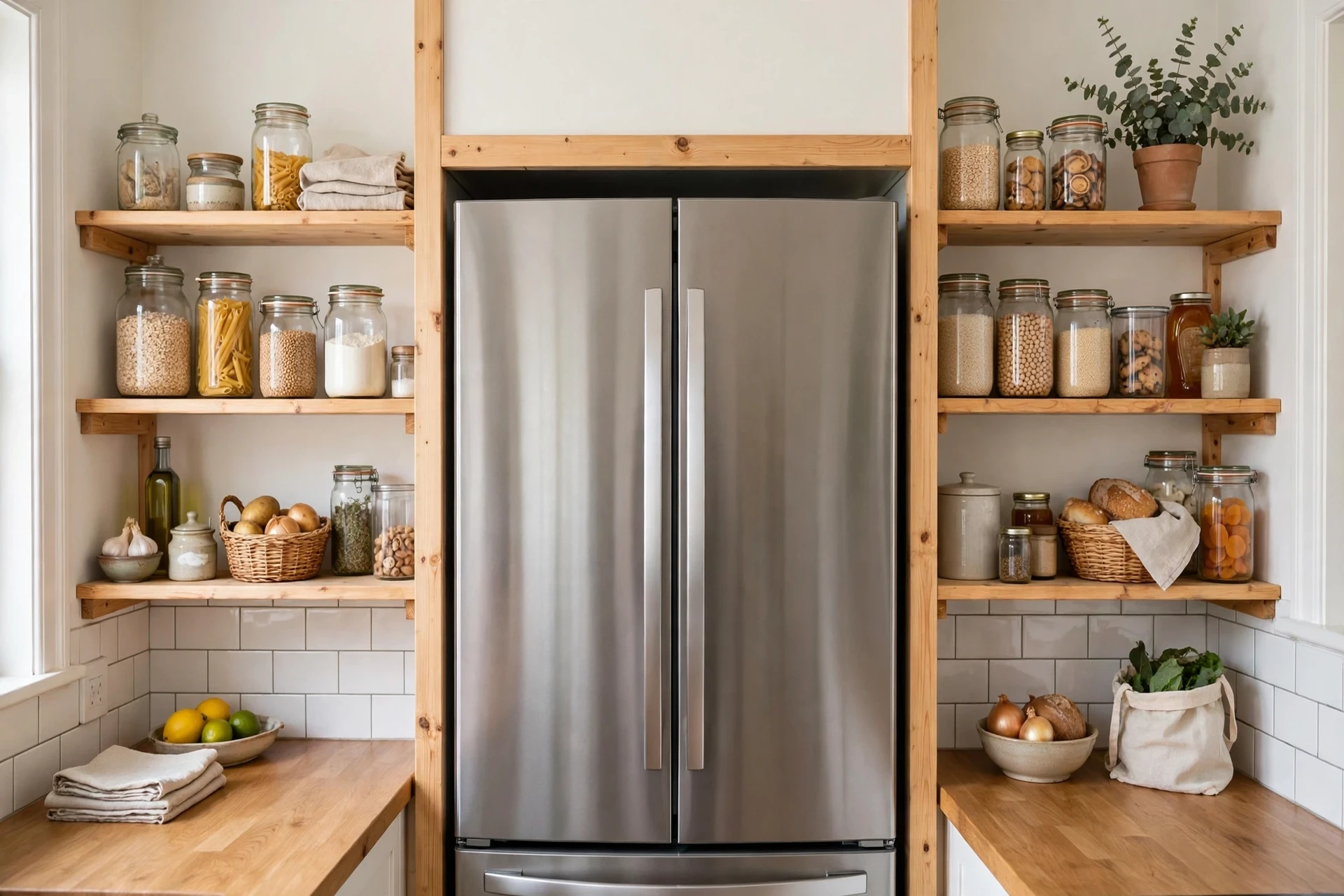
For busy families, the kitchen rarely fails for lack of food. It fails for lack of a place to put it where it can be found quickly, without a morning hunt through deep cupboards and crowded counters. The wall beside an existing refrigerator is often the most overlooked storage opportunity in the room, because it looks like dead space when in fact it can become a simple, practical pantry. Building a pantry around a fridge does not require moving plumbing, rewiring the kitchen, or buying a new appliance, and it can transform daily routines in a single weekend project.
The short answer is to build a shallow, well-planned surround that fits your actual refrigerator, leaves the airflow and door swing it needs, and uses pull-outs and adjustable shelves so nothing gets buried. Measure first, build a simple carcass or use ready-made cabinets, and organise by how your family actually cooks, with everyday items at hand height and bulk or rarely used items higher up. Done that way, a fridge pantry looks built-in, works hard every day, and can be adapted when the refrigerator is eventually replaced.
Measuring Your Refrigerator Pantry Space Without Costly Mistakes
Start with the refrigerator itself, not the cabinet catalogue. Measure width, depth including handles, and height, then open both doors fully and note how far they swing and whether drawers pull out clear of the wall. Many refrigerators need a small gap at the sides and back for airflow, and the manufacturer guidance for your model is the authority on those clearances. Building tight against the fridge may look neat on day one, but it can trap heat, strain the compressor, and make future removal a struggle.
Next, measure the wall space honestly, including skirting boards, uneven walls, sockets, and any pipework or vents. Note the floor level too, because kitchen floors are rarely perfectly level and a tall unit that rocks will never look built-in. Sketch the space with all measurements, including the height to any bulkhead or ceiling, and decide whether the pantry will be a single tall unit on one side, a pair of narrower units, or a slim pull-out in a narrow gap. That sketch is your shopping list, and it prevents the most common mistake: building first and discovering the fridge doors cannot open properly.
Choosing a Fridge Pantry Layout That Fits a Busy Family Routine
A good pantry layout follows the family cooking routine. Place breakfast and lunch items where children and adults can reach them without help, keep cooking staples near the hob and preparation area, and put baking, bulk, and seasonal items higher up. If the fridge is at one end of the kitchen, a tall pantry beside it creates a natural food zone, so refrigerated and dry goods can be gathered in one trip.
Consider who uses the pantry and how often. A family with young children may want a low snack zone with clear bins, while a household that batch-cooks may prioritise deep pull-outs for large containers. A slim vertical pull-out suits a narrow gap and spices or cans, while a wider cabinet with adjustable shelves suits boxes, cereals, and appliances. Avoid the temptation to maximise shelf count at the expense of usability. Shelves that are too close together, or too deep without pull-outs, create the same buried-food problem you are trying to solve, just in a new cabinet.
Simple Fridge Pantry Builds: Ready-Made Cabinets, Flat-Pack, or a Timber Carcass
You do not need bespoke joinery to get a built-in look. Ready-made tall cabinets, flat-pack pantry units, and simple plywood carcasses can all work, provided they are levelled, fixed securely to the wall, and finished with matching doors or panels. Ready-made units save time and give predictable dimensions, while a simple carcass built from plywood lets you fit an awkward width exactly and choose shelf heights to suit your groceries. For most busy families, a hybrid works well: a ready-made carcass with customised interiors, such as pull-outs, door racks, and clear bins.
Whichever route you choose, fix the unit properly. Tall pantry units are top-heavy when loaded, so anchor them to wall studs or solid masonry with suitable fixings, and level them with adjustable feet or shims before loading. Leave the refrigerator bay slightly wider than the fridge, with a finished side panel that hides the gap neatly, and consider a top panel or bridge cabinet above the fridge for rarely used items, provided it does not block ventilation. A clean, level, securely fixed unit looks intentional, while a wobbling, unanchored tower looks temporary, however nice the doors are.
Pull-Outs, Shelves, and Door Racks That Stop Food Getting Lost
The interior matters more than the exterior. Deep fixed shelves are where food goes to expire, because items at the back disappear behind newer purchases. Pull-out shelves, baskets, and door racks change that completely, because they bring the back of the cabinet to you. For a fridge pantry, full-extension pull-outs are worth the extra cost, especially for heavy items such as canned goods, oils, and baking supplies. Check weight ratings before loading, and distribute heavy items low to keep the unit stable.
Adjustable shelves are the other essential, because grocery sizes change and families grow. Plan shelf heights around real items, not catalogue defaults: tall cereal boxes and oil bottles need more height than spice jars, and a single adjustable shelf can often solve a whole category of awkward items. Clear bins and labels help busy mornings, but keep the system simple enough that children and guests can maintain it. If the organisation system needs a manual to understand, it will not survive a busy week, however tidy it looks on installation day.
Ventilation, Door Swing, and Fridge Access You Must Not Block
A pantry that looks perfect but blocks the fridge is a failed project. Re-check door swing after the unit is built, including freezer drawers and any ice or water dispenser access. Doors should open fully without hitting the pantry, and drawers should pull out without catching. Also check that the fridge can be pulled forward for cleaning and servicing. A unit that traps the appliance will make a simple filter change or repair into a dismantling job, so leave a sensible removal path and avoid fixing panels across the back of the fridge bay.
Ventilation deserves the same care. Most refrigerators need air to circulate around the sides and back, and some need a gap at the top as well. Follow the manufacturer guidance for your model, and do not stuff insulation or storage into ventilation gaps to gain a few extra inches. If the fridge runs hot, noisy, or struggles to stay cold after the pantry is built, ventilation is the first thing to check. A small, intentional gap with a neat trim panel is far better than a tight fit that shortens the life of an expensive appliance.
Finishing a Fridge Pantry So It Looks Built-In, Not Bolted On
Finishing is what turns a storage unit into a built-in pantry. Match door fronts, handles, and paint or finish to the existing kitchen as closely as possible, and use filler panels to close gaps against uneven walls. A simple cornice or top trim can tie a tall unit into the room, while a plinth or kick plate at the base makes it look like part of the original kitchen. Take time with scribing and filling, because small gaps catch the eye far more than the cabinet itself.
Lighting also makes a surprising difference. A small LED strip inside a tall pantry, or under a bridge cabinet, makes contents visible without opening every door in a dark kitchen. Choose lighting that is easy to switch and does not generate significant heat near food storage, and keep wiring tidy and away from the fridge ventilation path. For rented homes or temporary setups, freestanding tall units, open shelving, and rolling pantry carts can give much of the benefit without permanent fixing, provided they are stable and do not block walkways or fridge access.
Organising a Fridge Pantry for School Mornings and Weeknight Cooking
Once built, organise by routine rather than by category alone. Create zones that match how your family actually eats: a breakfast zone with cereals, spreads, and lunchbox items; a cooking zone with oils, sauces, and spices; and a bulk zone for flour, rice, and cleaning supplies. Keep the most-used zone at hand height, put heavy items low, and reserve high shelves for light, rarely used things. Rotate stock so new purchases go behind older ones, and do a quick monthly check for expired items, which is far easier when pull-outs make everything visible.
Involve the family in the system, especially children who pack their own lunches or snacks. Clear bins labelled with simple words or pictures help younger children find and return items, and a single snack bin can prevent the whole pantry being searched every afternoon. Revisit the layout after a month of real use. What seemed logical during building may need a shelf moved or a bin swapped, and that small adjustment is normal. A pantry that adapts to the family will stay tidy, while a rigid system that ignores real habits will quietly revert to clutter.
Fridge Pantry Safety, Weight, and When to Call a Professional
Safety is straightforward but worth stating plainly. Anchor tall units to the wall, do not overload pull-outs beyond their rating, and keep heavy items low. Keep cleaning chemicals separate from food, ideally in a different cabinet, and keep small items and sharp tools out of reach of very young children. If the pantry build involves moving sockets, altering wiring, or cutting into walls that may contain pipes or cables, stop and get professional advice. Electrical and plumbing work is not a place to improvise for extra storage.
Also consider the floor and wall condition before loading a tall unit. A pantry full of canned goods is heavy, and a weak floor or a plasterboard wall without proper fixings can fail over time. If the wall is uneven, the floor slopes noticeably, or the unit will be very tall and heavily loaded, a carpenter or kitchen fitter can advise on fixing and levelling in a short visit. That advice is worth it, because a pantry that is safe and stable will be used confidently every day, while a wobbling unit will be avoided and eventually emptied.
Final Thoughts: A Simple Pantry Around Your Fridge That Busy Families Actually Use
A simple pantry around an existing refrigerator works when it is measured to the fridge, built to the family routine, and organised so nothing gets buried. Choose a layout that fits your wall, use pull-outs and adjustable shelves, protect ventilation and door swing, and finish it to match the kitchen. Done that way, the pantry becomes the quiet hero of the kitchen: breakfasts get faster, weeknight cooking gets easier, and the fridge wall stops being wasted space and starts working for the family every single day.
Fridge Pantry FAQs for Busy Families
How much clearance does a refrigerator need inside a pantry surround?
Follow your refrigerator manufacturer guidance, as clearances vary by model. In general, leave a small gap at the sides and back for airflow, keep the top clear where required, and make sure doors and drawers open fully without hitting the pantry.
Can I build a pantry around a fridge in a rental home?
Yes, with freestanding tall units, open shelving, or rolling pantry carts that do not need permanent wall fixing. Keep units stable, do not block fridge ventilation or access, and check your rental agreement before fixing anything to walls.
Are pull-out shelves worth it for a fridge pantry?
Yes, especially for deep cabinets. Full-extension pull-outs bring back items into view, prevent food expiring unseen, and make heavy cans and bottles easier to handle. Check weight ratings and keep heavy items low for stability.
What should go in a pantry beside the refrigerator?
Everyday dry goods that pair with refrigerated food work best: cereals, spreads, sauces, spices, baking supplies, and lunchbox items. Keep cleaning chemicals elsewhere, and put bulk or rarely used items higher up.
How do I make a flat-pack pantry look built-in?
Level and anchor the unit, match doors and handles to the kitchen, use filler panels against uneven walls, and add a top trim and plinth. Those finishing details do more for the built-in look than the cabinet brand itself.
What if my fridge is replaced with a larger model later?
Build the fridge bay slightly wider than the current model, avoid fixing panels across the back, and choose pantry units that can be moved or adjusted. That flexibility makes a future replacement far less disruptive.