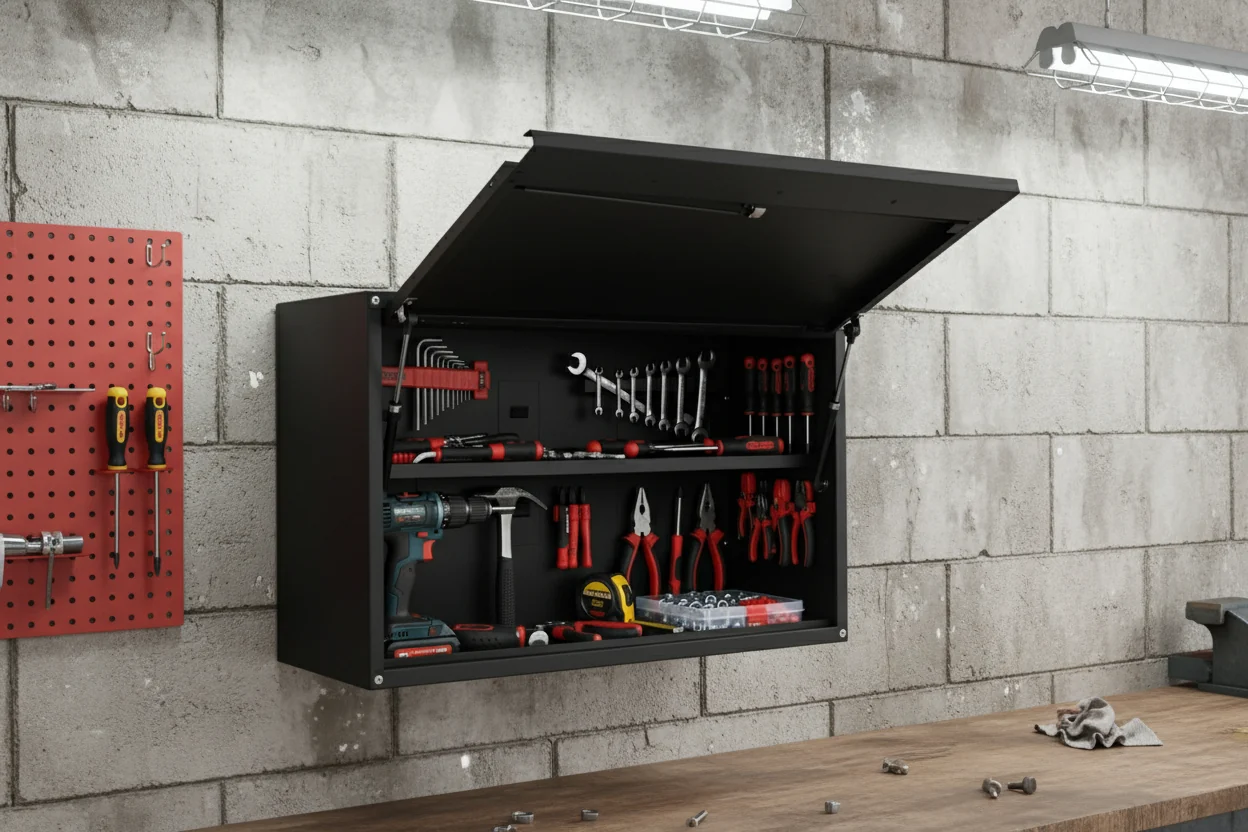
A well-organized tool collection can make home repairs, DIY projects, gardening tasks, and workshop work much easier. Without proper storage, however, even a small collection of tools can quickly become difficult to manage.
A modern home tool storage network brings together toolboxes, cabinets, pegboards, shelves, drawers, wall organizers, workbenches, and workshop storage systems to keep equipment protected and accessible.
The goal is not simply to find somewhere to place tools. Good storage should make it easy to find the right tool, return it after use, protect expensive equipment, and make better use of limited space.
What Is a Home Tool Storage Network?
A home tool storage network is an organized combination of storage solutions used to manage hand tools, power tools, accessories, hardware, and workshop equipment.
A complete setup may include:
- Toolboxes
- Tool bags
- Tool cabinets
- Rolling tool chests
- Pegboards
- Wall panels
- Shelving
- Storage bins
- Drawer organizers
- Workbenches
- Power tool racks
- Hardware organizers
- Garage cabinets
Different storage systems serve different purposes. Small tools may work best in drawers or pegboards, while heavy power tools may require stronger cabinets or dedicated shelves.
Why Tool Organization Matters
Tool organization affects more than appearance.
A properly organized workshop can help:
- Reduce time spent searching for tools
- Protect equipment from damage
- Improve workspace safety
- Make inventory easier
- Reduce unnecessary purchases
- Keep work surfaces clear
- Improve access to frequently used equipment
When every tool has a designated location, returning equipment after a project becomes much easier.
Toolboxes for Portable Storage
Toolboxes remain one of the most practical storage options for homeowners.
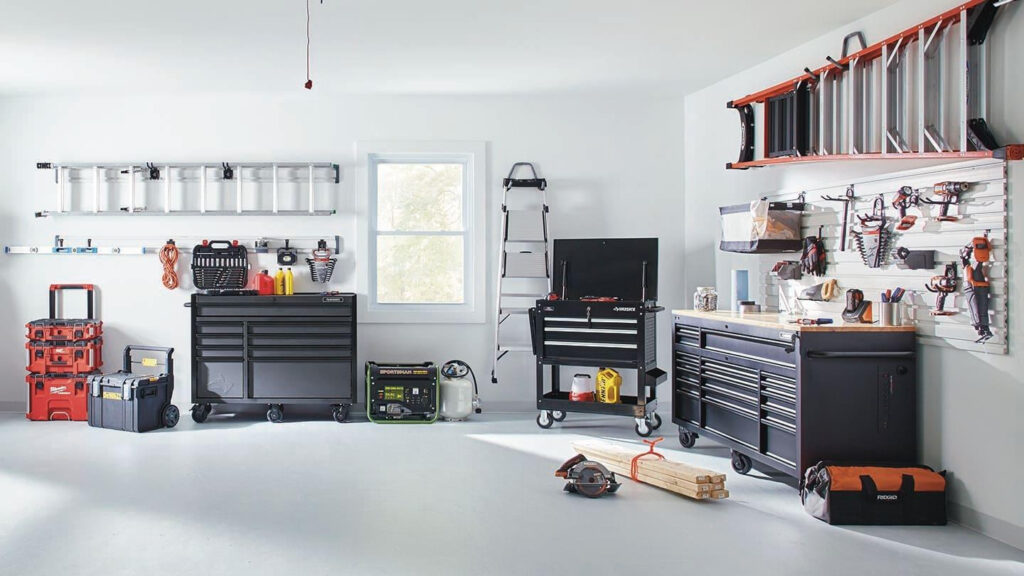
A toolbox allows tools to be stored together and transported to another location.
They are especially useful for:
- Basic household repairs
- Plumbing work
- Electrical maintenance
- Automotive projects
- DIY tasks
- Outdoor repairs
Traditional Toolboxes
Traditional toolboxes typically contain one or more compartments for hand tools and small hardware.
They are useful when portability is more important than maximum storage capacity.
Modular Toolboxes
Modular systems use interconnected storage boxes that can be stacked or transported together.
They allow homeowners to expand storage as their tool collection grows.
Tool Bags
Tool bags offer another portable option.
They are lightweight and can provide quick access to frequently used tools. Tool bags can be particularly convenient for carrying equipment around a house rather than working in a dedicated workshop.
Tool Cabinets
Tool cabinets provide considerably more storage than a basic toolbox.
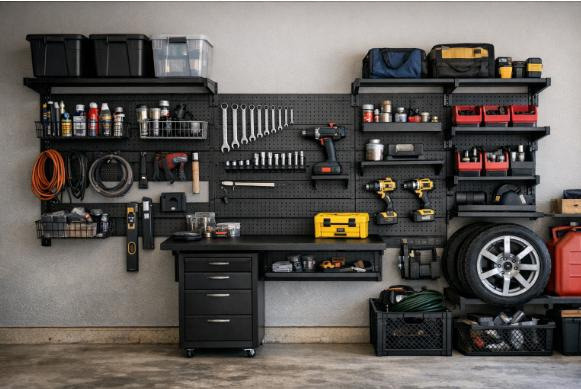
A cabinet can contain multiple drawers and compartments for organizing different categories of equipment.
Common storage categories include:
- Screwdrivers
- Pliers
- Wrenches
- Sockets
- Measuring tools
- Cutting tools
- Fasteners
- Power tool accessories
Rolling Tool Cabinets
Rolling cabinets are mounted on casters, allowing them to move around a garage or workshop.
They can function as both storage and a mobile workstation.
Before purchasing a rolling cabinet, consider the floor surface, wheel quality, drawer capacity, and overall weight.
Pegboard Tool Storage
Pegboards are one of the simplest ways to turn unused wall space into practical storage.
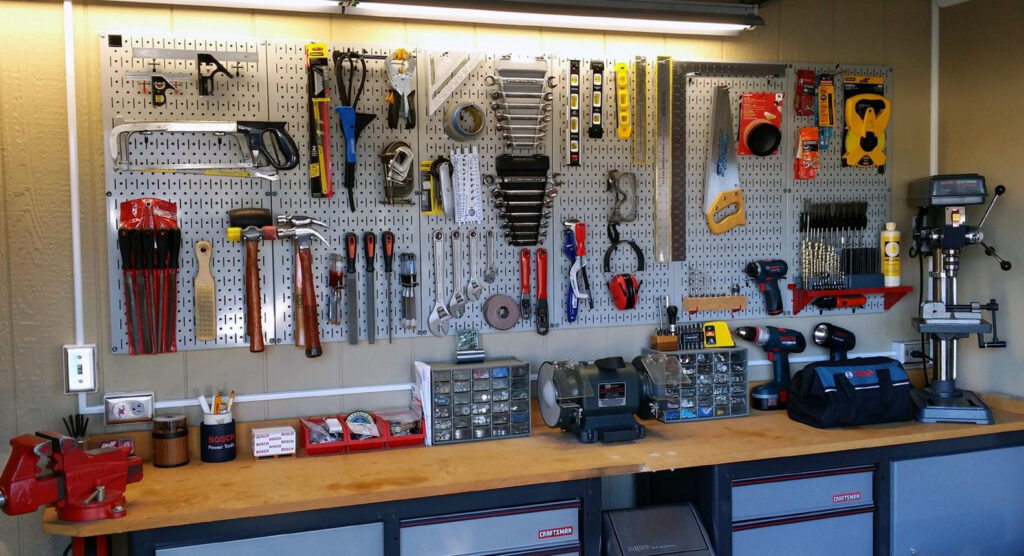
Hooks and accessories can be arranged according to the tools used most frequently.
A pegboard can hold:
- Hammers
- Pliers
- Screwdrivers
- Tape measures
- Wrenches
- Levels
- Brushes
- Cords
- Small accessories
One major advantage is visibility. Tools remain easy to see instead of being hidden inside drawers.
Wall-Mounted Storage Panels
Wall storage panels provide a more structured alternative to traditional pegboards.
Depending on the system, panels may support:
- Hooks
- Shelves
- Bins
- Tool holders
- Cabinets
- Magnetic accessories
They can be useful when homeowners want a customizable wall storage system that can change as their tool collection grows.
Workshop Shelving
Shelving is particularly useful for bulky equipment that does not fit efficiently into drawers.
Shelves can store:
- Tool cases
- Power tools
- Paint supplies
- Storage containers
- Extension cords
- Garden equipment
- Workshop materials
Heavy items should be placed on appropriately rated shelving and positioned safely.
Drawer Organizers
A drawer without internal organization can quickly become a collection of mixed tools and hardware.
Drawer organizers divide storage into smaller sections.
They can be used for:
- Screwdrivers
- Bits
- Sockets
- Fasteners
- Measuring tools
- Small hand tools
Transparent or labeled organizers can make it easier to identify contents without opening multiple containers.
Small Parts Storage
Screws, nuts, bolts, washers, anchors, nails, and other small components can be difficult to organize.
Small-parts organizers typically use individual compartments so different hardware types remain separated.
A useful labeling system might categorize hardware by:
Type → Size → Material → Application
For example, screws can be separated by length and intended material rather than simply being placed into one large container.
Power Tool Storage
Power tools require different storage considerations from small hand tools.
Common power tools include:
- Drills
- Impact drivers
- Circular saws
- Jigsaws
- Sanders
- Grinders
- Routers
Dedicated racks or shelves can prevent bulky tools from taking over valuable workbench space.
Battery-powered tools also require a suitable location for battery storage and charging.
Battery and Charger Organization
Cordless tools often create a second storage challenge: batteries and chargers.
A dedicated charging station can keep equipment organized while reducing cable clutter.
A charging area may include:
- Wall-mounted shelves
- Charger brackets
- Cable management
- Battery holders
- Small accessory bins
Chargers and batteries should be used and stored according to the manufacturer’s instructions.
Workbenches With Integrated Storage
A workbench can become the center of a home workshop.
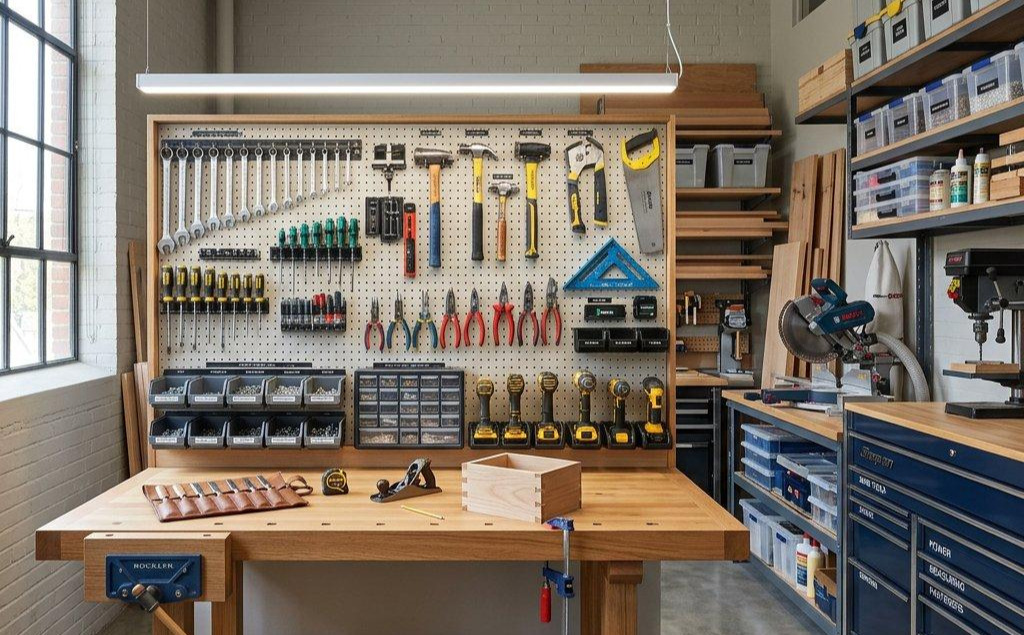
The best workbenches combine a durable working surface with practical storage underneath or nearby.
Integrated storage can include:
- Drawers
- Cabinets
- Open shelves
- Pegboards
- Tool racks
- Hardware bins
This arrangement keeps frequently used equipment close to the workspace.
Garage Tool Storage
Garages often provide the largest available storage area in a home.
However, simply placing cabinets and shelves around the garage does not guarantee good organization.
A better approach is to divide the garage into functional zones.
Automotive Zone
Store:
- Automotive tools
- Socket sets
- Jack accessories
- Cleaning equipment
General Repair Zone
Store:
- Screwdrivers
- Hammers
- Pliers
- Measuring tools
- General hardware
Garden Zone
Store:
- Pruning tools
- Hoses
- Hand tools
- Outdoor equipment
Power Tool Zone
Store:
- Drills
- Saws
- Sanders
- Batteries
- Chargers
This zoning system makes frequently used equipment easier to locate.
Vertical Tool Storage
Wall space is often underused.
Vertical storage can free floor space while keeping tools visible.
Useful options include:
- Pegboards
- Slatwall systems
- Wall-mounted cabinets
- Magnetic strips
- Hanging racks
- Tool hooks
- Vertical shelves
Tall storage systems can be particularly useful in compact garages and workshops.
Ceiling Storage
Ceiling storage can provide additional capacity when wall and floor space are limited.
Suitable items may include:
- Seasonal equipment
- Empty storage containers
- Lightweight materials
- Camping equipment
- Infrequently used items
Heavy equipment should not be stored overhead unless the storage system is specifically designed and rated for the load.
Mobile Workshop Storage
Mobile storage allows the workshop to adapt to different projects.
Rolling carts can carry tools between:
- Garage areas
- Driveways
- Workbenches
- Garden areas
- Home renovation projects
A mobile cart can also function as a temporary workstation.
Tool Storage Materials
Storage systems are available in several materials.
Steel
Steel cabinets are popular because they can provide strength and durability.
They are commonly used for heavy tools and garage workshops.
Plastic
Plastic storage boxes and bins are lightweight and resistant to many forms of corrosion.
They can be useful for small tools, hardware, and portable storage.
Wood
Wooden cabinets and shelves can provide a traditional workshop appearance.
They can also be customized for specific tools and spaces.
Composite Materials
Modern storage products may use engineered materials designed to balance strength, weight, and durability.
Organizing Tools by Frequency of Use
One of the easiest ways to improve a storage system is to organize tools according to how frequently they are used.
Frequently Used Tools
Keep these within easy reach.
Examples include:
- Screwdrivers
- Pliers
- Tape measure
- Utility knife
- Adjustable wrench
Occasionally Used Tools
Store these in drawers, cabinets, or labeled containers.
Specialized Tools
Large or specialized equipment can be stored separately so it does not occupy prime workspace.
This approach makes everyday tasks faster without requiring every tool to remain visible.
Creating a Tool Inventory
A simple inventory can prevent unnecessary purchases and make tool management easier.
The inventory can record:
- Tool name
- Quantity
- Storage location
- Brand
- Model
- Accessories
- Condition
For larger workshops, digital inventory systems can make it easier to determine whether a specific tool is already available.
Labeling Tool Storage
Labels are particularly useful when multiple drawers and containers look similar.
Labels can identify categories such as:
Wrenches | Pliers | Screwdrivers | Electrical | Plumbing | Fasteners | Drill Bits | Sanding
Clear labels can help other household members return tools to the correct location.
Security for Expensive Tools
Some tools can represent a significant investment.
Lockable cabinets can provide additional protection for expensive equipment.
Security considerations may include:
- Lockable drawers
- Cabinet locks
- Anchoring large storage units
- Controlled workshop access
- Tool inventory records
A secure storage system can also reduce the risk of tools being misplaced.
Moisture and Rust Protection
Garages, sheds, and workshops can experience humidity and temperature changes.
Metal tools may develop rust when exposed to prolonged moisture.
Good practices include:
- Keeping tools dry
- Avoiding unnecessary exposure to moisture
- Maintaining protective coatings
- Using appropriate storage containers
- Controlling workshop humidity where practical
Storage location is especially important for precision tools and metal equipment.
Designing a Small Workshop Storage System
A small workshop does not need to sacrifice organization.
Start by using vertical surfaces.
A compact system might combine:
Pegboard + Wall Cabinet + Workbench Drawers + Small Parts Bins
This arrangement keeps frequently used tools visible while placing less frequently used equipment in cabinets.
Foldable workbenches can provide additional flexibility when floor space is limited.
How to Build a Home Tool Storage Network
Step 1: Take Inventory
Identify the tools you already own.
Remove broken, duplicate, or unnecessary items where appropriate.
Step 2: Categorize Everything
Group tools according to their purpose.
For example:
- Hand tools
- Power tools
- Automotive tools
- Garden tools
- Electrical tools
- Plumbing tools
- Hardware
Step 3: Measure Available Space
Measure walls, floor areas, cabinets, and workbench locations before buying storage equipment.
Step 4: Select the Main Storage System
Choose whether your primary system will be based around a toolbox, cabinet, pegboard, shelving, or a combination.
Step 5: Create Easy-Access Zones
Place frequently used tools where they can be reached quickly.
Step 6: Add Specialized Storage
Use racks, bins, hooks, and organizers for equipment that does not fit standard storage.
Step 7: Label the System
Clear labels make organization easier to maintain.
Step 8: Review the Setup
After using the workshop for several weeks, identify which tools are difficult to access and adjust the layout accordingly.
Common Tool Storage Mistakes
Storing Everything in One Toolbox
A single toolbox may work for a small collection but becomes inefficient as the number of tools increases.
Ignoring Wall Space
Large amounts of vertical space can remain unused in garages and workshops.
Mixing Small Hardware
Combining different screws, nuts, and bolts in one container makes future projects unnecessarily difficult.
Overloading Shelves
Storage equipment should always be used within its rated capacity.
Poor Labeling
Without labels, drawers and containers can quickly become difficult to manage.
Keeping Tools on the Workbench
A workbench should provide working space rather than becoming permanent storage.
Frequently Asked Questions
What is the best way to organize home tools?
Start by grouping tools according to their function and frequency of use. Combine toolboxes, cabinets, pegboards, drawers, and bins according to the size and type of your collection.
Are pegboards good for tool storage?
Yes. Pegboards are especially useful for frequently used hand tools because they keep equipment visible and accessible.
Should power tools be stored in cabinets?
They can be stored in cabinets, shelves, racks, or dedicated cases. The best option depends on tool size, frequency of use, available space, and protection requirements.
What is better a toolbox or tool cabinet?
A toolbox is generally better for portability and smaller collections, while a tool cabinet provides greater capacity and organization for larger workshops.
How do I organize a small garage workshop?
Use vertical storage, wall-mounted systems, compact cabinets, a storage-equipped workbench, and clearly labeled bins. Keeping the floor clear can make a small workshop feel significantly larger.
How can I prevent tools from rusting?
Keep tools dry, minimize exposure to moisture, and use suitable protective measures for metal equipment. A dry and well-organized storage environment can reduce corrosion problems.
Clearing Up Confusion
Effective tool storage is not about filling a garage with cabinets and containers. The purpose of a storage network is to make tools easy to find, easy to access, easy to return, and protected between projects.
A toolbox provides portability, cabinets offer high-capacity storage, pegboards provide visibility, shelving handles larger equipment, and drawer organizers keep small tools and hardware separated.
Combining these systems creates a more flexible workshop than relying on a single storage solution.
Final Thoughts
A modern home tool storage network can transform a cluttered garage, shed, or workshop into an efficient working environment.
The ideal setup depends on the size of the tool collection, available space, project types, and how frequently different tools are used. Portable toolboxes work well for mobile repairs, while cabinets and rolling chests provide greater capacity. Pegboards make frequently used tools easy to see, and shelves and dedicated racks handle larger equipment.
By combining toolboxes, cabinets, pegboards, workbenches, shelves, organizers, and smart storage zones, homeowners can create a system that protects their equipment while making every project easier to start and finish.