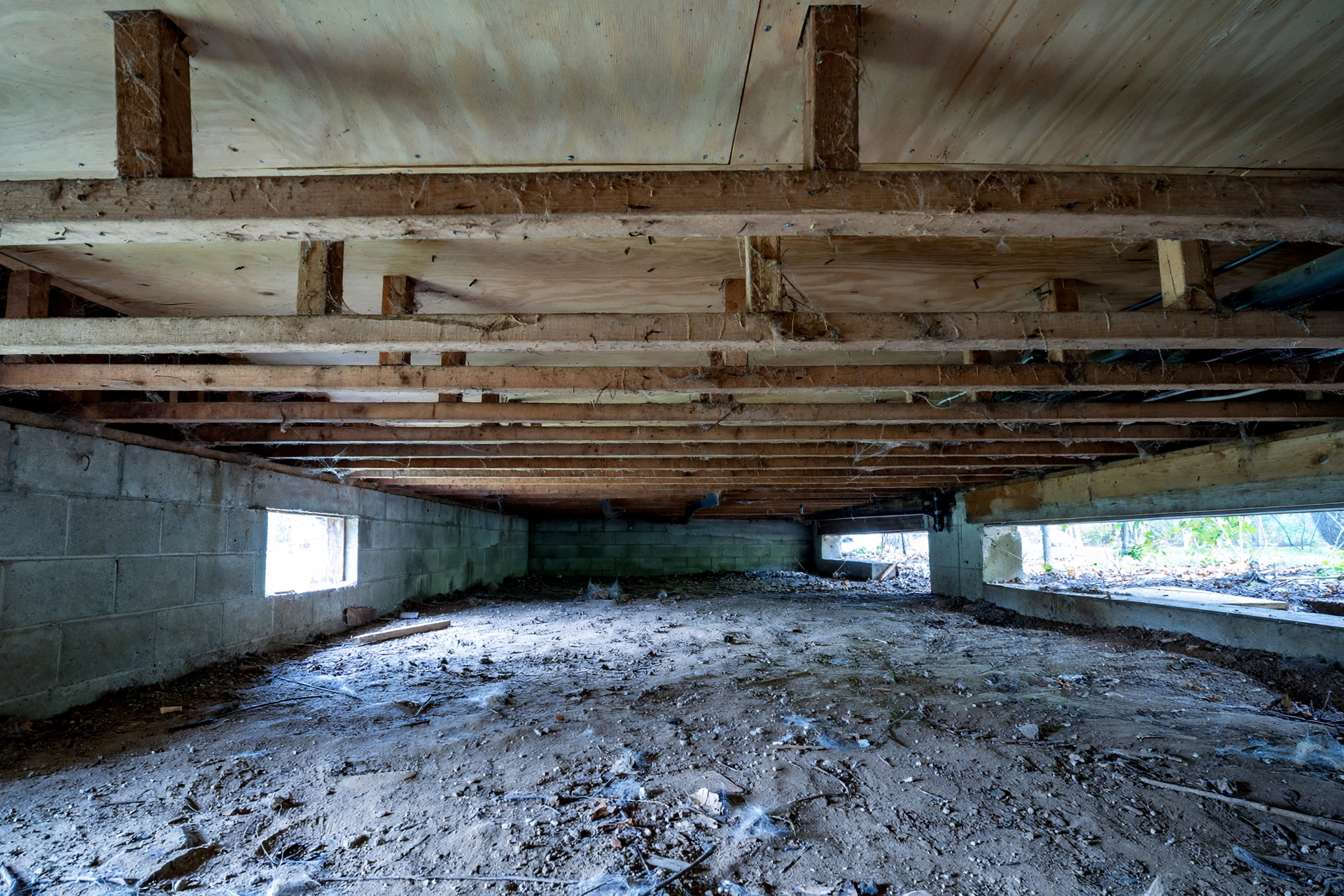
You can set the thermostat to a comfortable temperature and still feel a chill rising through your feet. In many homes, the heating system is not the problem: the shallow, uninsulated space beneath the first floor is quietly pulling warmth out of the rooms above it all winter.
Cold floors over an uninsulated crawl space are caused by heat escaping downward through the floor, outdoor air entering through vents and gaps, and moisture making the floor feel colder than it is. In most homes, several of these causes act at once, which is why turning up the heat rarely fixes the problem.
The Short Answer: Your Crawl Space Acts as a Heat Sink Beneath the Floor
An uninsulated crawl space sits outside the home's thermal envelope, so it stays close to outdoor temperature for much of the year. In winter, that can mean near-freezing air directly below your living room or bedroom. Heat always moves from warm areas to cold ones, so warmth flows steadily downward through the subfloor and joists. As long as the crawl space stays cold, the floor surface stays several degrees cooler than the rest of the room, and the chill returns as soon as each heating cycle ends.
Three Ways Heat Slips Through a Bare Floor Assembly
Heat escapes through a floor in three ways, and an uninsulated crawl space lets all three work against you. Conduction is heat moving directly through solid materials: warmth travels from the subfloor into the wooden joists and down into the cold air below, and joists act as thermal bridges that carry heat past any thin floor covering. Convection is heat carried by moving air, as cold air seeps upward through cracks and gaps while warm room air leaks downward. Radiation, the smallest contributor, is heat radiating from the warm floor surface toward the colder surfaces below.
Open Vents and Foundation Gaps: How Outdoor Air Gets Under Your Floor
Many older homes were built with foundation vents meant to dry out the crawl space. In winter, those vents admit a steady stream of outdoor air directly beneath the floor, and on a windy day the effect is dramatic, because moving air strips heat from the underside of the floor far faster than still air. Rooms above the windward side often feel coldest, and the chill worsens on gusty days. Cracks in masonry, loose-fitting access doors, and openings where pipes and cables pass through the foundation wall all add to the inflow.
The Rim Joist Problem: Why the Edge of Your Floor Feels Coldest
The rim joist is the board that caps the ends of the floor joists around the perimeter of the house, sitting on top of the foundation wall. It is one of the weakest points in a floor assembly: a relatively thin piece of wood with outdoor air on one side and living space on the other. In many homes it is never insulated, and the joints where it meets the foundation and subfloor are never sealed. Heat conducts straight through it, and cold air leaks through the joints around it. The symptom is distinctive: floors feel coldest near exterior walls, with a draft at ankle height along baseboards, even in rooms whose centers feel fine.
Sagging, Wet, or Missing Batts: What Failed Floor Insulation Actually Looks Like
Some homes have insulation between the floor joists, yet the floors are still cold, usually because the insulation is no longer doing its job. Fiberglass batts are held by friction and supports, and over years they sag, slip, or fall entirely, leaving bare stretches of subfloor exposed. A batt that has dropped even a few inches creates a gap where air circulates freely, defeating the insulation across the whole bay. Moisture is the other great destroyer: a damp crawl space soaks batts from below, and wet fiberglass loses much of its ability to resist heat flow while becoming heavy, which accelerates sagging. From inside, failed insulation shows up as uneven cold patches within a single room.
Ducts and Pipes Running Through the Cold Zone Beneath Your Feet
In many homes, heating ductwork runs through the crawl space, so warm air travels through a cold environment before reaching a room. Uninsulated or poorly insulated ducts lose a significant share of their heat along the way, so air arriving at the register is cooler than intended, and rooms above the crawl space are hardest to warm. Leaky duct joints spill warm air directly into the crawl space, heating the void under the floor instead of the living space. Hot water lines lose heat on the way to taps, and cold water lines near vents or the rim joist can freeze and burst in cold weather.
Damp Earth and Standing Water: How Crawl Space Moisture Deepens the Chill
Moisture makes cold floors worse in several ways at once. Bare earth floors release water vapor continuously, and damp air feels colder against skin than dry air at the same temperature. When humid air reaches the cooler underside of the floor, it can condense, wetting the subfloor and any insulation present. Wet materials conduct heat more readily than dry ones, so a damp floor assembly loses warmth faster, and wet insulation stops insulating effectively. Standing water also keeps the crawl space colder for longer, extending the cold-floor season into spring, while chronic dampness can lead to wood rot and mold growth in the floor structure.
The Stack Effect: Why Warm Air Escaping Upstairs Pulls Cold Air Across Your Floors
A house behaves like a chimney in winter. Warm indoor air rises and leaks out through gaps in the attic and upper floors, and replacement air has to come from somewhere. The path of least resistance is usually at the bottom of the house: the crawl space. This upward pull, known as the stack effect, continuously draws cold crawl space air up through gaps in the floor, around plumbing penetrations, and along baseboards. It explains why cold floors persist even when the heating runs hard, and why air leaks at the top of the house, such as a poorly sealed attic hatch, can make ground-floor floors colder: every cubic foot of air lost upstairs must be replaced by air drawn in from below.
Flooring Materials That Amplify the Chill Underfoot
The flooring material itself shapes how cold a floor feels, because different materials conduct heat away from bare feet at different rates. Tile and stone are the worst offenders: dense and highly conductive, they feel cold even in a reasonably warm room. Hardwood feels less cold than tile but still draws heat from feet, while laminate sits in between, depending on its underlay. Carpet insulates the foot from the floor surface and can mask a moderately cold subfloor. If only tiled floors feel cold while carpeted bedrooms feel fine, the flooring may be amplifying a mild crawl space problem. If carpeted rooms feel cold too, the heat loss below is likely substantial.
Reading the Clues: A Room-by-Room Cold Floor Diagnosis Checklist
Before spending money on any fix, map the problem. Cold floors are rarely uniform, and the pattern of where and when they occur points to the cause. Walk the house on a cold morning and note which rooms are affected, whether the chill is worst near exterior walls or in the middle of rooms, and whether it changes with wind or outdoor temperature. Check the crawl space itself if it is safe to do so, looking for open vents, fallen insulation, standing water, and gaps at the rim joist.
- Coldest near exterior walls: suspect the rim joist and foundation gaps.
- Coldest on the windward side or on windy days: suspect open vents and air leaks.
- Uneven patches within one room: suspect sagging, wet, or missing insulation batts.
- Whole first floor cold, upper floors fine: suspect the stack effect plus an uninsulated crawl space.
- Cold rooms above long duct runs: suspect uninsulated or leaky ductwork below.
- Musty smell or dampness with the chill: suspect crawl space moisture as a driving cause.
- Only tile or stone floors feel cold: suspect the flooring material amplifying a milder problem.
What Cold Floors Cost You Over Time: Bills, Comfort, and Hidden Damage
Cold floors are easy to dismiss as a comfort quirk, but they carry real costs. A heating system compensating for steady heat loss through the floor runs longer and more often, which shows up on energy bills and shortens equipment life through extra wear. Estimates of how much heat an unmanaged crawl space accounts for vary with climate and construction, but the direction is consistent: an uninsulated floor assembly is an ongoing energy drain. The hidden costs matter more: chronic cold and damp encourage condensation on joists and subflooring, which over years can lead to wood decay and mold, while pipes in a cold crawl space face freeze risk each winter.
When a Cold Floor Signals Something a Specialist Should Look At
Most cold floors trace back to the causes above, but some signs warrant a professional assessment rather than a do-it-yourself look. Standing water, visible mold growth, sagging or bouncy floors, and joists showing rot or insect damage all indicate problems beyond simple heat loss, and entering a crawl space with mold, sewage, or structural damage carries real health and safety risks. An energy auditor or crawl space specialist can measure what a homeowner can only guess at: blower-door testing quantifies air leakage, infrared imaging reveals exactly where heat escapes, and an inspection distinguishes failed insulation from moisture or structural issues. A professional assessment typically costs a few hundred dollars as an estimate, and it prevents the most common expensive mistake here: paying to insulate a crawl space that actually needs drainage, moisture control, or structural repair first.
Cold Crawl Space Floor Questions Homeowners Ask Most
Are cold floors over a crawl space normal in winter?
Mildly cool floors in the coldest weeks can be normal, but floors that feel icy, or stay cold all winter despite a warm thermostat setting, point to a real heat-loss problem below.
Why are my floors cold even though the heat is running?
Because heat escapes as fast as it is supplied. An uninsulated crawl space drains warmth downward, and the stack effect pulls cold air in from below, so the heating system warms the air while the floor itself stays cold.
Why is one room colder than the rest of the house?
Uneven cold usually traces to a local cause: fallen insulation above that room, a duct run losing heat, a rim joist gap on that side of the house, or a vent admitting cold air beneath that room.
Does an uninsulated crawl space really raise heating bills?
Yes. Steady heat loss through the floor forces the heating system to run longer to hold the thermostat setting, and leaky ducts in the crawl space waste additional heat before it reaches rooms. The effect is largest in cold climates and in homes with vented crawl spaces.
Can dampness alone make floors feel cold?
Yes. Humid air feels colder, wet insulation loses its insulating ability, and evaporation from damp soil draws additional heat from the floor assembly. A damp crawl space often produces cold floors even when some insulation is present.
Should I check the attic if my ground floor is cold?
Surprisingly, yes. Because of the stack effect, air leaking out through the attic pulls replacement air in through the crawl space. Sealing major attic leaks can reduce the cold air drawn across ground-floor floors.
Final Thoughts: Pinpointing Your Floor's Cold Source Before Spending a Cent
Cold floors over an uninsulated crawl space are rarely caused by one thing alone. Open vents, an uninsulated rim joist, failed batts, leaky ducts, crawl space moisture, and the stack effect usually combine, and the pattern of cold across your home reveals which ones dominate. Map the problem room by room, look beneath the floor where it is safe to do so, and treat warning signs like standing water or sagging floors as a reason to call a specialist.