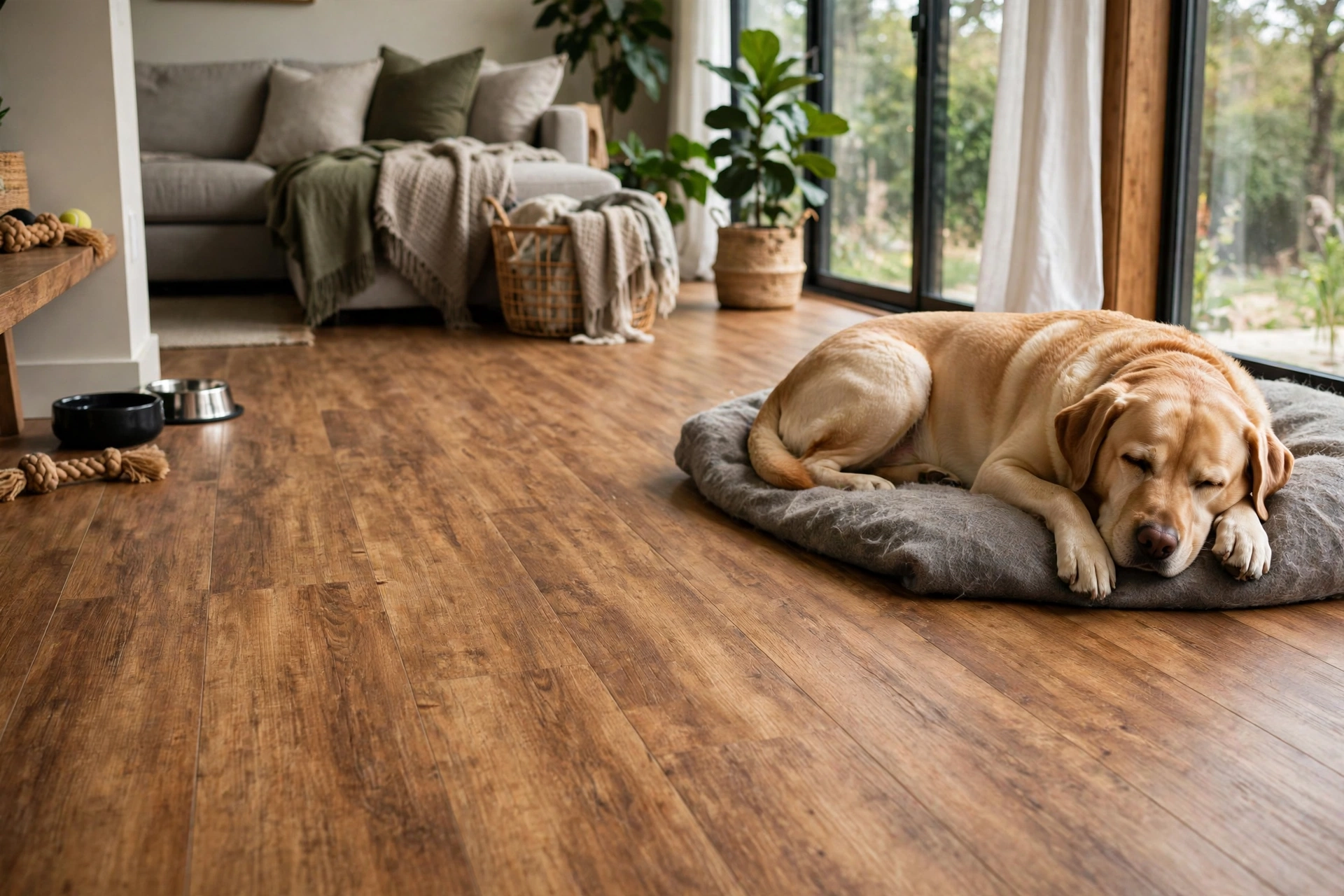
A large dog does not need a house that looks like a kennel, but it does need a floor that can survive claws, muddy paws, spilled water bowls and the daily sprint from the door to the sofa. The best flooring for a big-dog home is not simply the hardest material. It is the material that balances scratch resistance, water resistance, traction and comfort, and that can be installed without tearing the house apart.
The short answer is that rigid-core luxury vinyl plank with a thick wear layer is the best all-round choice for most large-dog homes, with porcelain tile close behind for wet areas and the toughest traffic. Hardwood can work with the right species and finish, but it will show wear sooner and needs more care. The right choice depends on your dog, your rooms and how much maintenance you are honestly willing to do.
How Large Dogs Actually Damage Floors, Room by Room
Large dogs damage floors in four ways, and each material handles them differently. Claws scratch and dull finishes, especially when a dog turns quickly on a hard surface. Grit trapped in paws acts like sandpaper. Urine and spilled water stain and swell materials that absorb liquid. And a running dog needs traction: a floor that is too smooth can leave a large dog slipping, which is uncomfortable for the dog and hard on joints, especially for older animals.
Traffic patterns matter too. The hallway from the back door, the area around the water bowl, the path to the sofa and the spot where a dog lands after jumping down are the places that wear first. A floor that looks fine in a spare bedroom may fail quickly in those high-traffic zones. When you choose flooring, judge it by the busiest room in the house, not by the quietest one.
Rigid-Core Vinyl Plank: The Large-Dog All-Rounder
Rigid-core luxury vinyl plank, often called SPC or WPC vinyl, is popular in dog homes for good reasons. A thick wear layer, typically 20 mil or more for heavy pet traffic, resists claw marks far better than thin vinyl, the rigid core is waterproof so accidents wipe up rather than soak in, and embossed textures give paws reasonable grip without feeling rough under bare feet. It is also warmer and quieter than tile, which matters in living rooms and bedrooms.
Vinyl is not scratch-proof, despite what some marketing suggests. Grit, untrimmed nails and dragging heavy furniture can still mark it, and a cheap plank with a thin wear layer will show wear quickly under a large dog. Look for a thick wear layer, a rigid core, a textured surface and a warranty that actually covers pet use, and keep the floor clean of grit. Installed as a floating floor, vinyl can also be fitted over many existing floors, which helps if you want to avoid major remodeling.
Choose planks with tight locking joints and a stable core, and follow the maker's guidance on underlay, expansion gaps and subfloor preparation. A floating vinyl floor that moves, gaps or clicks loudly under a large dog is usually a subfloor or installation problem, not a material problem. In wet areas, check that trims, transitions and sealant details suit a waterproof floor, because a waterproof plank does not make a badly sealed edge waterproof.
Porcelain Tile: The Toughest Floor for Muddy Paws
Porcelain tile is the most scratch-resistant and waterproof option in this guide. Glazed porcelain resists claws, does not absorb urine or spilled water, and cleans up easily after muddy walks. Wood-look porcelain gives the warmth of timber without timber's vulnerability to moisture, and matte or textured finishes improve traction compared with polished tile.
The trade-offs are comfort and installation. Tile is hard and cold underfoot, which some dogs and people dislike, especially in bedrooms and living rooms. It can also be slippery when wet if you choose a polished finish, so look for a textured surface with a suitable slip rating for the room. Installing tile usually means more disruption than a floating vinyl floor, with adhesive, grout and curing time, so it suits a planned room update better than a quick, no-remodel refresh, unless you are already replacing a floor.
Laminate, Engineered Wood and Solid Hardwood Under Big Paws
Modern laminate has improved a great deal. High abrasion-class laminate, with a tough top layer and a textured face, resists scratches well and costs less than many alternatives, but most laminate is water-resistant rather than waterproof. A spilled bowl wiped up promptly is fine; liquid left standing in joints can swell the core. That makes laminate a strong choice for dry living areas, and a riskier choice beside water bowls, back doors and bathrooms.
Engineered hardwood looks and feels like real wood, and a hard species with a matte, wire-brushed finish hides scratches better than a glossy, soft floor. The top wood layer can be refinished only a limited number of times, and standing water can still damage it, so engineered wood suits homes where accidents are cleaned promptly and dogs are not left to run through wet rooms unsupervised. Solid hardwood, especially softer species, shows claw marks fastest, and refinishing a whole floor is a major job, so it is the hardest choice to live with under a large dog, even though it can be beautiful.
Carpet, Rugs and the Comfort Question for Older Large Dogs
Carpet is often dismissed in dog homes, but it has a real role, especially for older or larger dogs that struggle on smooth floors. Solution-dyed fibres resist staining better than many carpets, and a low, dense pile with a good pad gives traction and cushioning for joints. The downside is obvious: carpet absorbs accidents, holds odour if not cleaned well, and needs regular vacuuming and occasional deep cleaning to stay fresh.
A practical compromise is hard flooring in traffic and wet areas, with washable rugs and runners where dogs sleep, play and land after jumping. Rugs with a non-slip backing protect both the dog and the floor underneath, and a washable rug can be cleaned far more easily than wall-to-wall carpet. Place rugs at doorways, beside water bowls and along the main dog path, and choose sizes that do not slide or bunch under a running dog.
Choosing by Room: Entries, Kitchens, Living Rooms and Bedrooms
Entries and mudrooms need the toughest, most waterproof floor you can live with, because mud, rain and grit arrive here first. Porcelain tile or rigid-core vinyl both work, with a mat that traps grit before it reaches the main floor. Kitchens need the same waterproof thinking, plus a surface that tolerates dropped food, water bowls and frequent mopping. Living rooms can prioritise comfort and noise, which often points back to vinyl or engineered wood with rugs for traction.
Bedrooms are the best place for carpet or a softer floor, especially for an older dog that needs grip getting up in the morning. If you prefer hard flooring throughout, add a large, washable rug beside the bed so the dog has a safe landing and standing area. Bathrooms and laundry rooms, where water is constant, should stay with tile or waterproof vinyl, not wood or standard laminate, regardless of how attractive the wood option looks.
Installation Without Major Remodeling: Floating Floors and Smart Transitions
If you want to avoid major remodeling, floating floors are your friend. Rigid-core vinyl and many laminates can be installed over a sound, level existing floor, without adhesive or demolition, provided the subfloor is clean, dry and within the maker's flatness limits. That does not mean you can ignore preparation: squeaks, soft spots, high ridges and damp subfloors will show through a new floor, and a large dog will find every weak spot quickly.
Transitions matter more than most people expect. Use proper transition strips where flooring changes height or material, keep door clearances in mind, and do not trap a floating floor under heavy cabinetry or a fixed island. Leave the expansion gaps the maker specifies, even if they look untidy before trims are fitted, because a floor that cannot expand will buckle, gap or lift at the joints.
Daily Care That Keeps a Dog Floor Looking Good for Years
The single most effective habit is grit control. Mats at every exterior door, a quick paw wipe after muddy walks, and regular sweeping or vacuuming remove the sand and grit that cause most surface wear. Trim nails regularly, not to an extreme length, but enough that claws do not click loudly on hard floors or catch on rugs. Clean accidents promptly, even on waterproof floors, because urine left to dry can stain grout, trims and rugs even when the plank itself survives.
Mop hard floors with a cleaner suited to the material, avoid steam mops on floors the maker does not approve for steam, and never flood a laminate or wood floor to clean it. For tile, clean grout lines periodically, because dirty grout makes even a durable floor look tired. A small, consistent routine beats an occasional deep clean, and it is far cheaper than replacing a floor that failed from neglect rather than from the dog.
Large-Dog Flooring Safety and When to Get Professional Advice
Slip risk deserves serious attention, especially for older, arthritic or very large dogs. If your dog regularly slips, struggles to rise, or avoids a room, the floor may be part of the problem. Textured finishes, rugs with non-slip backing and ramps beside beds and sofas can help, and a veterinarian can advise on joint health and mobility. Do not use waxes or polishes that make a floor more slippery, and keep water bowls on a mat with a lip to contain spills.
Get professional advice if the subfloor is damaged, damp or uneven, if you suspect asbestos in old flooring or adhesive, or if you plan to change floor heights in a way that affects doors, stairs or accessibility. A flooring installer can also advise on the right wear layer, slip rating and underlay for your dog's size and activity, which is more useful than choosing by colour alone.
Final Thoughts: The Best Floor for a Large Dog Is the One You Can Live With
There is no single perfect floor for every large dog, but there is a practical winner for most homes: a thick-wear, rigid-core vinyl plank in living areas, porcelain tile where water and mud are constant, and rugs or carpet where comfort and grip matter most. Choose by scratch resistance, water resistance and traction, not by appearance alone, and protect the floor with mats, nail care and prompt cleaning. Done that way, a dog-friendly floor can look like a normal, attractive home floor, because it is one.
Durable Flooring for Homes With Large Dogs FAQs
What is the best flooring for a large dog overall?
Rigid-core luxury vinyl plank with a wear layer of 20 mil or more is the best all-round choice for most large-dog homes. It resists claws, is waterproof, feels warmer than tile and can often be installed as a floating floor without major remodeling.
Is porcelain tile too hard for large dogs?
Tile is the toughest and most waterproof option, but it is hard and cold. It works best in entries, kitchens and mudrooms, especially in a matte or textured finish for grip. In living rooms and bedrooms, many owners prefer vinyl with rugs for comfort.
Can large dogs live with hardwood floors?
Yes, with compromises. A hard species, matte or wire-brushed finish and prompt cleanup of accidents help, but hardwood will show claw wear sooner than vinyl or tile, and refinishing is a major job. It suits lower-traffic rooms better than main dog paths.
Does luxury vinyl plank scratch with large dogs?
It can scratch, especially if nails are long, grit is tracked in, or the wear layer is thin. A thick wear layer, regular sweeping, mats at doors and trimmed nails greatly reduce visible wear, but no floor is truly scratch-proof.
Is laminate safe for homes with large dogs?
High-AC laminate resists scratches well and suits dry living areas, but it is usually water-resistant rather than waterproof. Clean spills promptly and avoid it in wet areas, beside water bowls and at frequently wet entrances.
How can I stop my large dog slipping on hard floors?
Choose textured finishes, add washable rugs with non-slip backing on main paths and landing spots, keep nails trimmed, and avoid slippery polishes. If slipping is frequent or worsening, ask a veterinarian about joint health and mobility support.