What does it mean to age well?
For many years, conversations about senior care focused primarily on medical needs and physical safety.
Those things remain important, but today’s understanding of healthy aging is broader.
Older adults also need social connection. They need opportunities to stay active. They need meaningful routines and the ability to make choices about their daily lives.
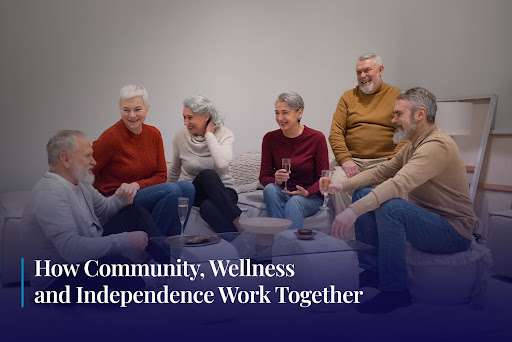
In other words, wellness, community and independence are not separate ideas. They work together.
When these elements are combined thoughtfully, senior living can become more than a place to receive care. It can become an environment where older adults continue to build relationships, pursue interests and maintain a meaningful sense of independence.
Independence Is More Than Doing Everything Alone
Independence is sometimes misunderstood.
It does not necessarily mean managing every task without assistance.
An older adult can receive help with medication, meals or personal care while still maintaining significant control over their life.
True independence is about choice and autonomy.
It means having a say in daily routines.
It means being able to decide which activities to attend.
It means having personal space.
It means maintaining relationships and interests.
AARP’s research shows that 75% of adults age 50 and older want to remain in their homes throughout their lifetime, while 73% want to remain in their communities.
These preferences demonstrate how strongly older adults value familiarity, autonomy and connection.
Community Can Strengthen Independence
At first, community and independence may seem like opposite concepts.
One involves living around other people.
The other suggests autonomy.
In reality, they can reinforce each other.
A supportive community can remove barriers that make independence more difficult.
Transportation can make it easier to attend appointments or activities.
Maintenance services can eliminate physically demanding household tasks.
Dining services can reduce the burden of meal preparation.
Social programs can make it easier to maintain relationships.
When those barriers are reduced, residents may have more energy and time to focus on the activities they value.
Social Connection Is a Wellness Issue
Human beings are social.
Retirement can sometimes reduce the number of natural social interactions a person experiences each day. A former workplace may have provided regular conversations, shared routines and friendships. Once that structure disappears, maintaining connection may require more intentional effort.
That is one reason senior living communities can play an important role in wellness.
AARP research published in 2026 reports that loneliness remains a significant concern among adults age 45 and older, while its livable-community research highlights the importance of social connection alongside health care, transportation and other community supports.
Community therefore should not be viewed simply as a social feature.
It can be part of a broader wellness strategy.
Wellness Begins With Daily Habits
Wellness is built through everyday choices.
Getting enough movement.
Eating nutritious meals.
Maintaining social relationships.
Participating in mentally stimulating activities.
Getting appropriate medical care.
Having a consistent routine.
Senior living communities can make many of these habits easier by bringing resources and opportunities closer to residents.
At Liberty Village of Tomah, residents have access to daily activities designed to support enrichment and engagement, while the community’s care model focuses on individual needs and changing circumstances.
This approach recognizes that wellness should be integrated into daily life rather than treated as a once-a-week activity.
Physical Activity Does Not Have to Be Intense
When people hear the word “wellness,” they sometimes imagine demanding exercise programs.
For older adults, wellness can look very different.
Walking.
Stretching.
Gentle movement.
Gardening.
Dancing.
Participating in recreational activities.
The goal is to find movement that is appropriate, enjoyable and sustainable.
A senior living community can make these opportunities more accessible by providing suitable activities and spaces.
The emphasis should be on participation rather than performance.
Mental and Emotional Wellness Matter Too
A healthy lifestyle includes more than physical movement.
Older adults also benefit from opportunities to learn, create, communicate and make decisions.
Creative activities can stimulate the mind.
Social conversations can provide emotional connection.
Personal routines can create familiarity.
Meaningful responsibilities can create purpose.
These experiences help residents feel that they are participating in life rather than simply being cared for.
Purpose Gives Wellness Meaning
A person can have excellent nutrition and remain physically active but still feel that something is missing.
That missing element may be purpose.
Purpose does not have to mean employment.
It can come from relationships, hobbies, helping others, creating something, learning a new skill or contributing to a community.
This is why senior living programs should not focus exclusively on keeping residents occupied.
The goal should be to create opportunities that feel personally meaningful.
A Community Should Respect Different Personalities
Not every resident wants the same lifestyle.
Some people enjoy large group events.
Others prefer one-on-one conversations.
Some residents may enjoy creative activities.
Others may prefer reading, walking or spending time outdoors.
A strong community provides choices.
At Liberty Village of Tomah, residents are encouraged to participate in meaningful activities and maintain personal connections while receiving individualized care. The community’s assisted living model specifically emphasizes independence, safety and compassionate support.
That flexibility is essential.
Wellness should be personalized just like care.
Independence and Support Can Coexist
One of the biggest concerns families have when considering assisted living is whether their loved one will lose independence.
A well-designed assisted living environment should do the opposite.
The purpose of support is to make daily life more manageable while preserving as much autonomy as possible.
Liberty Village of Tomah provides assistance with activities of daily living and medication management while encouraging residents to maintain their independence and participate in social and enriching activities.
This is an important distinction:
Assistance is not the same as dependence.
The right support can actually help a person maintain independence for longer.
Memory Care Requires an Even More Personalized Approach
For individuals living with dementia, the connection between community, wellness and independence becomes even more important.
A structured environment can provide reassurance and consistency.
Meaningful activities can support engagement.
Familiar surroundings can reduce unnecessary stress.
Individualized care can help residents continue participating in daily life at an appropriate level.
Liberty Village of Tomah’s memory care program combines a secure, structured environment with private studio apartments, daily life-enrichment activities and personalized support that adapts as residents’ needs change.
This model demonstrates how safety and independence can work together rather than compete.
Technology Can Support the Bigger Picture
Technology is also becoming part of the modern wellness conversation.
Adults over 50 are increasingly comfortable using digital tools. AARP’s 2026 technology research found that smartphone ownership among adults 50+ reached 90% in 2025, illustrating how significantly technology has become integrated into older adults’ everyday lives.
Within senior care, technology may support communication, health monitoring, care coordination and other services.
But technology should remain a tool.
It should make care more responsive without replacing human interaction.
Families Benefit From a Strong Community Too
The benefits of a supportive senior living community extend beyond the resident.
Families often carry significant emotional and practical responsibilities when an older loved one needs increasing support.
A community can provide another layer of assistance.
When professional caregivers handle appropriate daily support, family members may have more opportunity to focus on their relationships rather than becoming full-time caregivers.
That can change family visits from responsibility-driven encounters into opportunities to simply spend meaningful time together.
What Families Should Look for in a Wellness-Focused Community
Families evaluating senior living should ask how a community approaches wellness in everyday life.
Look for evidence that:
- Activities are varied and adapted to different abilities.
- Residents have meaningful choices.
- Social interaction is encouraged without being forced.
- Care plans reflect individual preferences.
- Physical activity is accessible.
- Families are included in communication.
- Support can increase as needs change.
Most importantly, observe residents.
Do they appear engaged?
Are they interacting with one another?
Do staff members communicate respectfully?
Does the environment feel comfortable and welcoming?
These observations can tell families a great deal.
Liberty Village of Tomah: Connecting Care With Daily Life
Liberty Village of Tomah approaches senior living around the idea of personalized care in a place that feels like home. Its assisted living program combines support with independence, while memory care provides structured, individualized assistance for residents living with memory loss. Advanced Care is available for residents with more complex physical or medical needs.
This range of services allows care to be considered alongside the resident’s overall lifestyle—not separately from it.
Families can explore Liberty Village of Tomah’s senior care options to learn more about its approach.
The Three Elements of Healthy Aging
Community, wellness and independence should not be viewed as three separate goals.
They are connected.
Community creates relationships and belonging.
Wellness supports physical, emotional and mental well-being.
Independence provides choice, dignity and control.
When all three are supported, older adults have a stronger foundation for a fulfilling life.
The goal of senior living should therefore not simply be to provide a safe place to live.