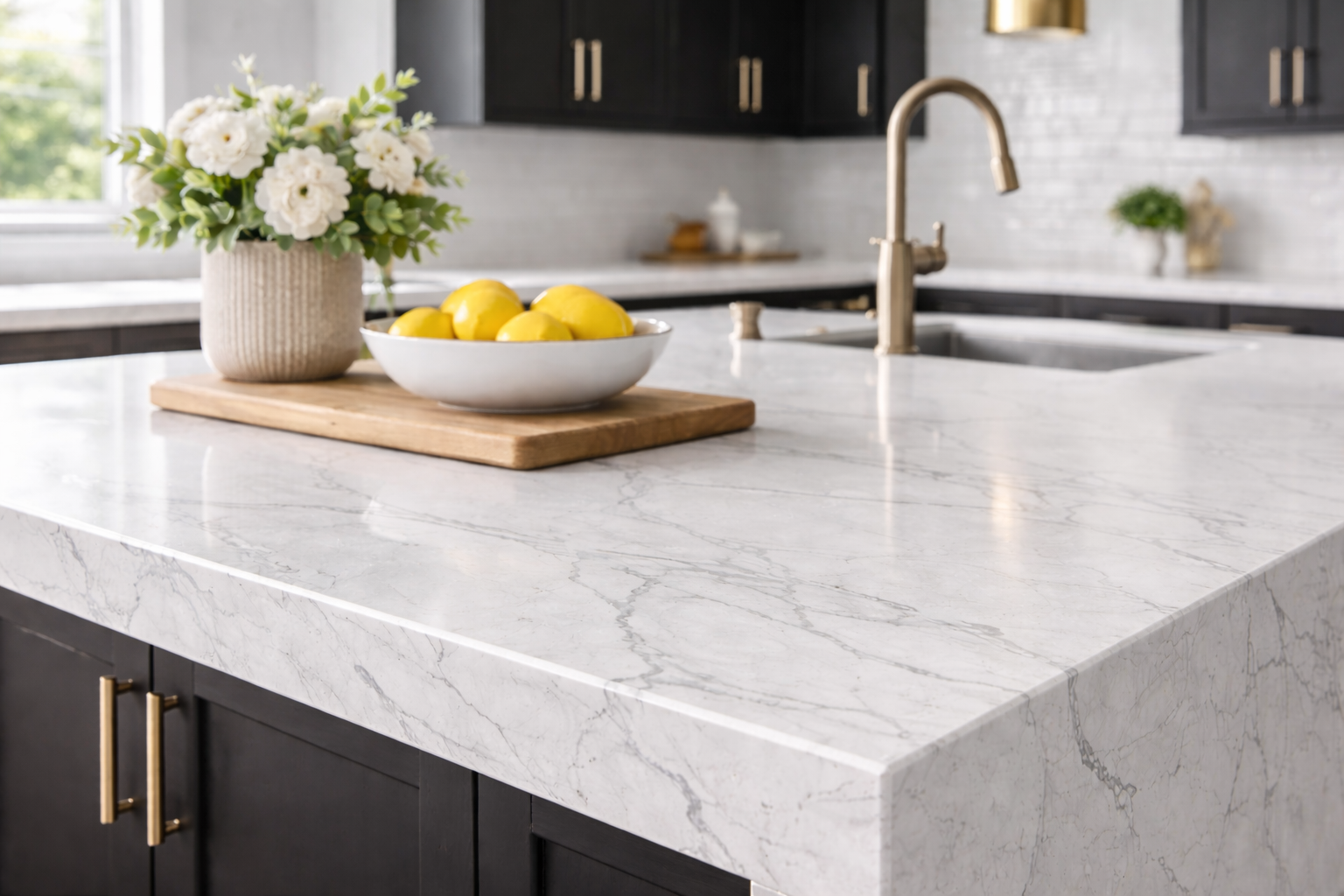
Choosing a new kitchen countertop is one of the most important decisions you’ll make during a kitchen renovation. Your countertop is more than just a work surface—it influences your kitchen’s appearance, functionality, maintenance requirements, and even your home’s resale value. With so many materials available, narrowing down the best option can feel overwhelming.
Quartz, granite, marble, butcher block, and laminate remain the five most popular countertop materials because each offers unique advantages. Some homeowners prioritize durability, while others focus on appearance, affordability, or low maintenance. The ideal choice depends on your cooking habits, budget, design preferences, and long-term expectations.
Factors to Consider Before Buying a Countertop
Before comparing materials, think about what matters most in your daily life.
Consider these questions:
- How much maintenance are you willing to do?
- Do you cook frequently?
- Is your kitchen used heavily by children?
- What’s your total renovation budget?
- Do you prefer modern or traditional designs?
- How important is stain resistance?
- Will you place hot pots directly on the surface?
- Are you planning to sell your home in the near future?
Your answers will help narrow your options significantly.
Quartz Countertops
Quartz countertops have become one of the most popular choices for modern kitchens. Unlike natural stone, quartz is an engineered material made from approximately 90–95% crushed natural quartz mixed with resins and pigments.
Advantages
Quartz offers exceptional durability and consistency.
Some major benefits include:
- Non-porous surface
- No sealing required
- Highly stain resistant
- Wide range of colors
- Scratch resistant
- Easy daily cleaning
- Consistent patterns
- Hygienic surface
Because quartz is manufactured, homeowners can choose from hundreds of colors ranging from solid white to dramatic marble-look designs.
Disadvantages
Quartz isn’t perfect.
Potential drawbacks include:
- Higher upfront cost
- Heavy material requiring professional installation
- Can discolor with prolonged direct sunlight
- Less heat resistant than granite
Although quartz resists everyday heat, placing extremely hot cookware directly on the surface can damage the resin.
Best For
Quartz is ideal for:
- Busy families
- Modern kitchens
- Low-maintenance homeowners
- Frequent cooking
- High-traffic kitchens
Granite Countertops
Granite has been a favorite countertop material for decades because every slab is naturally unique.
Formed deep within the earth, granite features natural mineral patterns that cannot be duplicated.
Advantages
Granite remains popular because of its impressive durability.
Benefits include:
- Excellent heat resistance
- Natural beauty
- Long lifespan
- Unique patterns
- High scratch resistance
- Increases home value
A properly maintained granite countertop can last for decades.
Disadvantages
Granite does require some maintenance.
Potential downsides include:
- Needs periodic sealing
- Higher installation costs
- Heavy material
- Natural color variations
- Can stain if not sealed properly
Some homeowners love the unique variations, while others prefer the uniform appearance of quartz.
Best For
Granite works well for:
- Luxury kitchens
- Traditional homes
- Heavy cooking
- Homeowners wanting natural stone
- Long-term investments
Marble Countertops
Marble has long been associated with elegance and luxury. It has been used in architecture for centuries and remains one of the most visually stunning countertop materials available.
Its dramatic veining creates an upscale appearance that few materials can match.
Advantages
Marble offers several appealing qualities.
These include:
- Timeless beauty
- Naturally cool surface
- Excellent for baking
- Unique veining
- Adds luxury appeal
- Brightens kitchens
Professional bakers often appreciate marble because dough remains cooler during preparation.
Disadvantages
Marble is one of the most delicate countertop materials.
Common concerns include:
- Easily scratches
- Susceptible to staining
- Acid-sensitive
- Requires regular sealing
- Higher maintenance
- More expensive than many alternatives
Foods like lemons, vinegar, tomatoes, and wine can etch marble surfaces over time.
Best For
Marble suits:
- Luxury homes
- Baking enthusiasts
- Decorative kitchen islands
- Low-traffic kitchens
- Homeowners who appreciate natural aging
Butcher Block Countertops
Butcher block countertops bring natural warmth into kitchens. Made from hardwood pieces glued together, they create a cozy, welcoming atmosphere that works especially well in farmhouse, Scandinavian, and rustic kitchens.
Popular woods include maple, walnut, oak, birch, and cherry.
Advantages
Wood countertops provide several unique benefits.
These include:
- Warm appearance
- Renewable material
- Can be refinished
- Easier DIY installation
- Gentle on dishes
- Comfortable work surface
Small scratches can often be sanded away instead of replacing the entire countertop.
Disadvantages
Wood requires ongoing care.
Potential drawbacks include:
- Regular oiling
- Water damage risk
- Can scratch easily
- Vulnerable to burns
- May stain
- Requires proper maintenance
Standing water is one of butcher block’s biggest enemies.
Best For
Butcher block is ideal for:
- Rustic kitchens
- Cottage-style homes
- DIY enthusiasts
- Eco-conscious homeowners
- Food preparation areas
Laminate Countertops
Laminate has improved dramatically over the past decade. Modern manufacturing techniques have created attractive designs that realistically imitate granite, marble, wood, and concrete.
Laminate consists of decorative layers bonded to particleboard or MDF.
Advantages
Laminate remains one of the most budget-friendly countertop choices.
Benefits include:
- Affordable
- Huge variety of designs
- Lightweight
- Easy installation
- Low maintenance
- Easy to clean
Many homeowners are surprised by how realistic premium laminate designs have become.
Disadvantages
Despite improvements, laminate still has limitations.
These include:
- Less heat resistant
- Can chip
- Difficult to repair
- Lower lifespan
- Moisture damage if edges fail
- Less premium appearance
Deep scratches usually cannot be repaired invisibly.
Best For
Laminate works well for:
- Budget renovations
- Rental properties
- Starter homes
- Secondary kitchens
- Laundry rooms
Durability Comparison
Durability is often the deciding factor.
Here’s how these materials compare.
Quartz
- Excellent scratch resistance
- Excellent stain resistance
- Good heat resistance
Granite
- Excellent heat resistance
- Excellent scratch resistance
- Good stain resistance with sealing
Marble
- Moderate durability
- Prone to scratches
- Acid-sensitive
Butcher Block
- Moderate durability
- Can be refinished
- Sensitive to moisture
Laminate
- Moderate durability
- Heat-sensitive
- Can chip under heavy impact
Maintenance Comparison
Maintenance requirements vary significantly.
Lowest Maintenance
Quartz requires the least upkeep. Soap and water are generally all that’s needed.
Moderate Maintenance
Laminate is also simple to clean but requires care around heat and sharp objects.
Regular Maintenance
Granite needs periodic sealing depending on usage.
High Maintenance
Marble requires careful cleaning, sealing, and protection from acidic foods.
Ongoing Maintenance
Butcher block needs regular oiling and immediate cleanup of spills.
Cost Comparison
Prices vary by region and design, but generally fall into these ranges.
Laminate
Most affordable option.
Butcher Block
Budget to mid-range pricing.
Granite
Mid-range to premium.
Quartz
Mid-range to premium, depending on brand.
Marble
Usually the most expensive option.
Installation costs should always be included in your budget, especially for heavy stone materials.
Appearance and Style
Every countertop creates a different visual impression.
Quartz offers clean, modern, and consistent aesthetics.
Granite provides bold natural stone patterns.
Marble creates luxurious elegance with dramatic veining.
Butcher block introduces warmth and texture.
Laminate offers countless design options at a lower cost.
Choosing a countertop that complements your cabinets, flooring, backsplash, and appliances creates a cohesive kitchen design.
Environmental Impact
Sustainability has become increasingly important for many homeowners.
Quartz manufacturing consumes energy but offers long service life.
Granite is a natural material, although quarrying and transportation have environmental impacts.
Marble also requires quarrying and transportation.
Butcher block can be environmentally friendly when sourced from responsibly managed forests.
Laminate uses manufactured materials but continues improving in sustainability through recycled content and lower-emission production methods.
Which Countertop Is Best for Different Households?
For Busy Families
Quartz is usually the best option because it’s highly durable, stain resistant, and requires almost no maintenance.
For Passionate Home Chefs
Granite performs exceptionally well thanks to its heat resistance and rugged durability.
For Luxury Kitchens
Marble delivers unmatched elegance if you’re comfortable with regular maintenance.
For Rustic Homes
Butcher block creates warmth and character that natural stone cannot replicate.
For Tight Budgets
Laminate offers excellent value while still providing attractive designs.
Tips Before Purchasing
Before finalizing your countertop choice, keep these practical tips in mind.
Always request full slab samples instead of tiny color chips whenever possible.
View materials under both natural daylight and indoor lighting.
Compare installation warranties alongside manufacturer warranties.
Think about long-term maintenance rather than just initial cost.
Coordinate countertop colors with cabinets, flooring, backsplashes, and appliances.
Ask whether sealing, edging, sink cutouts, and installation are included in the quoted price.
Don’t overlook the importance of professional installation, especially for natural stone materials.
Final Verdict
There is no single countertop material that’s perfect for every kitchen. The best choice depends on how you cook, clean, entertain, and use your space every day.
If you want the easiest maintenance and outstanding durability, quartz is difficult to beat. Granite remains a timeless favorite for homeowners who appreciate natural stone and excellent heat resistance. Marble stands out for luxury and elegance but demands careful upkeep. Butcher block brings warmth and natural charm while requiring regular maintenance to stay beautiful. Laminate continues to offer exceptional value for homeowners seeking stylish countertops without stretching their budget.
By balancing your budget, maintenance expectations, design preferences, and lifestyle needs, you’ll be able to choose a countertop that enhances both the beauty and functionality of your kitchen for many years to come.