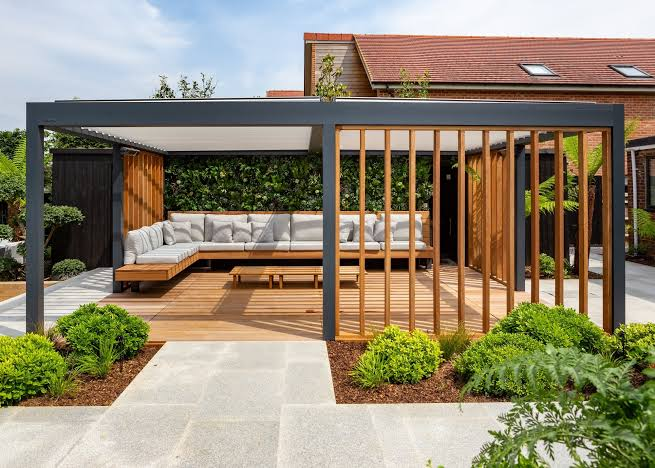
Modern outdoor privacy screens have become an important feature in residential patio design because they help create more comfortable, secluded, and visually organized exterior living spaces. As homes are built closer together and outdoor areas become extensions of interior living rooms, homeowners increasingly want ways to reduce direct views from neighboring properties, streets, balconies, and shared boundaries.
Privacy screens provide a flexible alternative to solid walls. They can filter views without completely blocking light or airflow, and they can also become attractive architectural features in their own right. Contemporary options include timber slats, aluminum panels, decorative metal screens, composite boards, frosted glass, vertical gardens, bamboo-style panels, and adjustable louvers.
The right screen can help a patio feel more intimate while also supporting shade, wind control, outdoor zoning, and decorative design. The most effective choice depends on the size of the patio, the direction of unwanted views, the surrounding architecture, maintenance expectations, climate, and the amount of light that should remain in the space.
Why Outdoor Privacy Screens Are Useful
Patios are often used for activities that benefit from a greater sense of separation from neighboring properties.
These may include:
- Outdoor dining
- Relaxing
- Reading
- Entertaining guests
- Family gatherings
- Hot tub use
- Outdoor cooking
Without privacy, people may feel exposed even when the patio itself is well designed.
A privacy screen creates a visual boundary while allowing the space to remain connected to the garden.
This can make the patio feel more like an outdoor room.
Privacy Screens vs Solid Fences
Traditional fences can provide strong separation, but they may also make small patios feel enclosed.
Privacy screens offer more flexibility.
They can be:
- Partial height
- Full height
- Freestanding
- Wall mounted
- Adjustable
- Decorative
- Perforated
This allows homeowners to block specific sightlines rather than surrounding the entire patio with solid barriers.
Timber Slat Privacy Screens
Timber slats are one of the most popular modern privacy options.
They create warmth and texture while preserving a natural connection with the garden.
Popular timber choices include:
- Cedar
- Pine
- Hardwood
- Thermally modified wood
- Treated timber
Slats may be installed horizontally or vertically.
The spacing between them determines the level of privacy.
Horizontal Timber Screens
Horizontal slats create a strong contemporary appearance.
They visually emphasize width and can make a narrow patio feel broader.
This style works especially well with:
- Modern furniture
- Concrete paving
- Black metal frames
- Large planters
Narrow gaps between boards provide better privacy, while wider gaps allow greater airflow.
Vertical Timber Screens
Vertical slats can make a patio appear taller.
They work particularly well with:
- Modern townhouses
- Compact courtyards
- Slatted pergolas
- Tall planting
Vertical screens can also reduce the visibility of neighboring upper-floor windows when combined with overhead shading.
Wood-Look Aluminum Privacy Screens
Wood-look aluminum provides the appearance of timber with lower maintenance requirements.
It is often finished with powder coating or printed grain effects.
Benefits may include:
- Reduced warping
- No regular staining
- Strong weather resistance
- Consistent color
This makes it suitable for homeowners who want a warm visual effect without the maintenance associated with natural wood.
Powder-Coated Aluminum Screens
Aluminum is widely used in modern outdoor architecture because it is lightweight and resistant to corrosion.
Privacy panels can be manufactured in colors such as:
- Black
- Charcoal
- White
- Bronze
- Gray
Dark aluminum screens work especially well with contemporary homes using black window frames or metal pergolas.
Decorative Laser-Cut Metal Screens
Laser-cut metal panels can provide privacy while also creating a strong decorative feature.
Patterns may include:
- Geometric shapes
- Botanical motifs
- Abstract designs
- Repeating lines
- Perforated grids
Because the panels are partially open, they can filter views without completely blocking light.
At night, lighting behind the panels can create decorative shadow patterns.
Black Metal Screens for Contemporary Patios
Black privacy screens create strong contrast and can give the patio a more architectural feel.
They pair well with:
- Light exterior walls
- Gray paving
- Warm timber furniture
- Concrete finishes
- Minimalist landscaping
Matte black finishes are especially popular because they coordinate easily with modern outdoor furniture and lighting.
Composite Privacy Screens
Composite materials combine synthetic components with wood fibers or other materials.
They can imitate timber while offering improved resistance to moisture and insects.
Composite screens are useful where homeowners want:
- Consistent color
- Reduced maintenance
- Weather resistance
- Modern profiles
They are available in both slatted and solid panel designs.
Frosted Glass Privacy Screens
Frosted glass can provide privacy while allowing daylight to pass through.
It is particularly suitable for:
- Balconies
- Modern patios
- Pool areas
- Side boundaries
Glass creates a clean and premium appearance.
It may be supported by:
- Aluminum posts
- Stainless-steel frames
- Frameless channels
Clear and Partially Frosted Glass
Some designs combine clear and frosted sections.
This allows homeowners to preserve selected views while blocking others.
For example, the lower part may be frosted for privacy while the upper part remains clear.
This works well in compact patios where total visual enclosure would feel too heavy.
Adjustable Louvered Screens
Adjustable louvers provide greater control than fixed screens.
The blades can rotate to change:
- Privacy
- Airflow
- Light
- Shade
This is useful in patios where privacy needs change throughout the day.
For example, the screen may remain open during daylight and close during evening use.
Vertical Louvers
Vertical louvers are particularly useful for blocking side views.
They can be angled to reduce visibility from a neighboring property while preserving outward views in another direction.
They also create a strong contemporary appearance.
Horizontal Louvers
Horizontal louvers can provide both privacy and partial shade.
They work particularly well beneath pergolas or around outdoor kitchens.
The angle of the slats determines how much visibility remains.
Retractable Privacy Screens
Retractable screens can be extended only when needed.
They are useful where permanent screening is not desirable.
Common applications include:
- Between neighboring patios
- Beside outdoor dining tables
- Around balconies
- Next to hot tubs
The screen retracts into a housing when not in use.
Side-Awning Privacy Screens
Side awnings operate horizontally rather than overhead.
They pull out from a wall or post to create a temporary visual barrier.
Advantages include:
- Easy operation
- Compact storage
- Flexible use
- Minimal permanent visual impact
They are particularly useful on smaller patios.
Privacy Screens With Integrated Planters
Combining screens with planters can soften hard architectural materials.
A planter at the base may support:
- Climbing plants
- Tall grasses
- Small shrubs
- Vines
This creates a layered privacy effect.
The screen provides immediate separation while the plants add natural texture.
Living Privacy Screens
Plants can also function as the primary privacy screen.
Suitable options may include:
- Bamboo
- Ornamental grasses
- Evergreen shrubs
- Climbing vines
- Hedge plants
Living screens create a softer appearance than metal or timber.
However, they require regular care.
Vertical Garden Privacy Walls
Vertical gardens can transform a blank privacy panel into a decorative planting feature.
They may include:
- Modular planting pockets
- Wall-mounted planters
- Irrigation systems
- Decorative frames
This works particularly well in urban patios with limited ground area.
The wall becomes both a privacy barrier and a garden feature.
Bamboo-Style Privacy Screens
Bamboo provides a natural and relaxed appearance.
It works well in:
- Tropical patios
- Zen-inspired gardens
- Casual outdoor spaces
- Pool areas
Natural bamboo may weather over time.
Synthetic bamboo-style screens can offer lower maintenance while maintaining a similar appearance.
Privacy Screens Around Outdoor Dining Areas
Dining patios benefit from a greater sense of enclosure.
A screen behind the dining table can reduce direct views and create a more intimate atmosphere.
It can also help frame:
- Pendant lighting
- Wall lights
- Decorative planting
- Outdoor artwork
The result feels more like a defined exterior room.
Privacy Screens Around Outdoor Sofas
Lounge seating often works best when it has a backdrop.
A screen behind the sofa can provide:
- Privacy
- Visual structure
- Wind reduction
- Support for lighting
Timber slats, metal panels, and planted screens are all effective options.
Screens Around Hot Tubs and Spa Areas
Hot tubs generally require greater privacy.
Full-height screens may be more appropriate than decorative partial panels.
Useful materials include:
- Aluminum
- Composite boards
- Frosted glass
- Dense timber slats
The design should also allow adequate ventilation and access for maintenance.
Privacy Screens for Small Patios
Small patios require careful planning because oversized solid screens can make the area feel cramped.
Better options include:
- Narrow slats
- Perforated panels
- Frosted glass
- Living screens
- Partially open louvers
Light-colored materials can also help preserve a sense of openness.
Privacy Screens for Large Patios
Large patios can use screens to divide different activity zones.
For example:
- Dining area
- Lounge zone
- Outdoor kitchen
- Spa area
Screens can create visual separation without constructing solid walls.
This is particularly useful in large open backyards.
Freestanding Privacy Screens
Freestanding screens do not require attachment to a wall.
They can be positioned where privacy is needed most.
Benefits include:
- Flexible placement
- Easy relocation
- Reduced structural work
- Good zoning potential
The base must be stable enough to resist wind.
Wall-Mounted Privacy Screens
Wall-mounted screens can provide a more permanent and integrated appearance.
They are suitable for:
- Side patios
- Courtyards
- Boundary walls
- Outdoor kitchens
The mounting system should be designed for the wall material and expected wind loads.
Privacy Screens Attached to Pergolas
Pergolas provide an ideal structural framework for privacy screens.
Panels can be mounted between posts or along one side.
Options include:
- Fixed slats
- Retractable fabric
- Adjustable louvers
- Decorative metal
This creates a more enclosed outdoor room without requiring full walls.
Privacy Screens With Outdoor Lighting
Lighting can turn a privacy screen into a feature after dark.
Popular options include:
- LED strips
- Wall lights
- Uplights
- Integrated spotlights
Lighting can emphasize:
- Timber texture
- Decorative perforations
- Plants
- Vertical slats
Warm light often creates the most comfortable evening atmosphere.
Backlit Decorative Screens
Laser-cut panels are especially effective with backlighting.
Light passes through the perforations and creates patterns on nearby walls or paving.
This can make the privacy screen feel decorative rather than purely functional.
Privacy Screens and Wind Control
Screens can reduce wind, but they should not necessarily block it completely.
A fully solid panel may create turbulence.
Partially open slats or perforated screens can soften wind while maintaining airflow.
This can improve comfort in exposed patios.
Privacy Screens and Shade
Some privacy screens also reduce direct sunlight.
Vertical screens are especially useful for low-angle morning or afternoon sun.
Louvered panels can provide both shade and privacy.
This makes them useful on west-facing patios.
Combining Privacy Screens With Outdoor Curtains
Outdoor curtains provide another flexible layer of privacy.
They can be installed around:
- Pergolas
- Covered patios
- Gazebos
Curtains may remain open most of the day and close when stronger privacy is needed.
Weather-resistant fabrics should be used.
Matching Screens With Exterior Wall Colors
The screen should coordinate with the architecture of the home.
Light Exterior Walls
Suitable options include:
- Black metal
- Warm timber
- Charcoal composite
Dark Exterior Walls
Better choices may include:
- Light timber
- White aluminum
- Bronze metal
Brick Homes
Timber, black metal, and muted bronze finishes often work well with brick.
Matching Privacy Screens With Patio Flooring
The flooring also affects screen selection.
Concrete or gray porcelain works well with warm timber and black metal.
Wood decking pairs naturally with:
- Black aluminum
- Matching timber slats
- White screens
Stone paving can coordinate with neutral composite panels and planted screens.
Creating a Cohesive Material Palette
Too many materials can make a patio feel visually busy.
A simple combination may include:
- Timber privacy screen
- Black metal furniture
- Gray paving
- Green planting
Repeating the same materials across furniture, pergolas, planters, and screens creates better visual consistency.
Choosing the Right Screen Height
The required height depends on what needs to be blocked.
A low screen may be enough to hide seated views.
A taller screen may be necessary for:
- Neighboring windows
- Upper-floor balconies
- Street exposure
Local regulations may limit screen height near property boundaries.
These requirements should be checked before installation.
Screen Spacing and Privacy Level
Slatted screens provide different levels of privacy depending on spacing.
Narrow gaps provide:
- Greater privacy
- Less airflow
- Reduced visibility
Wider gaps provide:
- More ventilation
- More daylight
- Greater transparency
The correct balance depends on the location.
Privacy Without Blocking Natural Light
One of the main goals of modern screening is maintaining brightness.
Good options include:
- Frosted glass
- Perforated metal
- Narrow slats
- Vertical louvers
These materials create privacy while allowing some light to pass through.
Maintenance of Timber Screens
Natural timber requires more care than aluminum or composite materials.
Maintenance may include:
- Cleaning
- Staining
- Sealing
- Checking for rot
- Inspecting fasteners
The frequency depends on weather exposure and timber type.
Maintenance of Metal Screens
Powder-coated aluminum generally requires relatively little maintenance.
Occasional washing can remove:
- Dust
- Pollution
- Salt deposits
Damaged coatings should be repaired where possible to prevent deterioration.
Maintenance of Glass Screens
Glass requires regular cleaning to maintain its appearance.
Frosted finishes may hide fingerprints more effectively than clear glass.
Cleaning should include:
- Glass surfaces
- Frames
- Channels
- Drainage areas
Privacy Screens in Coastal Areas
Coastal environments expose outdoor materials to salt and moisture.
Materials should be selected carefully.
Aluminum, suitable stainless steel, and certain composites can perform well when properly specified.
Natural timber may require more frequent maintenance.
Privacy Screens in Hot Climates
In hot climates, screens should support airflow rather than trap heat.
Open slats, louvers, and perforated panels are often preferable to solid walls.
Light-colored finishes may also reduce surface heat absorption.
Privacy Screens in Rainy Climates
Moisture resistance becomes more important in areas with frequent rain.
Materials should resist:
- Rot
- Swelling
- Corrosion
- Mold
Drainage at the base of screens should also be considered.
Child-Friendly Privacy Screens
Family patios should avoid designs with sharp edges or unstable panels.
Screens should be:
- Securely fixed
- Structurally stable
- Smooth at accessible edges
- Difficult to climb where necessary
Large gaps near play areas should be assessed carefully.
Pet-Friendly Privacy Screens
Pets may push against or scratch screens.
Durable materials such as:
- Aluminum
- Composite
- Strong timber
can be practical.
Openings should also be small enough to prevent pets from escaping.
Common Privacy Screen Design Mistakes
Common mistakes include:
- Installing screens too low
- Blocking too much light
- Ignoring wind loads
- Using indoor materials outdoors
- Choosing high-maintenance materials
- Failing to consider neighboring views
- Mixing too many styles
A screen should be designed around the actual sightline problem.
Planning Privacy Before Patio Construction
Privacy should ideally be considered during the initial patio design.
This allows screens to coordinate with:
- Pergola posts
- Lighting
- Paving
- Furniture layouts
- Planting
Retrofitted screens can still work well, but early planning usually produces a cleaner result.
Choosing the Best Privacy Screen Material
The right material depends on priorities.
For low maintenance, consider:
- Aluminum
- Composite
- Frosted glass
For natural warmth, consider:
- Timber
- Bamboo
- Living screens
For decorative impact, consider:
- Laser-cut metal
- Slatted wood
- Vertical gardens
The choice should support both the architecture and the practical needs of the patio.
Frequently Asked Questions
What is the best material for a modern outdoor privacy screen?
Aluminum, timber, composite, frosted glass, and decorative metal are all strong options. The best choice depends on maintenance, budget, and desired style.
How tall should a patio privacy screen be?
The ideal height depends on the sightlines being blocked and local regulations. A screen for seated privacy may be lower than one designed to block neighboring upper-floor views.
Do privacy screens block airflow?
Solid screens can reduce airflow significantly, while slatted, louvered, and perforated designs allow better ventilation.
Can privacy screens provide shade?
Yes. Vertical slats and adjustable louvers can reduce direct sun as well as improve privacy.
Are timber privacy screens difficult to maintain?
They require more maintenance than aluminum or composite materials because they may need periodic sealing or staining.
Can privacy screens be installed around a pergola?
Yes. Pergola posts can provide support for slatted, fabric, louvered, or decorative screening systems.
Do frosted glass screens provide full privacy?
They can significantly reduce visibility while still transmitting daylight, although the exact privacy level depends on the glass finish.
Are retractable screens suitable for small patios?
Yes. They are particularly useful where privacy is needed only occasionally and permanent panels would make the space feel too enclosed.
Final Thoughts
Modern outdoor privacy screens can transform an exposed residential patio into a more comfortable and secluded outdoor living space. Timber slats provide natural warmth, aluminum and composite systems offer lower maintenance, frosted glass preserves daylight, and decorative metal panels can become striking architectural features.
The most successful screens do more than simply block views. They can also provide shade, reduce wind, support planting, define outdoor zones, and enhance the visual connection between the patio and the home.
Screen height, spacing, material, orientation, lighting, climate, and nearby sightlines should all be considered before installation. A partially open design is often more effective than a solid wall because it maintains airflow and natural light while still improving privacy.
When integrated with patio furniture, pergolas, paving, planters, and exterior finishes, a well-designed privacy screen can create a more refined, intimate, and functional outdoor environment that feels like a natural extension of the modern home.