A french drain is one of the most effective ways to stop water pooling against a foundation or flooding a basement. It is also one of the easiest drainage projects to get wrong, because a bad drain hides its mistakes underground. The trench gets backfilled, the grass grows back, and only months later — during the first heavy rain — do you learn the pipe has no slope, the gravel is clogged with silt, or the outlet discharges nowhere useful.
Most failed drains were weakened not by one dramatic error but by several small, avoidable choices. This guide explains how a french drain works, the mistakes that most often reduce its performance, and what to do instead.
How French Drains Work
A french drain is a slightly sloped trench filled with washed gravel and a perforated pipe, usually 4 inches in diameter. Water seeps through the gravel, enters the pipe through small holes, and flows by gravity to a safe discharge point away from the house — a lower part of the yard, a dry well, a permitted storm drain, or daylight at a slope.
Three things make it work. First, interception: the trench must sit where water travels. Second, movement: the pipe needs a consistent downhill slope. Third, exit: the water needs somewhere legal and genuinely lower to go. If any one fails, the whole system fails.
A typical run is 30 to 60 feet. Professionally installed, expect $50 to $100 per linear foot; do-it-yourself costs $12 to $25 per foot in materials — which is why redoing a failed job hurts.
Slope and Depth Mistakes
Slope is the engine of a french drain, and getting it wrong is the most common reason a new drain barely moves water.
Too Little Slope, or Slope in the Wrong Direction
Aim for at least 1 inch of fall for every 8 feet of run — about a 1 percent slope. Over 40 feet, the outlet end should sit roughly 5 inches lower than the start. A level pipe holds standing water, which deposits silt and blocks the perforations. A reverse slope is worse: water pools nearest the house, exactly where you least want it.
Do not eyeball this. Use a laser level, or a long level taped to a straight board, and check the trench bottom before the pipe goes in, and again after bedding it in gravel — uneven stone creates bellies that trap sediment.
Digging Too Shallow or Too Deep
- Too shallow (under 12 inches): the drain misses groundwater moving below it, and the pipe can be crushed by foot traffic, mowers, or frost heave.
- Too deep without a plan: you dig below your outlet, so water has nowhere to flow, or you undermine the footing — never dig below its base without professional advice.
- Inconsistent depth: a trench that wanders up and down creates low pockets where water and silt collect, even if the overall fall looks correct.
As a rule, place the drain just below the level of the water problem — typically 18 to 24 inches deep for yard and foundation-perimeter drains in most soils.
Gravel and Fabric Errors
Gravel is not filler. It is the filter and reservoir that lets water reach the pipe while keeping soil out. The wrong stone undoes good digging.
- Using pea gravel or rounded river rock: small, round stones pack tightly and hold less water. Use clean, washed, angular 3/4-inch crushed stone, which locks together with void space for water.
- Using dirty or unwashed gravel: stone delivered with dust and fines introduces the very silt you are trying to keep out. If it arrives muddy, rinse it or reject the load.
- Skipping gravel under the pipe: pipe laid on soil sits in mud. Add 2 to 3 inches of stone beneath it, and at least 3 inches on top.
- Wrapping the pipe itself in fabric: this popular mistake puts the filter where it clogs fastest — silt cakes on and seals the perforations within a few years.
The better approach is to line the trench — bottom and sides — with non-woven geotextile fabric, lay the stone and pipe inside, then fold the fabric over the top like a burrito before backfilling. That keeps soil out of the stone while keeping fabric away from the pipe openings. In sandy soil some contractors omit fabric; in heavy clay, lining matters much more.
Outlet and Discharge Mistakes
A french drain does not make water disappear — it moves it, so a careless outlet can turn a foundation problem into a yard, neighbour, or legal problem.
- No real outlet: ending the pipe in a flat area or shallow pit that fills during storms backs up the whole line. The discharge point must be lower than the drain.
- Discharging too close to the house: an outlet 3 feet from the wall recycles water back toward the foundation. Aim for at least 10 feet away, farther on flat lots.
- Dumping water on a neighbour or sidewalk: many municipalities prohibit discharging onto adjoining property or across pavements where it can ice over. Check local rules first.
- Unprotected pop-up emitters: these clog with mulch and clippings and freeze shut in cold climates. Fit a grate, mark the location, and keep it clear.
Where the lot allows it, daylighting the pipe on a slope is the most reliable outlet: it rarely clogs and you can see it flowing. Otherwise, a dry well — a fabric-lined, gravel-filled pit, often 3 to 4 feet deep — gives water somewhere to soak away, but fails in tight clay. Test drainage with a percolation hole first.
Skipping Permits and Utility Checks
Because a french drain is ‘just digging,’ many homeowners skip checks that protect them from fines and dangerous accidents.
Always arrange a free utility locate before digging — in the United States, call 811 a few business days ahead; other countries have equivalent services. Hitting a gas line, buried electric cable, or fibre line can cause injury, outages, and repair bills far larger than the drain itself. Hand-dig near any marked line.
Permits vary. Many towns need none for a simple yard drain, but connecting to a municipal storm drain or curb usually requires permission, and work near a septic system, well, wetland, or property line may be regulated. A quick call to the building department costs nothing; being ordered to fill in a finished drain costs a great deal.
Common Pipe Mistakes
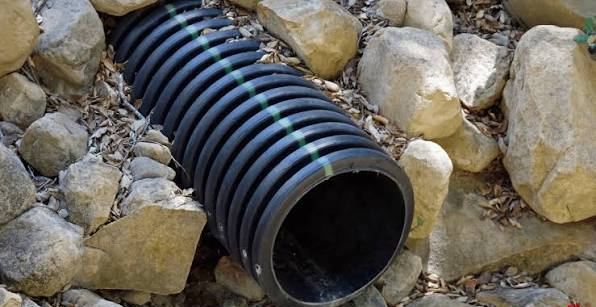
- Choosing thin corrugated pipe where rigid pipe belongs: flexible corrugated pipe crushes under deep backfill, sags, and its ridges trap silt. Rigid PVC or SDR-35 pipe flows cleaner and can be rodded out; if you use corrugated pipe, keep it shallow and fully supported.
- Perforations facing the wrong way: the holes go down, not up. Water rises into the pipe from below as the gravel saturates; holes on top let gravel and silt fall straight in.
- Loose or unsealed joints: gaps let roots in and water escape mid-run, eroding the trench. Fit joints snugly with proper couplers.
- No cleanout access: without a cleanout, the drain cannot be inspected or flushed. A capped vertical cleanout at the high end, under $20 in parts, turns a future excavation into a 30-minute jetting job.
- Runs that are too long or too small: one 4-inch pipe stretched 100 feet with several downspouts tied in will be overwhelmed. Keep foundation drains separate from roof water, and split long runs.
Also avoid sharp 90-degree bends, which collect debris and block cleaning equipment. Use two 45-degree fittings instead, and never connect a downspout without a catch basin — roof grit causes early clogging.
Maintaining Your French Drain
A well-built french drain can work for 20 to 30 years, but ‘install and forget’ shortens that life. A short annual routine keeps it flowing:
- Inspect the outlet after heavy rain: you should see clear flow during or shortly after a storm. No flow suggests a blockage or clogged emitter.
- Flush through the cleanout once a year with a garden hose, from the high end toward the outlet — heavy silt coming out means soil is entering somewhere.
- Keep the trench line clear: do not plant deep-rooted shrubs over the drain, pile mulch above it, or drive vehicles across a shallow run.
- Maintain gutters and grading: a french drain is a backup, not a substitute, for working gutters and soil sloping away from the house — roughly 6 inches over the first 10 feet.
Warning signs include soggy ground along the trench line, damp basement walls after moderate rain, and sediment at the outlet. Caught early, these usually mean a camera inspection ($150 to $300) and cleaning rather than replacement.
Final Thoughts
Almost every french drain failure was decided before the trench was filled in: a slope nobody measured, fabric wrapped around the pipe, stone full of fines, an outlet with nowhere to go, or digging before the utilities were marked. None of these requires expensive skill to avoid — just measuring, clean materials, and planning where the water ends up. Take an extra hour with a level, spend a little more on washed stone and rigid pipe, and check the drain yearly. Done that way, it quietly moves water away from your home for decades instead of seasons.
Frequently Asked Questions
How much does a french drain cost around a house foundation?
Professional installation typically runs $50 to $100 per linear foot, so a 50-foot run often costs $2,500 to $5,000. Do-it-yourself costs $12 to $25 per foot in materials, plus delivery fees.
How deep should a french drain be near a foundation?
Most work best 18 to 24 inches deep, with the pipe below where water collects. Never dig below the footing base without professional advice, and keep at least 12 inches of cover over the pipe.
Should the holes in perforated french drain pipe face up or down?
Down. Water in the surrounding gravel rises into the pipe through the downward-facing holes as the trench saturates. Holes facing up let gravel and silt drop in and speed up clogging.
Can I install a french drain myself, or should I hire a contractor?
A handy homeowner can install a short, shallow yard drain in a weekend. Hire a contractor for deep foundation work, long runs, poor soil, or digging near the footing, septic system, or utility lines.
How do I know if my french drain is clogged?
Look for pooling along the trench line, a damp basement after ordinary rain, and little or no flow at the outlet during a storm. Flush the cleanout with a hose; if flow does not improve, book a camera inspection.