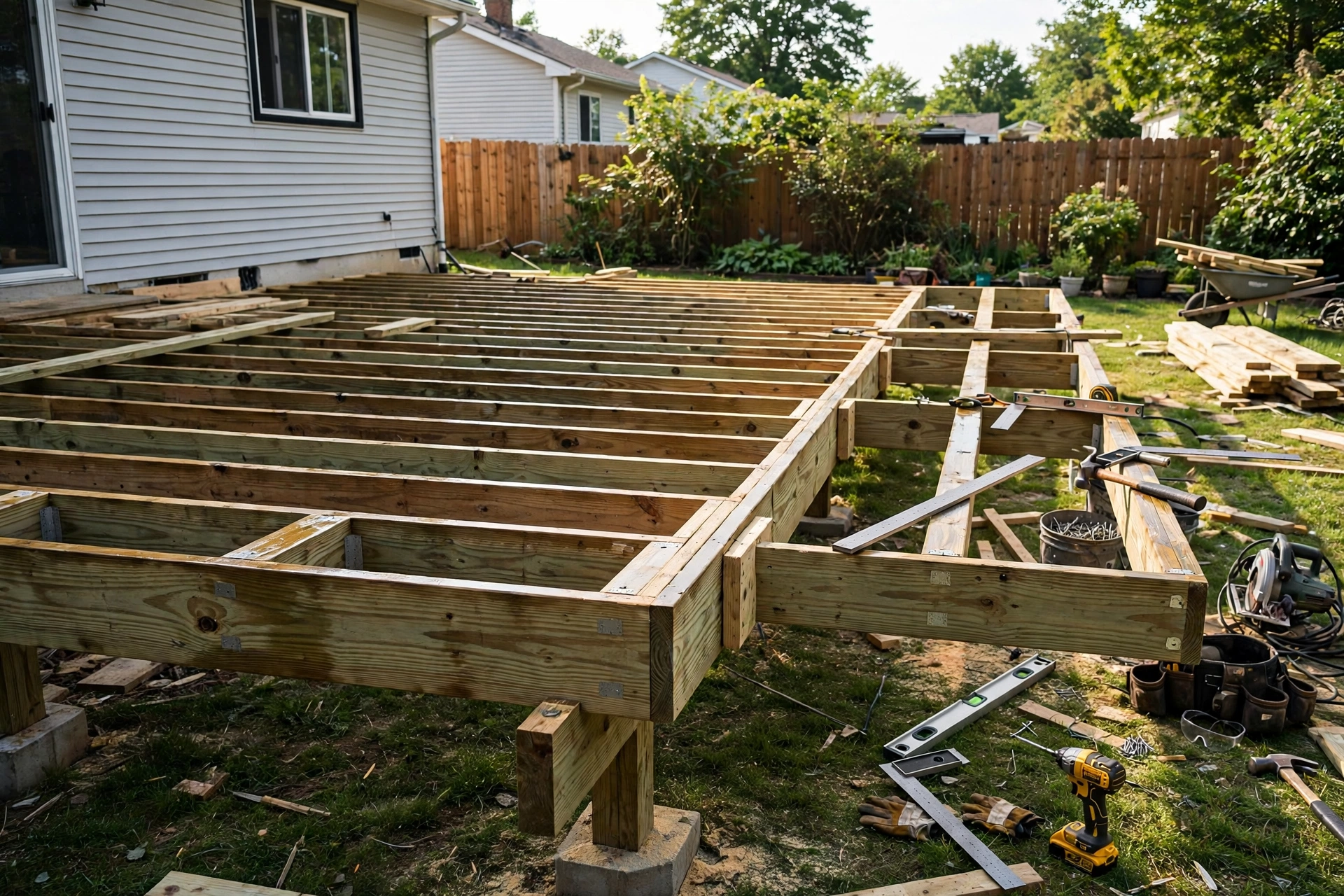
Homeowners usually choose a deck by its surface, comparing board colors while letting the builder pick whatever goes underneath. That is backwards. Boards can be replaced in a weekend. The frame decides whether the deck lasts fifteen years or fifty, and it is the part you cannot see once the boards go down.
The short answer: build the frame from galvanized steel, or from pressure-treated lumber rated for ground contact (UC4A or higher) with joist tops sealed in flashing tape and cut ends field-treated. Cedar and redwood heartwood suit drier climates; steel and aluminum are strongest for wet, coastal, and low decks. Detailing, drainage, and fastening matter at least as much as material.
Why Deck Frames Rot Before the Boards Do
Wood decay is not caused by water alone. It is caused by wood that stays wet long enough for fungi to grow, and the frame is where water lingers. Rain runs off the surface but collects in the gap between board and joist, sits in screw holes, and wicks into the end grain of posts and beams. Leaves and dirt pack into those gaps and hold moisture for days after a storm. Under a low deck with poor airflow, framing may never fully dry between rain events. Decay generally begins at roughly 20 percent moisture content, and a shaded joist top can sit above that level for most of the wet season.
Reading the End Tag: What UC Ratings Actually Mean for Your Joists
Not all pressure-treated lumber is treated equally, and the difference is invisible. Two boards can look identical yet carry very different amounts of preservative. The American Wood Protection Association (AWPA) sorts treated wood into Use Categories, printed on the end tag of every board. Color is not a rating. UC3B covers above-ground exterior wood that can dry between wettings. UC4A is the ground-contact rating for posts and joists that are hard to replace. UC4B is the heavy-duty rating for critical members in severe exposure. Anything touching soil, sitting within about six inches of the ground, or staying damp from debris and poor airflow should be UC4A at minimum.
Every cut, notch, and drilled hole exposes untreated wood inside the board. Brush those surfaces with a preservative such as copper naphthenate before assembly, following the product label and the AWPA M4 field-treatment standard.
Pressure-Treated Southern Pine: The Default Frame, Properly Specified
Pressure-treated southern pine is the default deck frame in most of the United States for good reasons. It is affordable, stocked at every lumberyard, familiar to every contractor and inspector, and easy to cut and modify on site. Modern preservatives, mainly alkaline copper quat (ACQ) and micronized copper azole (MCA), protect against fungi and termites. A well-detailed treated-pine frame commonly lasts an estimated 15 to 30 years or more, depending on climate, detailing, and maintenance. The trade-offs are real: treated pine moves with moisture, so joists can crown and twist as they dry, and copper-based treatments corrode ordinary fasteners, so hot-dipped galvanized or stainless-steel hardware is required throughout. For a budget build in a moderate climate, treated pine at the right UC rating, taped at the joist tops, remains a sound frame.
Naturally Durable Timber: Cedar, Redwood, and Tropical Hardwood Framing
Some woods resist decay without chemical treatment, but only in their heartwood. The pale sapwood of cedar and redwood rots about as readily as untreated pine, so framing from these species must be specified as heartwood, and even then it is softer and less stiff than treated pine. Cedar and redwood suit drier climates and above-ground framing. They are rarely the best choice for posts in soil or joists in wet, low-clearance conditions. Tropical hardwoods such as ipe are considerably more durable, with framing service lives often estimated at 25 to 35 years, but they are heavy, hard to cut, and expensive.
Galvanized Steel Framing: The Frame That Cannot Rot
Steel framing removes rot from the equation entirely. Galvanized or powder-coated steel joists, beams, and posts cannot be eaten by termites, do not absorb moisture, and do not warp, twist, or shrink with the seasons. That stability keeps the deck surface flat and board gaps even. Steel also spans farther than wood, so a design can use fewer posts and beams. The costs are higher: industry comparisons commonly put steel framing at roughly two to four times the material cost of treated wood, though the gap narrows because steel installs flat and fast. A single steel joist in a common size has been listed around $95 as a retail example, so get a project-specific quote. Steel systems often carry residential structural warranties of 25 years or more against corrosion, and a properly coated frame is commonly expected to last 50 years or longer. Plan for coated or stainless fasteners and confirm your crew has experience with the system. In wildfire-prone areas, steel’s noncombustible Class 1A fire rating can be a deciding advantage.
Composite and Aluminum Substructures for Wet and Coastal Decks
For decks close to the ground, over wet soil, or in salt air, two more framing families deserve attention. Composite structural joists are made from wood-free material similar to composite decking. They will not rot, split, or feed insects, need very little maintenance, and are commonly estimated to last 25 years or more, at a premium price best justified where moisture immunity is genuinely needed. Aluminum framing is lighter than steel, naturally corrosion-resistant, and well suited to rooftop decks, coastal homes, and structures where weight matters. It is typically the most expensive option and usually requires a manufacturer-specific system. Both pair well with composite and PVC decking.
Rot-Resistant Deck Framing Materials Compared Side by Side
Use this comparison as a starting point for your climate, deck height, and budget. Lifespans are planning estimates, not guarantees.
Detailing That Keeps Any Frame Dry: Tape, Flashing, and Airflow
Material choice sets the ceiling for a frame’s life. Detailing decides how close it gets. Four details do most of the work.
Seal the joist tops. Apply self-adhesive butyl joist tape along every joist, beam, and ledger before the boards go down. The tape sheds water, seals around each screw penetration, and separates treated lumber from metal hangers, slowing corrosion.
Flash the ledger properly. The ledger board, where the deck meets the house, is the most consequential joint in the structure. It needs metal flashing that directs water out and away from the house, installed before the ledger goes on, not caulked as an afterthought.
Give the frame air and drainage. Leave the board gaps the decking manufacturer specifies, keep soil and mulch away from the framing, and drain water away from posts and footings. If air cannot circulate under a low deck, treat its framing as ground-contact exposure.
Keep posts out of standing water. Set posts on concrete footings with post bases that hold the wood above the concrete, and never bury untreated end grain in soil or in a socket that traps water. Where a post must sit in wet ground, use UC4B-rated material.
Hardware Compatibility: Fasteners That Survive Treated Lumber Chemistry
A rot-resistant frame can still fail at its connections. Modern copper-based preservatives corrode ordinary electro-galvanized nails, screws, and hangers, loosening joints over time. Use hot-dipped galvanized or stainless-steel fasteners and connectors throughout a treated-lumber frame, and follow the connector manufacturer’s guidance for the preservative in your lumber. Stainless steel is the safer choice near salt water. A strip of joist tape between a treated joist and a metal hanger also separates two materials that otherwise react with each other. When in doubt, buy the better fastener.
Framing Errors That Invite Rot Into an Otherwise Sound Deck
Most premature frame failures trace back to avoidable errors. Check your build against them before the boards cover the evidence.
- Buying above-ground UC3B lumber for posts, low joists, or any member that will stay damp.
- Leaving cut ends, notches, and bolt holes untreated after trimming treated lumber.
- Skipping ledger flashing and relying on caulk to keep the house wall dry.
- Omitting joist tape, so every screw hole becomes a funnel into the joist top.
- Setting joists or beams in direct contact with soil, mulch, or standing water.
- Burying posts in concrete that holds water against the end grain instead of draining it away.
- Mixing ordinary galvanized fasteners with copper-treated lumber and expecting them to last.
Choosing a Frame for Your Climate, Height, and Budget
There is no single best frame, only a best match for the conditions it will live in. Work through these questions and the choice usually makes itself.
- Wet or humid climate, heavy shade, or poor airflow? Lean toward steel or composite framing, or at minimum UC4A treated pine with full tape and flashing.
- Coastal or salt-air exposure? Steel or aluminum with stainless hardware, and confirm the coating is rated for marine-adjacent use.
- Low deck, close to grade? Treat every member as ground contact, use UC4A or higher, and prioritize drainage over saving on materials.
- Tall or second-story deck with long spans? Steel’s span capacity reduces posts and beams, simplifying the structure.
- Tight budget and a moderate climate? Correctly rated treated pine, carefully detailed, delivers the best value per year of service.
- Doing it yourself? Wood framing is most forgiving for a first-time builder, since every cut uses familiar tools.
Whatever you choose, check local building codes and permits before construction.
Deck Frame Upkeep: Catching Rot While a Repair Is Still Small
Even a rot-resistant frame deserves a yearly look underneath. Probe the joist tops near the ledger, the post bases, and any spot where debris collects. Sound wood resists the probe; decayed wood feels soft. Clear leaves and dirt from between boards, check that flashing is still in place, and look for rust streaks on hangers. Small, localized rot can sometimes be repaired by sistering a new joist alongside the damaged one. Call a licensed contractor or structural engineer promptly if you find a sagging section, a ledger pulling away from the house, widespread softness, or any post that has lost bearing.
Final Thoughts: Matching Your Deck Frame to the Deck You Want to Keep
A deck’s surface gets the compliments, but its frame earns the lifespan. Start with the right material for your exposure: UC4A-or-better treated pine for value, naturally durable heartwood where the climate allows, and steel, composite, or aluminum where moisture never lets up. Then protect that choice with joist tape, ledger flashing, drainage, airflow, and compatible hardware. Before you order, read the end tags and confirm the UC rating for every member.
Rot-Resistant Deck Framing Questions Homeowners Ask Before Building
Can I use untreated lumber for deck framing if I seal it well?
Sealer alone is not a substitute for pressure treatment or a naturally durable species. Coatings wear and crack, and they cannot protect the inside of the board or the end grain where water enters.
How long does a pressure-treated deck frame actually last?
A well-detailed treated-pine frame commonly lasts an estimated 15 to 30 years or more. Climate, UC rating, detailing, and maintenance explain the spread: a taped, flashed, well-drained frame lasts far longer than an untaped frame in a wet, shaded yard.
Is steel deck framing worth the extra cost over treated wood?
It depends on the deck. Steel costs roughly two to four times as much in materials, but it cannot rot, needs almost no maintenance, spans farther with fewer posts, and typically carries a 25-year or longer warranty against corrosion.
Do I really need joist tape on a pressure-treated frame?
Yes, it is one of the cheapest life-extending upgrades available. Joist tape seals the screw holes that would otherwise funnel water into the joist top, and it separates treated lumber from metal hangers to slow corrosion.
What UC rating do deck posts and low joists need?
Use UC4A or higher for posts and for any joist or beam within about six inches of the ground, in contact with soil, or in conditions that approximate ground contact. UC4B suits critical members in severe wet exposure. Always verify the rating on the end tag.
Can I reuse an old deck frame under new composite boards?
Only if the frame is genuinely sound, correctly treated, and compliant with current codes. Most aging frames show moisture damage, outdated fasteners, or joist spacing that does not suit the new boards. Have the frame inspected first; if there is widespread softness or ledger trouble, full replacement is safer.