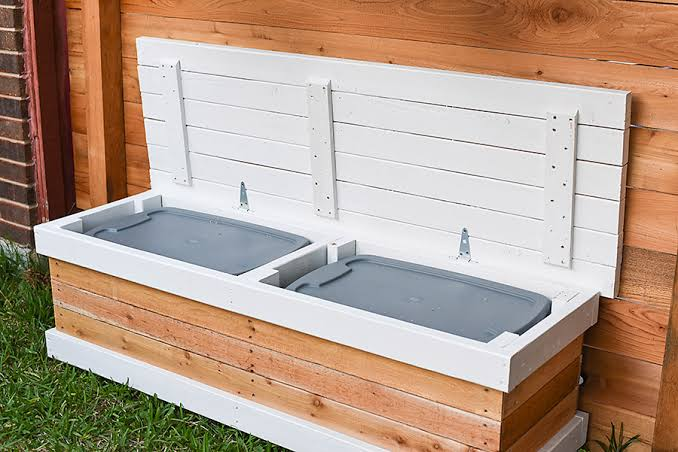
A balcony storage bench can solve two problems at once. It provides a place to sit while keeping cushions, gardening supplies, cleaning tools, and outdoor accessories out of sight. However, a bench that performs well on a covered patio may fail quickly on a balcony exposed to direct sun, wind-driven rain, and changing temperatures.
The best outdoor storage bench is not simply labeled “weatherproof.” It uses a suitable material, sheds water effectively, resists ultraviolet exposure, remains stable in wind, and allows stored items to stay dry without trapping condensation.
Weatherproof Does Not Always Mean Waterproof
Manufacturers often use terms such as weather-resistant, water-resistant, and waterproof differently. A weather-resistant bench may tolerate occasional rain but still allow moisture through its seams during a storm. Even a strongly sealed container can develop condensation when temperature and humidity change.
Before buying, decide what you plan to store. Plastic gardening tools may tolerate occasional moisture, while fabric cushions, books, electronics, and paper products require much stronger protection.
For moisture-sensitive contents, use sealed internal storage bags or smaller waterproof containers even when the bench itself is designed for outdoor use.
Best Overall Material: UV-Stabilized Resin
Resin storage benches are usually made from outdoor-grade plastic such as polypropylene or high-density polyethylene. They are popular for exposed balconies because they do not rust, require little maintenance, and are relatively easy to clean.
Look for UV-stabilized material designed to resist fading, chalking, and brittleness caused by prolonged sunlight. A thick, molded construction generally feels more stable than thin panels that flex when the lid is opened.
Advantages
Resin does not absorb water like untreated wood and requires no seasonal refinishing. Molded wood-grain finishes can also provide a warmer appearance than basic utility boxes.
Limitations
Lightweight resin furniture may move in strong wind. Dark colors can become hot in direct sun, while low-quality plastic may warp or weaken over time.
Select a bench with reinforced corners, a secure lid, and a manufacturer-approved method of anchoring or stabilizing it. Never drill additional holes without confirming that they will not weaken the unit or allow water inside.
Powder-Coated Aluminum Benches
Aluminum provides a clean, modern appearance and does not rust in the same way as ordinary steel. A properly applied powder-coated finish adds protection against weather and scratches.
An aluminum bench may be more rigid than a lightweight plastic model while remaining easier to move than heavy steel or solid wood.
Advantages
The material is durable, relatively lightweight, and suitable for contemporary balconies. It can also support slatted or ventilated designs that allow airflow.
Limitations
Scratched coatings may expose the metal, and coastal conditions can still cause corrosion around fasteners and damaged finishes. Metal surfaces also heat quickly in direct sunlight.
Check the hardware as carefully as the main panels. Stainless-steel or corrosion-resistant fasteners are preferable to untreated screws that may rust and stain the bench.
Natural Wood Storage Benches
Teak and other suitable outdoor woods can create an attractive, furniture-like balcony. Their weight may also provide more stability than thin plastic.
Wood must be designed and finished for exterior exposure. All faces, edges, joints, and cut ends need protection because water entering one unfinished area can cause swelling, splitting, or decay.
Advantages
Wood feels warmer than metal, blends with plants, and can be refinished when the surface begins to weather.
Limitations
Even durable outdoor wood requires maintenance. Sunlight may fade the color, rain can raise the grain, and water trapped beneath the bench may damage both the furniture and balcony surface.
A wooden bench should stand on feet that lift it above puddles. Inspect joints and underside surfaces regularly, and renew the finish according to the manufacturer’s instructions.
Do not assume that a solid wood bench has unlimited seating capacity. Confirm that the product is rated for sitting and follow its weight limits.
Synthetic Wicker Over a Metal Frame
Synthetic wicker can provide a softer residential look than a plain storage box. Outdoor versions generally use woven plastic over an aluminum or coated-steel frame.
This style works best on partly protected balconies, although high-quality models may tolerate greater exposure.
Advantages
Synthetic wicker coordinates easily with outdoor seating and allows some airflow around the structure.
Limitations
The woven exterior is not automatically waterproof. Water may pass through to an internal liner or storage box. The weave can also trap dust and leaves, while lower-quality strands may become brittle in strong sunlight.
Check the frame material and interior storage construction rather than judging the bench by the decorative weave alone.
Avoid Untreated Steel in Constant Exposure
Steel storage benches can be strong and stable, but they require effective corrosion protection. Once a coating chips or scratches, rust may spread around seams, hinges, and fasteners.
A galvanized or properly coated steel product may perform well if maintained. Ordinary painted steel is less suitable for balconies exposed to frequent rain or coastal air.
Inspect any metal bench for sharp edges and rust staining. Address coating damage early rather than allowing moisture to reach bare metal.
Look for a Water-Shedding Lid
The lid is the most important part of a storage bench. A completely flat lid may allow water to pool, while a slightly sloped or crowned top directs rain toward the edges.
An overlapping rim helps prevent water from entering through the opening. Internal channels may guide moisture away from the storage compartment.
A gasket can improve protection, but it must remain clean and flexible. Dirt, leaves, and pet hair caught along the seal can create small gaps.
The lid should close securely without slamming. Soft-close hinges or gas-assisted supports reduce the risk of pinched fingers and make a large lid easier to control in windy conditions.
Check the Base and Drainage
A bench should not sit directly in standing water. Raised feet create space beneath the unit and allow the balcony floor to dry.
Drainage holes inside the bench can release water that enters, but they also mean the unit is not fully sealed. Ventilation openings help control condensation but may admit wind-driven rain.
The ideal design depends on the contents. Outdoor tools benefit from airflow, while cushions require better sealing and additional internal protection.
Never position a bench over a floor drain, scupper, or drainage channel. Keep enough space around the unit to inspect and clean the balcony surface.
Choose a Lid That Can Be Secured
Strong wind can lift an unsecured lid and damage the hinges. Look for a positive latch rather than relying only on the lid’s weight.
A lockable lid may protect contents, but it should not create an entrapment hazard. Children must never be able to climb inside and become trapped. The bench should not be used as a toy box unless it is specifically designed to meet relevant child-safety requirements.
During severe weather, empty or relocate lightweight balcony furniture if this can be done safely. A latch keeps the lid closed, but it does not prevent the entire bench from moving.
Stabilize the Bench Without Damaging the Balcony
Never attach a storage bench to a railing unless the railing manufacturer, building owner, and an appropriate professional have approved the method. Drilling or clamping into a guardrail can damage coatings, increase corrosion, affect structural performance, or create unsafe wind loads.
If anchoring is permitted, use only the bench manufacturer’s approved attachment points and hardware suitable for the balcony construction. Renters should obtain written permission before drilling into walls or floors.
Freestanding stability may be improved by selecting a lower, wider bench and placing it against a solid wall away from the railing. Do not add unapproved heavy objects simply to weigh it down. Excessive weight may exceed balcony or furniture limits.
Consider the Balcony’s Load Capacity
A large storage bench can become extremely heavy after it is filled. Soil, bottled liquids, tools, tiles, and dense equipment add weight quickly.
The safe load depends on the balcony’s structure and condition. If you are unsure, ask the building manager or a qualified professional before placing a heavy bench or dense stored materials outdoors.
Spread weight appropriately and avoid concentrating heavy items near a visibly cracked or damaged area. Report balcony deterioration rather than covering it with furniture.
Keep Clear of Fire and Heat Sources
Do not place a plastic, wicker, or wooden bench beside a balcony heater, barbecue, or other ignition source. Fire and Rescue NSW advises keeping balcony barbecues and heaters at least one metre from surrounding objects, but local rules or appliance instructions may require more. Fire and Rescue NSW high-rise fire safety
Never store fuel, gas cylinders, oily rags, fireworks, hot charcoal, or other flammable materials inside an ordinary storage bench. Building policies may prohibit barbecues, heaters, and certain stored materials entirely.
Keep the bench away from sprinklers, fire equipment, escape routes, and firefighter access points.
Decide What Can Safely Be Stored
Suitable items may include dry garden tools, empty planters, outdoor tableware, cleaning brushes, watering cans, and weather-resistant toys.
Cushions should be completely dry before storage. Damp fabric placed inside a closed box may develop mildew and odors even when no rain enters.
Avoid storing food because it may attract insects, birds, or rodents. Electronics, important documents, batteries, medicines, and temperature-sensitive products should remain indoors.
Select a Safe Seating Design
A storage box is not automatically a bench. Confirm that the lid and frame are rated to support seated users.
The top should remain stable without flexing, and the feet should sit evenly on the balcony floor. A backrest can improve comfort but may catch more wind and add leverage to the unit.
Rounded corners are preferable in narrow spaces. Hinges and lid supports should keep fingers away from pinch points, especially where children use the balcony.
Do not place the bench near the railing if it could act as a climbing platform. In homes with children, position it well away from the balcony edge and maintain active supervision.
Protect Stored Cushions
Even a high-quality bench may allow humidity to reach fabric. Place dry cushions inside breathable storage bags or sealed containers appropriate for the climate.
Do not compress wet cushions into plastic bags. Moisture trapped inside will remain even if the outer bench is waterproof.
Lift the lid on dry days to inspect the interior and improve airflow. If condensation appears repeatedly, remove the contents and identify whether the problem comes from rain entry, damp items, or temperature changes.
Maintenance Through the Seasons
Wash resin and metal surfaces with mild soap and water, then rinse and dry them. Avoid abrasive pads that may damage protective coatings.
Clean debris from lid channels and gaskets. Tighten loose hardware, inspect hinges, and treat scratches according to the manufacturer’s instructions.
Wood benches need periodic examination for peeling finish, loose joints, cracks, and darkened areas. Synthetic wicker should be checked for broken strands and corrosion beneath the weave.
Before a storm season, confirm that the lid closes securely and the entire bench remains stable.
Common Buying Mistakes
Do not buy based only on storage volume. A large bench may block the balcony door, cover drainage, or create an unsafe climbing point.
Avoid assuming that “weather-resistant” means contents will remain completely dry. Do not place a lightweight box on a windy high-rise balcony without an approved stabilization plan.
Another common mistake is filling the bench with heavy materials without considering the total load. Measure the balcony, review building rules, and decide what will be stored before selecting a size.
Frequently Asked Questions
What is the best material for a fully exposed balcony bench?
UV-stabilized resin is usually a practical low-maintenance choice. Powder-coated aluminum and properly finished outdoor wood can also perform well with suitable care.
Are outdoor storage benches completely waterproof?
Many are water-resistant rather than fully waterproof. Wind-driven rain and condensation may still introduce moisture, so sensitive items need additional internal protection.
How can I stop the lid from opening in strong wind?
Choose a bench with a positive latch and durable lid supports. During severe weather, follow building guidance and move or empty lightweight furniture when safe.
Can I attach a storage bench to the railing?
Do not attach anything to a railing without specific approval. The connection may damage the guardrail or create additional wind loads.
Can cushions stay in the bench all winter?
Only store cushions when they are clean and completely dry. Check them regularly for moisture, odors, and mildew.
Is a deck box safe to use as seating?
Only if the manufacturer specifically rates it as a bench and provides a seating weight limit.
Where should the bench be placed?
Position it against a solid wall, away from the railing, drainage paths, heat sources, and exits. It should not create a climbing opportunity for children.
What should never be stored in a balcony bench?
Avoid fuels, gas cylinders, hot charcoal, fireworks, oily rags, food, important documents, medicines, batteries, and temperature-sensitive electronics.
Final Thoughts
A reliable balcony storage bench must handle more than rain. It needs UV-resistant materials, a water-shedding lid, secure hardware, raised feet, controlled ventilation, and enough stability for exposed conditions.
Choose the material according to the balcony’s climate and maintenance needs. Keep the bench away from railings, drains, heaters, and escape routes, and protect moisture-sensitive contents separately. With careful placement and routine inspection, a well-designed storage bench can provide useful seating and organization without becoming a weather or safety problem.